 3 days / 2 nights
Marrakech
Essaouira from Marrakech: 3 Days on the Atlantic Coast
Two nights inside the walled medina of Essaouira
- 2–12
- Easy
- 17 Sept
From€210 / per person
View tourMarrakech-Safi
A fortified Atlantic port with wind, blue boats and no hurry
Best time to visit
April to October. It is windy year-round, which is the appeal.
How long to stay
Two nights. Three if you are learning to surf.
Getting there
Three hours by road from Marrakech, or two and a half from Agadir. Small airport with limited European flights.
Essaouira is a walled Atlantic port about three hours west of Marrakech, and it is windy nearly every afternoon. That single fact decides whether you will like it. It is a walking, eating and sea-air town, not a sunbathing one, and two nights is the right length.
The Atlantic trade winds hit this stretch of coast almost daily. They build in the late morning, blow hardest through the afternoon and usually drop around sunset. That is why Essaouira is one of the world’s better kitesurfing and windsurfing towns, and why families who booked it as a beach holiday spend the week behind a windbreak.
Roughly how it runs through the year:
| Months | What the wind does |
|---|---|
| April – August | Strongest. Sand moves across the beach most afternoons. |
| September – October | Steady but easier. The best all-round window. |
| November – March | Lighter and more variable, with Atlantic storms passing through. |
Mornings are calm all year. If you want the beach, take it before noon. If you want the wind, the schools are on the sand south of the medina and they will put you in a wetsuit.
The town has collected more names than anywhere else in Morocco. Europeans called it Mogador until the 1960s, and the airport is still Essaouira-Mogador. The Arabic name means roughly “the little rampart”. French sources — and most of what is written about this town is French — call it Essaouira, Maroc, and the tourist literature calls it la cité des alizés, the city of the trade winds.
English spellings drift to Essouira and Essouria, both of which turn up often enough to break a search. It is all the same place, and all the same bus ticket.
The town is small. These are the things to do in Essaouira, Morocco, in the order that makes sense on foot:
Essaouira’s medina was laid out in the 1760s by a French engineer working for Sultan Sidi Mohammed ben Abdallah, and it shows: straight streets, right angles, two main axes crossing in the middle. After Fes it is a holiday in itself.
The selling pressure is a fraction of what you meet in Marrakech. Shopkeepers say hello and mostly let you pass. It is the town we send nervous first-timers to.
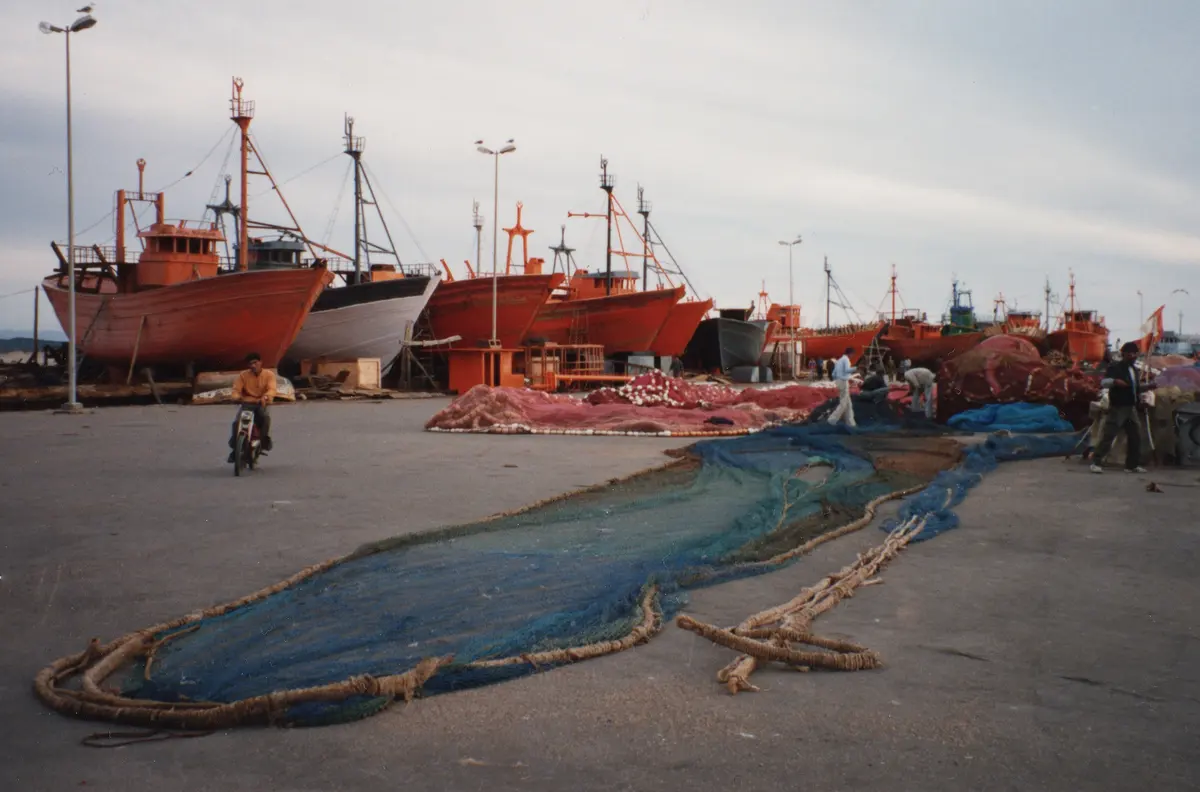
At the port there is a row of grill stalls where you choose your fish from ice and they cook it while you wait. It is one of the best meals in Morocco and it has one recurring problem: the price.
Agree the price per kilo and have the fish weighed in front of you before it goes on the grill. Ask what the bread, salad and sauce cost too, because they arrive whether you ordered them or not. Do that and it is cheap. Skip it and the bill can triple.
The other fish to eat here is sardines, which come off the boats in tens of thousands and are grilled whole for the price of a coffee.
The main beach runs several kilometres south and is broad, flat and hard enough to walk or ride on. It is not for lying still: see the wind, above.
The Atlantic here sits around 17–19 °C all year. That is cold. Surfers wear wetsuits in August. If your idea of a beach holiday involves warm water, this is not the coast for it, and we would rather tell you now.
Sidi Kaouki, twenty minutes south, is emptier, wilder and better for a long walk. There is a handful of places to eat and very little else.
Essaouira is where Moroccans learn, because the bay is broad, the bottom is sand and the wind is reliable enough to plan around. Schools sit in a line on the main beach and rent by the half-day, board and wetsuit included.
Surfing is better at Sidi Kaouki and in the winter swell; kitesurfing and windsurfing are better in the bay from April to August, when the trade winds do the work. Beginners should book mornings — the afternoon wind that makes the town famous is more than a first lesson needs.
The N8 runs through the argan belt, and the trees with goats in them are real. So are the women’s cooperatives, which press the oil by hand and sell it at the door.
Two things worth knowing. The goats that stand posed in a tree beside a lay-by have usually been put there and someone will want paying for the photograph; the ones climbing on their own are a hundred metres further on and free. And culinary argan is roasted, dark and nutty; cosmetic argan is pale and unroasted. Shops sell both, and a stall selling one bottle for both purposes is selling neither.
Two nights. Here is the arithmetic.
Essaouira to Marrakech is two and a half to three hours each way. A day trip means leaving at eight and getting back at eight, with about four hours in the town — the port and the ramparts, no beach, and none of the evening, which is when the place is at its best. Everyone who does it says it was too long in the car.
Two nights gives you a calm morning on the sand, a full afternoon in the medina and a sunset on the ramparts. It is also ten degrees cooler than Marrakech through the summer, which is why Marrakchis come here in August.
| Route | Realistic time |
|---|---|
| Marrakech → Essaouira, by road | 2h 30 – 3h |
| Agadir → Essaouira | 2h 30 |
| Casablanca → Essaouira | 5h |
The N8 from Marrakech is a good road through argan country. Yes, the goats are in the trees; no, do not stop at the ones being posed for coins by the roadside. Supratours and CTM coaches run several times a day and drop you beside the medina walls. The airport takes a small number of European flights.
Essaouira also sits on our Atlantic coast itinerary and pairs naturally with the High Atlas if you want mountains and sea in the same week. Everywhere else is on the destinations page.
April to October, with September and October the best of it: warm, less wind than midsummer, and the crowds gone.
Winter is mild, grey and quiet, and rooms are cheap. July and August are busy with Moroccan families and the wind is at its hardest. The Gnaoua and World Music Festival in June fills every bed in town — plan around it in one direction or the other.
Most people put Essaouira after Marrakech, when the noise has stopped being interesting. That is the right order. We drive it as a private transfer with the argan stops built in, or as part of a longer coast-and-mountains route.
Most afternoons, yes. The Atlantic trade winds blow hardest from April to August, usually building from late morning and dropping around sunset. Mornings are calm all year. That pattern is why the town is a kitesurfing centre and why it is a poor choice for lying on the sand.
Yes, and it is the easiest town in the country for a first-time visitor. The medina is a walled grid you cannot get lost in, the selling pressure is a fraction of Marrakech's, and women walking alone report far less comment here than inland.
Walk the Skala de la Ville ramparts, watch the catch land at the fishing port around midday, eat grilled sardines at the quay, cross the medina to the thuya wood workshops, and take the beach south towards Sidi Kaouki on foot or by camel.
Only just. It is two and a half to three hours each way, which leaves about four hours in the town — enough for the port and the ramparts, not enough for the beach or an evening. Two nights is the version people are glad they chose.
One road, the N8, and it takes two and a half to three hours depending on the argan-tree traffic. Supratours and CTM run coaches several times daily from beside the medina walls. A private car lets you stop at the argan cooperatives and the goats.
You can, and most people do not stay in long. The Atlantic here runs around 17–19 °C year-round, and the afternoon wind makes the beach cold even in August. Wetsuits are standard for surfing. For warm sea, Morocco's Mediterranean coast is the answer.
Two nights. That gives you one full day for the medina, the port and the ramparts, plus a morning on the beach before the wind gets up. Three if you are taking surf or kitesurf lessons, which are booked by the half-day.
The Gnaoua and World Music Festival is normally held in June and it fills the town completely. Rooms are booked months ahead and prices roughly double. If you want the music, book early; if you want a quiet town, avoid that week.
3 days / 2 nightsMarrakech
Two nights inside the walled medina of Essaouira
From€210 / per person
View tourTell us your dates and interests. We reply personally, usually within a couple of hours.
usually within 2 hoursNo deposit to planLicensed tour guide
+212 665 295 999
Try “Sahara”, “3 days”, or “Chefchaouen”.