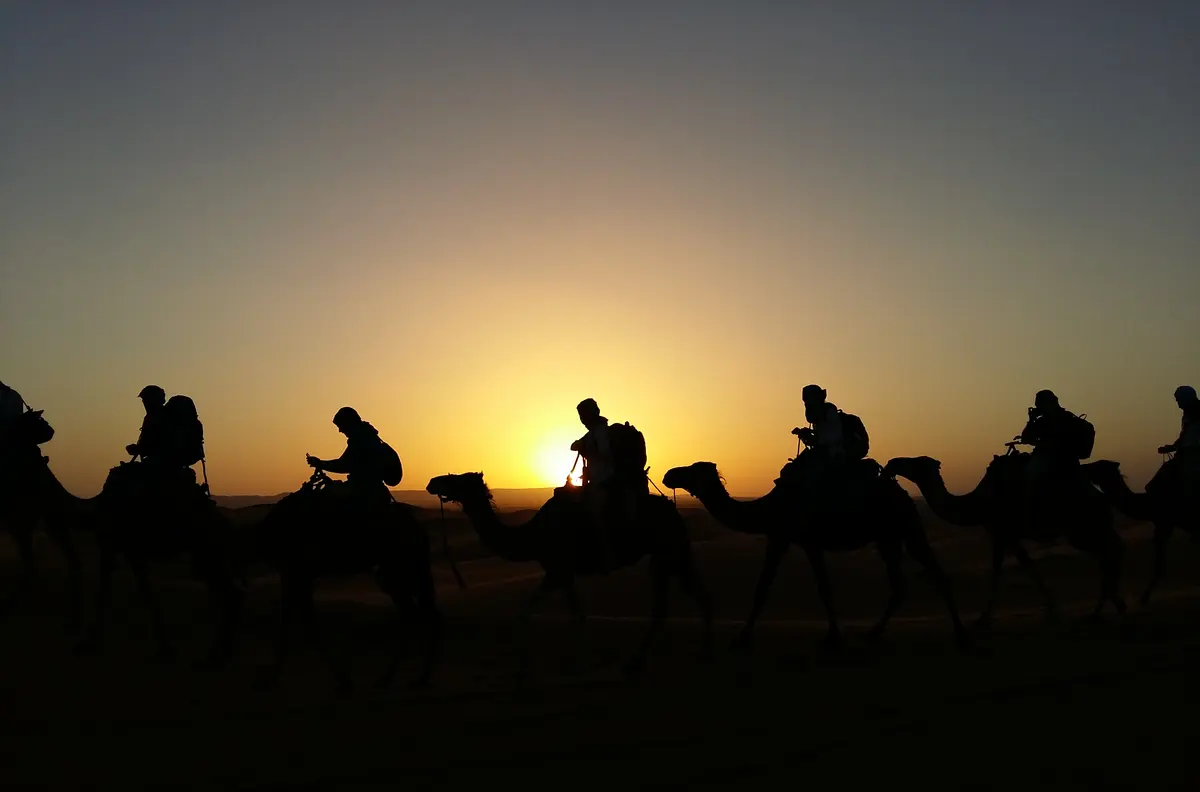
 3 days / 2 nightsSignature route
MarrakechFes
Marrakech to Fes Desert Tour: 3 Days to the Sahara
Cross the High Atlas on the Tizi n’Tichka pass
- 1–16
- Moderate
- 26 Sept
From€155 / per person
View tour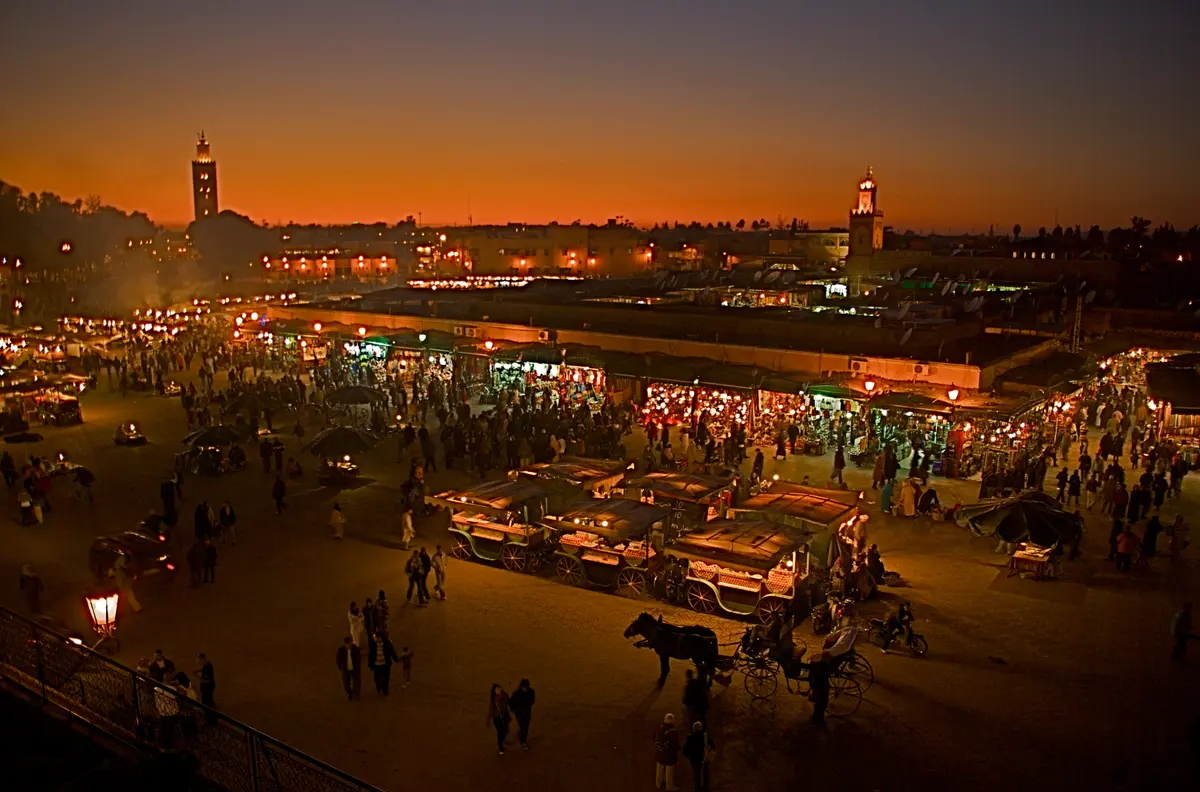
Marrakech-Safi
The red city, and the reason most people come
Best time to visit
March to May and September to November. July and August regularly pass 42 °C.
How long to stay
Three nights. Two is enough for the sights and too few for the city.
Getting there
Menara airport is fifteen minutes from the medina and has direct flights from most of Europe. The train from Casablanca takes three hours.
Marrakech is a city of close to a million people in central Morocco, three hours inland from the Atlantic and ninety minutes from the High Atlas. It is not the capital. People come for the medina, the souks and the square at dusk, and three nights is the number that works for most of them. Our full ranking of things to do in Marrakech covers what each site costs, when to arrive and what to skip.
Marrakech, Morocco sits in the south-west of the country, roughly 240 km inland from Casablanca, with the Atlas ridgeline visible from the rooftops on a clear winter morning. It is at 31.6° north — the same latitude as Savannah, Georgia — which is why the light is hard and the summers are long.
It is not the capital of Morocco. Marrakech was the imperial capital three separate times; Rabat has held the job since 1912, so the palaces are here and the ministries are not. Marrakech the city sits inside Marrakech-Safi, the administrative region that shares its name. When people say Marrakech, they mean the city.
The Marrakech city walls are red rammed earth and enclose the medina, which is where almost everything you have seen photographed actually is. Outside them, Guéliz — the new town laid out under the French — is a grid of restaurants, pavements and traffic.
Direct answer: yes, for the things people usually mean by the question. Violent crime against visitors is rare, and this is not a country where you think about weapons in a crowd.
What is real is the low-level friction. Unofficial guides attach themselves to you in the souks and expect paying. Someone will tell you a street is closed or the square is “this way”, walk you somewhere else, and ask for money. Scooters use lanes two metres wide. Card skimming exists, so use ATMs attached to bank branches.
Women travelling alone get comments in the street. It is verbal, it is tiring, and it stops faster than most people expect once you stop engaging. There is more detail in safety in Morocco and in is Morocco safe for solo female travellers.
Three nights. One day for the monuments, one for the souks and a hammam, and one afternoon doing nothing in a courtyard.
Two nights works if you are disciplined and skip the gardens. One night is an airport stopover, not a visit. Past four nights, give a day to somewhere outside the city — otherwise the medina starts to repeat itself. People who push from nine in the morning to nine at night for five straight days end up disliking a city they would otherwise have loved.
Most Marrakech travel guides give you twenty items and no ranking. Here is the ranking.
What can go: the Koutoubia is a landmark you walk past rather than enter, since non-Muslims cannot go in. The camel rides in the palm grove are twenty minutes of nothing. The Menara gardens are a photograph, not an afternoon.
If you want that as a day-by-day plan, we have written one: three days in Marrakech.
Hajar is Moroccan; Marrakech is where she guides, and she answers this one from her own street rather than from a forum.
Shoulders and knees covered is the whole rule, and it applies to men as much as to women — a man in shorts in the medina looks as out of place as he would in a church. No visitor is expected to cover her hair. Long, loose and light beats short and tight, and it is also cooler when the thermometer passes 42 °C.
Evenings between November and March are genuinely cold once the sun drops, because the city sits at 460 m with mountains behind it. Bring a jacket. The full list is in what to pack for Morocco.
Nobody will touch you. What happens is verbal and constant: a price called at your back, a hand steering you towards a doorway, someone walking beside you asking where you are from.
Two phrases end most of it. La, shukran — no, thank you — said once, without an apologetic smile. And ghir kanshouf, “I’m only looking”. Say either while you keep walking; stopping is what starts the negotiation. There is more on this in language in Morocco and culture and etiquette.
Never accept a guide you did not ask for, and never follow someone who tells you the way ahead is closed. That is the most common way visitors end up in a shop they did not choose.
A riad is a courtyard house turned into a small hotel — five to ten rooms, a plunge pool, a roof terrace, breakfast upstairs. It is the reason people fall for this city. It also sits down a lane no car can enter, so plan on walking the last two hundred metres with your bags, and expect the dawn call to prayer.
Guéliz is the alternative: a real swimming pool, a quiet night, restaurants that take cards, and a ten-minute taxi to the medina gate. On a first trip, Marrakech is more rewarding from inside the walls. On a second visit, or with small children, Guéliz wins.
| Route | Realistic time |
|---|---|
| Casablanca → Marrakech, by train | 3h |
| Marrakech → Essaouira | 3h by road |
| Marrakech → Imlil, High Atlas | 1h 30 |
| Marrakech → Aït Benhaddou, the kasbah road | 3h |
| Marrakech → Merzouga | 9–10h |
Menara airport (RAK) is fifteen minutes from the medina and takes direct flights from most of western Europe; from the United States you will connect through Europe or through Casablanca. Royal Air Maroc — Marrakech’s onward link from its Casablanca hub — is the carrier that flies nonstop between Morocco and the United States, and Mohammed V airport has a train station underneath it, so an evening arrival can still sleep in a Marrakech riad that night.
Marrakech to Fes takes most of a day by train. The better version is the three-day drive through the desert, which is the route we run most often: Marrakech to Fes across the Sahara.
March to May and September to November. October is the single best month of the year.
July and August pass 42 °C by mid-afternoon and the medina holds the heat until midnight — Moroccans who can leave for the coast do. December to February is dry, bright and cold at night, with snow on the Atlas above the city, which photographs better than anything summer offers.
Ramadan moves each year. Restaurants in the medina open late, and the square is subdued until sunset and then extraordinary. It is a good time to visit Marrakech if you know what you are coming to.
Everywhere else is on the destinations page.
Marrakech opens most itineraries because the flights land here, not because it deserves to be rushed. We build private trips around three nights in the city and then whatever you actually want next — the mountains, the coast or the dunes.
Marrakech is in south-western Morocco, in North Africa, about 240 km inland from Casablanca and roughly ninety minutes from the High Atlas mountains. It sits at 31.6° north, the same latitude as Savannah, Georgia. Menara airport is fifteen minutes from the old city.
Yes, for the things most people mean by the question. Violent crime against visitors is rare. What you will meet is persistent selling, unofficial guides and scooters in narrow lanes. Keep valuables out of sight, refuse help you did not ask for, and use registered taxis or your own driver after dark.
Yes. US passport holders need no visa for stays under ninety days, and Americans are common enough here to be unremarkable. The practical risks are the same for every visitor — overcharging, street "guides" and traffic. Nothing about being American changes them.
Three nights. Two nights covers the palaces, the tombs and one evening on the square but leaves no room for a slow afternoon. Four only makes sense if one of the days is spent outside the city — the Atlas, Essaouira or the Agafay.
No. Rabat is the capital and has been since 1912. Marrakech was the imperial capital under the Almoravids, the Almohads and later the Saadians, which is why the palaces and tombs are here and the ministries are not.
Shoulders and knees covered is the useful rule, for men as well as women. No visitor is expected to cover her hair. Loose cotton or linen in summer, when it passes 42 °C. Evenings from November to March need a jacket.
Morocco runs on UTC+1 all year, so Marrakech is four hours ahead of New York in winter and five in summer. The clocks go back an hour for the month of Ramadan and forward again afterwards, which catches out train and flight bookings.
About 240 km. The train takes three hours from Casa-Voyageurs and runs through the day. Driving the motorway takes two and a half to three hours. Mohammed V airport has its own station, so you never need to cross Casablanca to get here.
A riad is an old courtyard house inside the medina, built inward around a garden or a pool and converted into a small hotel. They are cool, quiet and beautiful. They also sit on lanes no car can enter, so you walk the last stretch with your luggage.
3 days / 2 nightsSignature routeMarrakechFes
Cross the High Atlas on the Tizi n’Tichka pass
From€155 / per person
View tour10 days / 9 nightsSignature routeMarrakech
Every region that matters, in one loop
From€1,100 / per person
View tour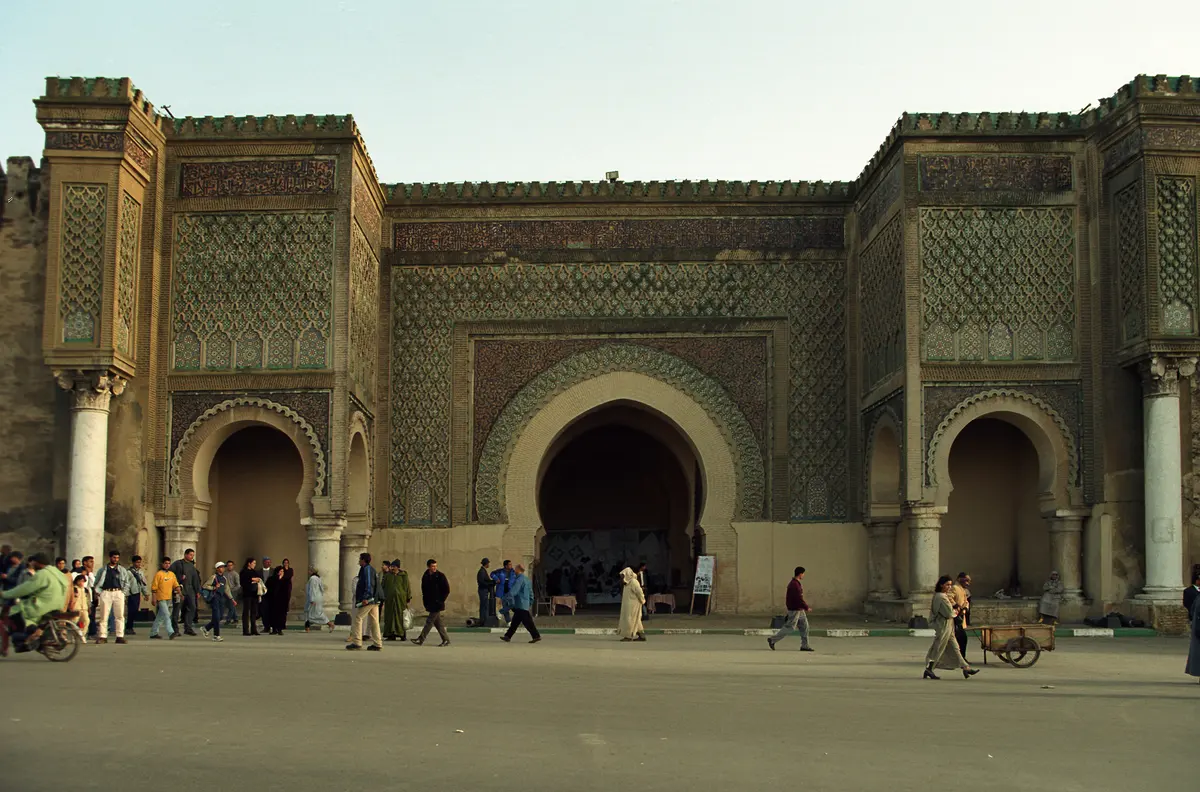 7 days / 6 nightsSignature route
CasablancaMarrakech
All four imperial capitals — Rabat, Meknes, Fes and Marrakech
From€610 / per person
View tour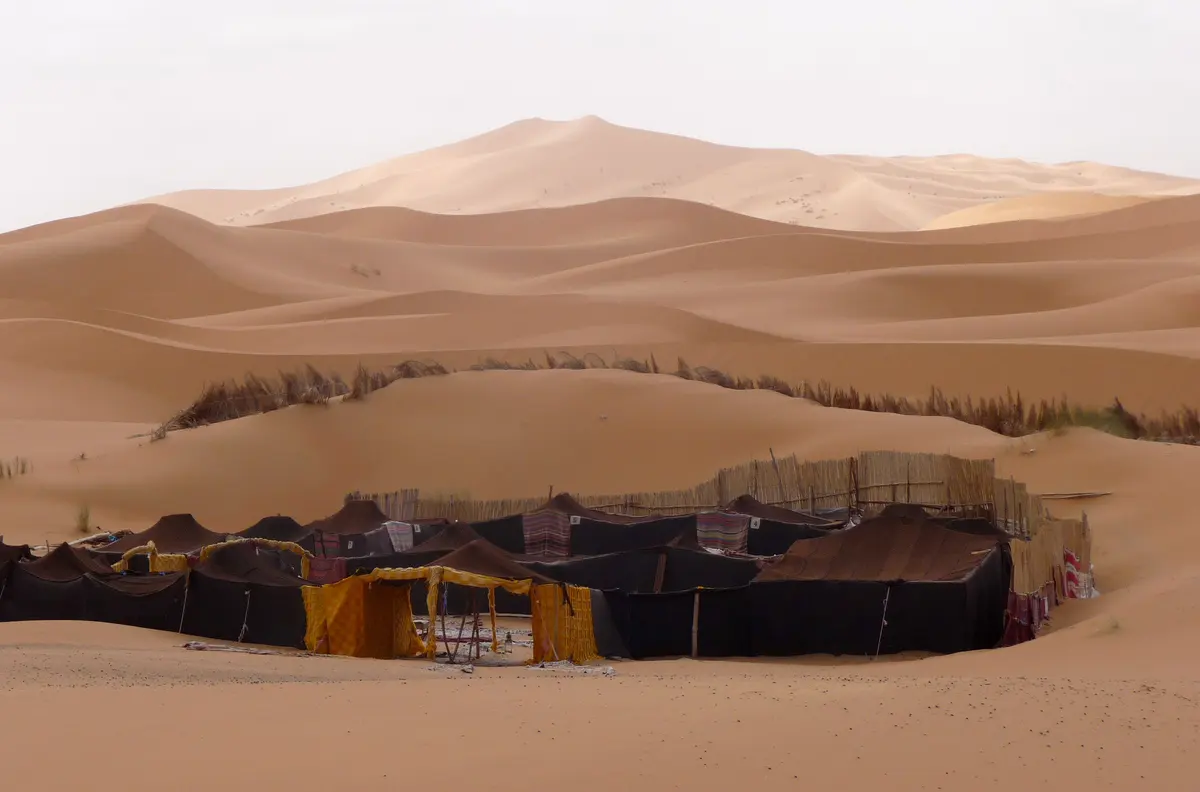 4 days / 3 nights
Marrakech
Two nights in a private-suite camp with proper beds and en-suite bathrooms
From€520 / per person
View tour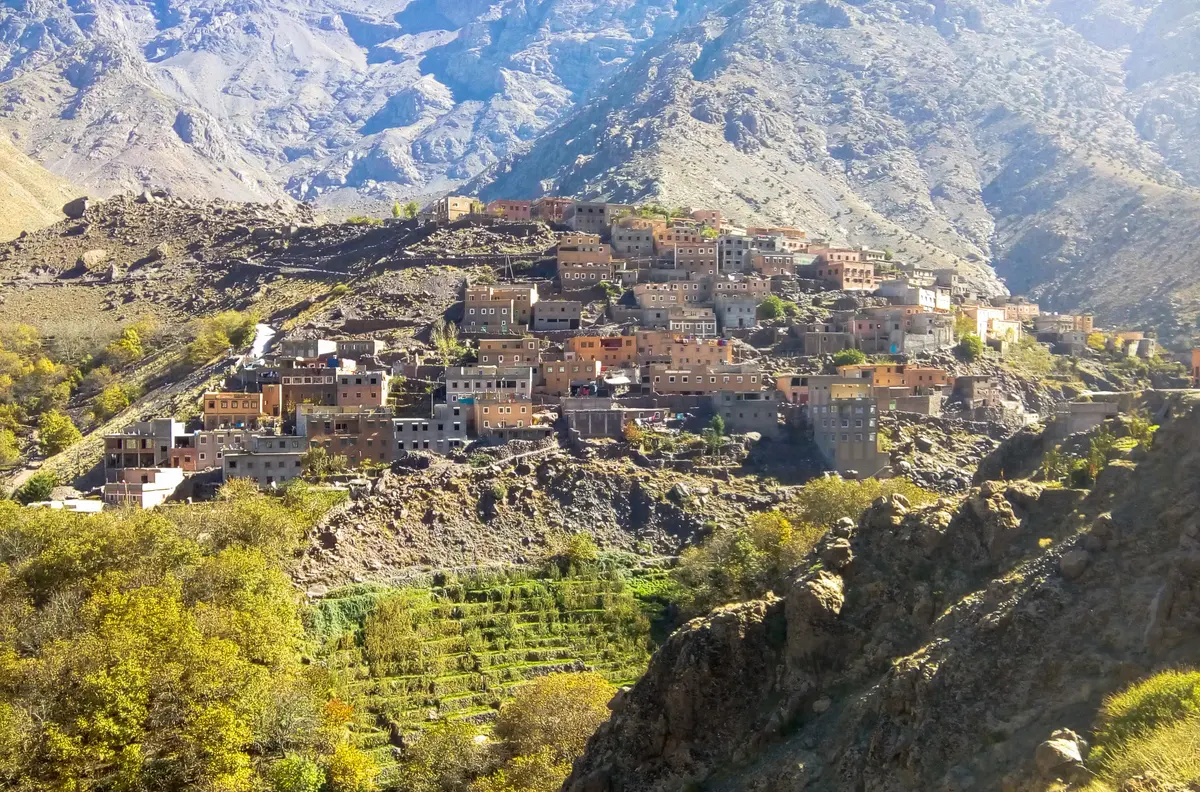 5 days / 4 nights
Marrakech
Summit Jebel Toubkal at 4,167 m — the highest point in North Africa
From€395 / per person
View tour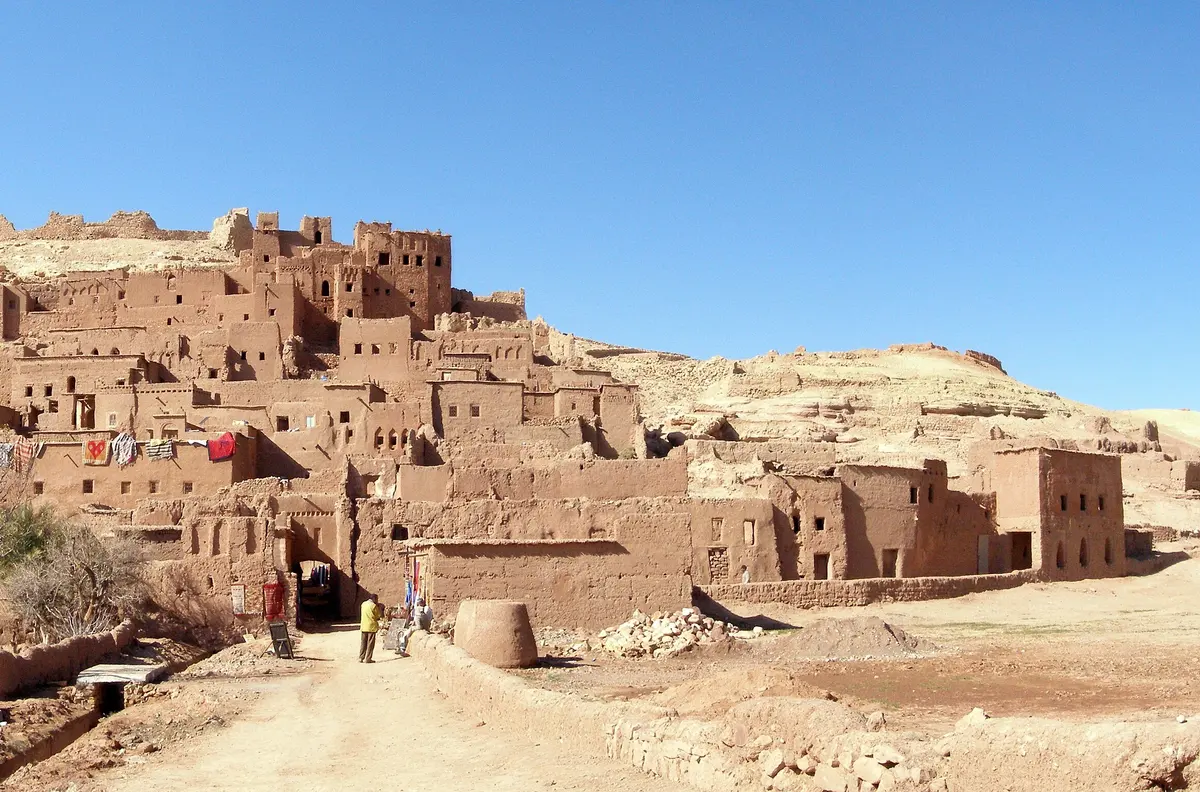 1 day
1 dayMarrakech
Cross the High Atlas at 2,260 m on the Tizi n’Tichka
From€38 / per person
View tour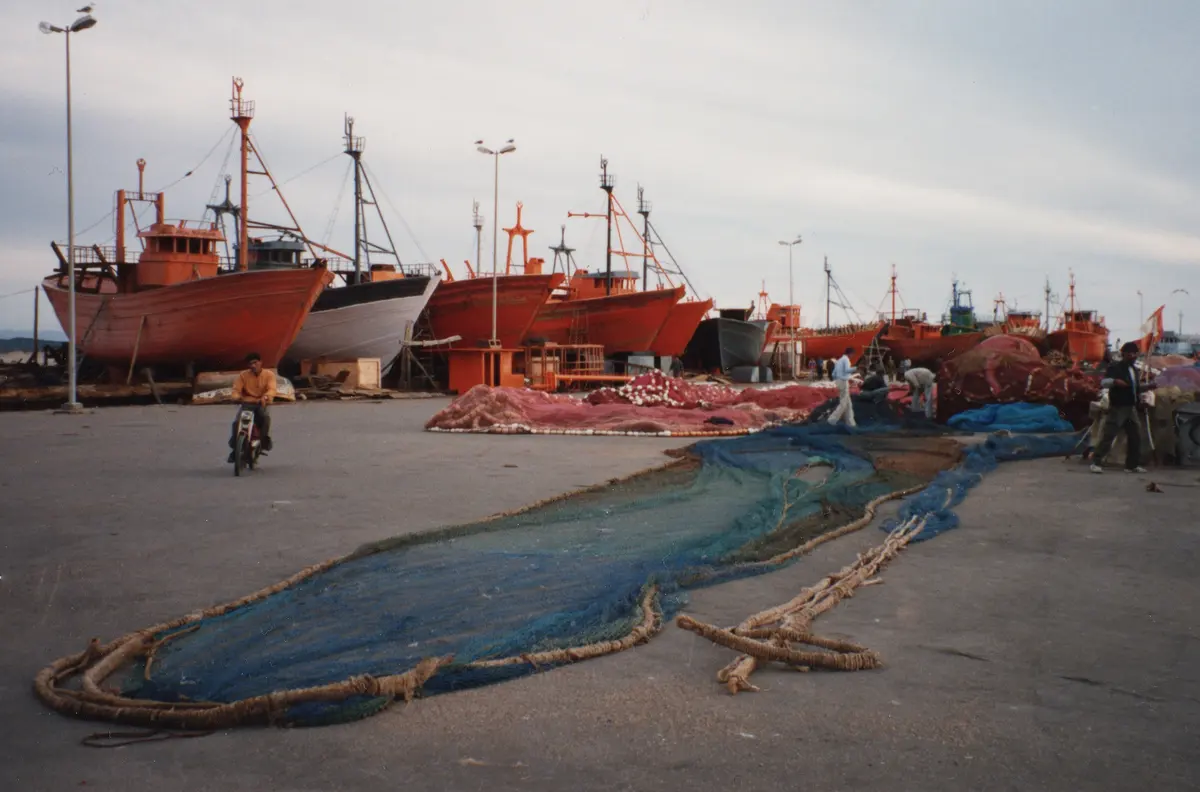 3 days / 2 nights
Marrakech
Two nights inside the walled medina of Essaouira
From€210 / per person
View tourTell us your dates and interests. We reply personally, usually within a couple of hours.
usually within 2 hoursNo deposit to planLicensed tour guide
+212 665 295 999
Try “Sahara”, “3 days”, or “Chefchaouen”.