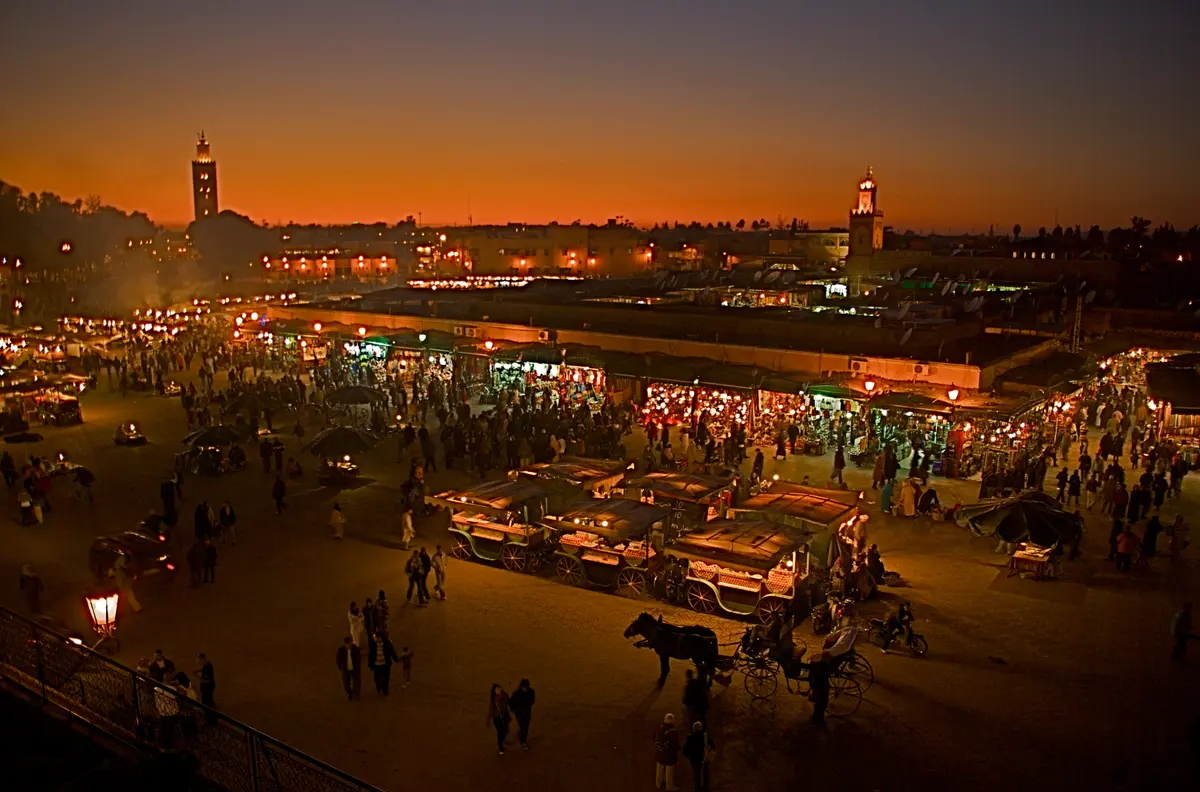
 10 days / 9 nightsSignature route
Marrakech
10 Days in Morocco: The Grand Tour Itinerary
Every region that matters, in one loop
- 2–12
- Easy
- 3 Oct
From€1,100 / per person
View tour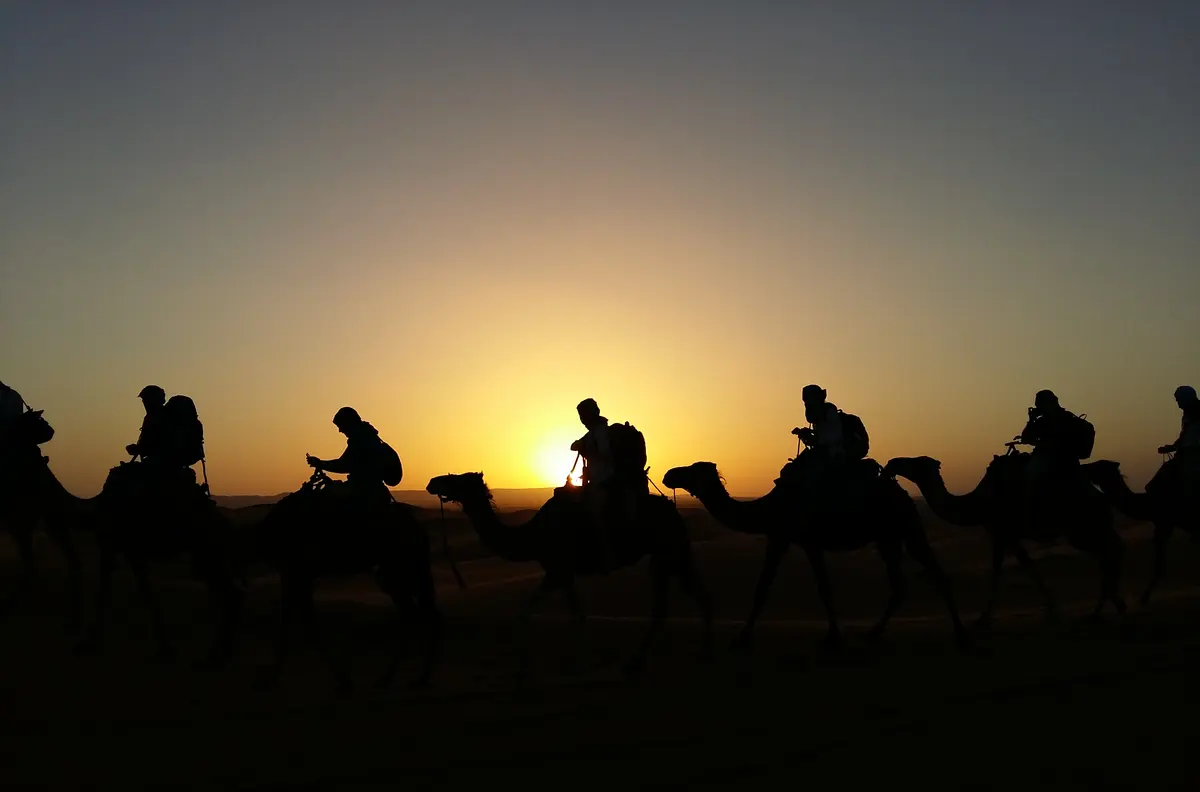
Signature route
Cross the High Atlas on the Tizi n’Tichka pass
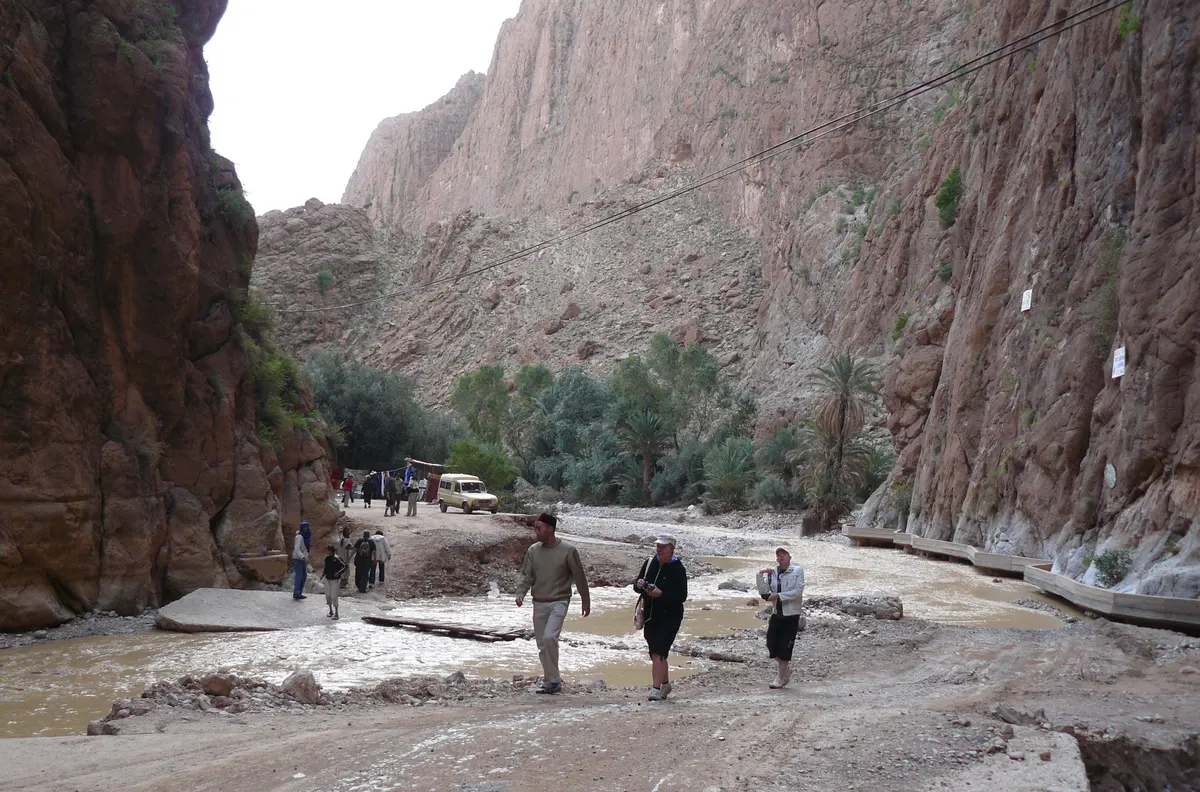
This is the route we run most often, and it is built to avoid the thing that ruins most desert tours: backtracking. Going one-way to Fes means you see the Todra Gorge and the Ziz Valley on fresh roads instead of repeating yesterday. We also stop properly at Aït Benhaddou rather than pausing for a photo — you walk up through the ksar with a guide who can tell you what you are looking at.
This is a Marrakech desert tour of 3 days that ends in Fes rather than doubling back. It crosses the High Atlas, reaches the Erg Chebbi dunes at Merzouga on the first evening, gives you a full day in the Sahara, then runs north to Fes through the Todra Gorge. Three days, two nights, one direction — no road driven twice.
Most 3 day desert trips from Marrakech drive you to Merzouga and back along the same road. Ours does not.
Most operators sell a Marrakech round trip because it is easier for them to schedule. It also means driving the same 500 km twice.
Finishing in Fes spends day three on the Todra Gorge and the Ziz Valley palm groves instead of retracing yesterday’s road. You end in a different city with a different medina, and you see roughly twice as much country for the same three days.
Travelling the other way? We run the identical route as a Fes to Marrakech desert tour, same price. Say which direction when you enquire.
Yes — Merzouga is the destination. Most 3 days tours from Marrakech to Merzouga return the same way on day three, which means eighteen hours in a vehicle to see one set of dunes. This 3 day desert tour from Marrakech to Merzouga carries on north to Fes instead, so the third day is new country rather than yesterday’s road in reverse.
If you need to end back in Marrakech, say so and we will quote the round trip honestly — including what you give up.
This is the part most listings soften. Here is what the road actually does.
| Day | Driving |
|---|---|
| Day 1 — Marrakech → Merzouga | ≈ 9 hours with stops |
| Day 2 — in the dunes | Minimal |
| Day 3 — Merzouga → Fes | ≈ 8 hours with stops |
Day one leaves at 07:00 and reaches the camels at 19:00. That is a long day, and it is the only way the geography works: Merzouga is roughly 560 km east of Marrakech, over a 2,260 m pass.
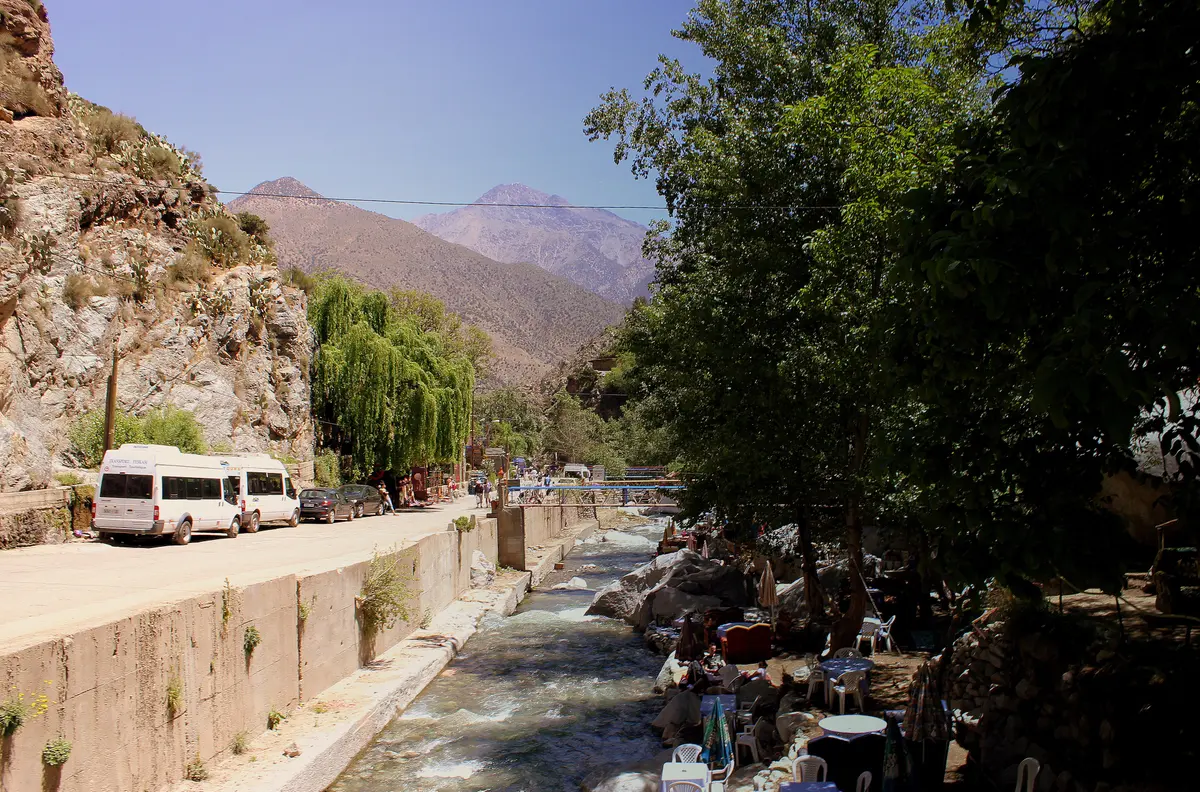
We break it properly — the Tizi n’Tichka at 09:30, a guided walk up through Aït Benhaddou and lunch beside the river at 11:30, then the Valley of a Thousand Kasbahs through the afternoon. Nobody sits in a vehicle for nine unbroken hours. But nine hours is what the day contains, and you should book knowing it.
The middle day has almost no driving in it. Sunrise from the dune behind camp at 06:30, nomad families and the Gnaoua village of Khamlia mid-morning, then a free afternoon.
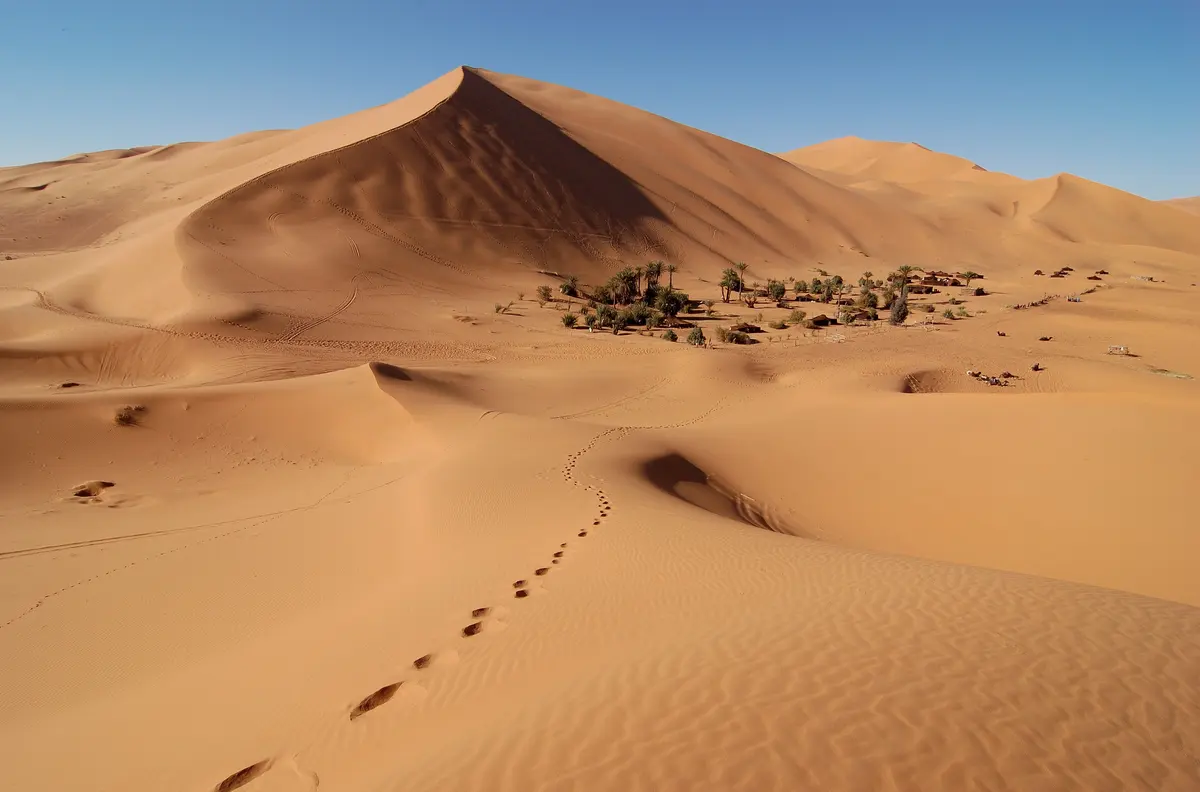
This is what separates a three-day trip from the two-day tours to Zagora. Zagora is stony hamada with modest dunes four hours closer to Marrakech. Erg Chebbi is the 150-metre sand people actually have in mind. Getting there costs you the extra day, and it is worth it.
Price per person falls with group size:
| Travellers | Per person |
|---|---|
| 1 | €320 |
| 2–3 | €250 |
| 4–6 | €185 |
| 7+ | €155 |
That covers the licensed driver-guide, an air-conditioned 4x4 or minibus, one night in a Berber desert camp and one in a guesthouse, the camel trek at sunset and sunrise, two lunches, two dinners, and all fuel, tolls and parking. Monument entries come to about €10 and are not included; nor are drinks or tips.
There is no online checkout. You enquire, we quote in writing, and you confirm.
Private tents have en-suite toilets and hot showers. The standard camp has shared facilities a short walk across the sand.
Between November and February the temperature drops close to freezing after dark. There are heavy wool blankets on the beds, but bring a warm layer — it is the single most common packing mistake. Our guide to what to pack for the Sahara covers the rest, and what to expect at a desert camp describes an evening there in detail.
October to April. In July and August the Erg Chebbi routinely passes 45 °C by early afternoon and the camel trek moves to the last half-hour of light, which takes most of the pleasure out of it. March, April, October and November are the best months. See the best time to visit Morocco if your dates are flexible.
It suits anyone who accepts two long road days as the price of reaching real dunes, and who would rather end in a new city than back where they started. Groups run from one to sixteen, and the vehicle is private below that.
It does not suit anyone with a low tolerance for time in a car. If nine hours sounds like too much, take the four-day luxury desert escape instead — it splits the same distance across an extra night in the Dades.
Hajar is a Moroccan woman who guides professionally, works in Darija, French and English, and has been running this road for six years. That is where the driving times above come from — not from a mapping app.
Booking through us means the person quoting you is the person organising the trip. No marketplace commission sits between you and the guide, and changes to the itinerary are a conversation rather than a support ticket. More on why booking direct is different.
Not at all. A 4x4 runs to camp on the same schedule, and plenty of people take it — particularly with knee or back trouble.
Between November and February it can drop close to freezing after dark. Camp beds have heavy wool blankets, but bring a warm layer.
Yes, identical price. Say so when you enquire and we flip the itinerary.
Yes — private tents have en-suite toilets and hot showers. The standard camp has shared facilities a short walk away.
Merzouga and the Erg Chebbi dunes are about 560 km east of Marrakech, over the 2,260 m Tizi n’Tichka pass. With the stops we build in, day one takes around nine hours. There is no shorter way to reach the big dunes.
Three days is the shortest sensible trip. It gives you one full day in the dunes rather than an overnight dash. Two-day tours go to Zagora, which is stony desert, not the tall sand people picture.
From €155 per person in a group of seven or more, €185 for four to six, €250 for two or three, and €320 travelling solo. That covers the vehicle, guide, both nights, the camel trek and four meals.
Yes. The Fes to Marrakech desert tour is the identical itinerary run in reverse, at the same price. Tell us your direction when you enquire and we flip the days.
Morocco is one of the safer countries in the region for tourists, and the desert route is well travelled. The usual city precautions apply in the medinas. Our travel-info page on safety goes through it properly.
10 days / 9 nightsSignature routeMarrakech
Every region that matters, in one loop
From€1,100 / per person
View tour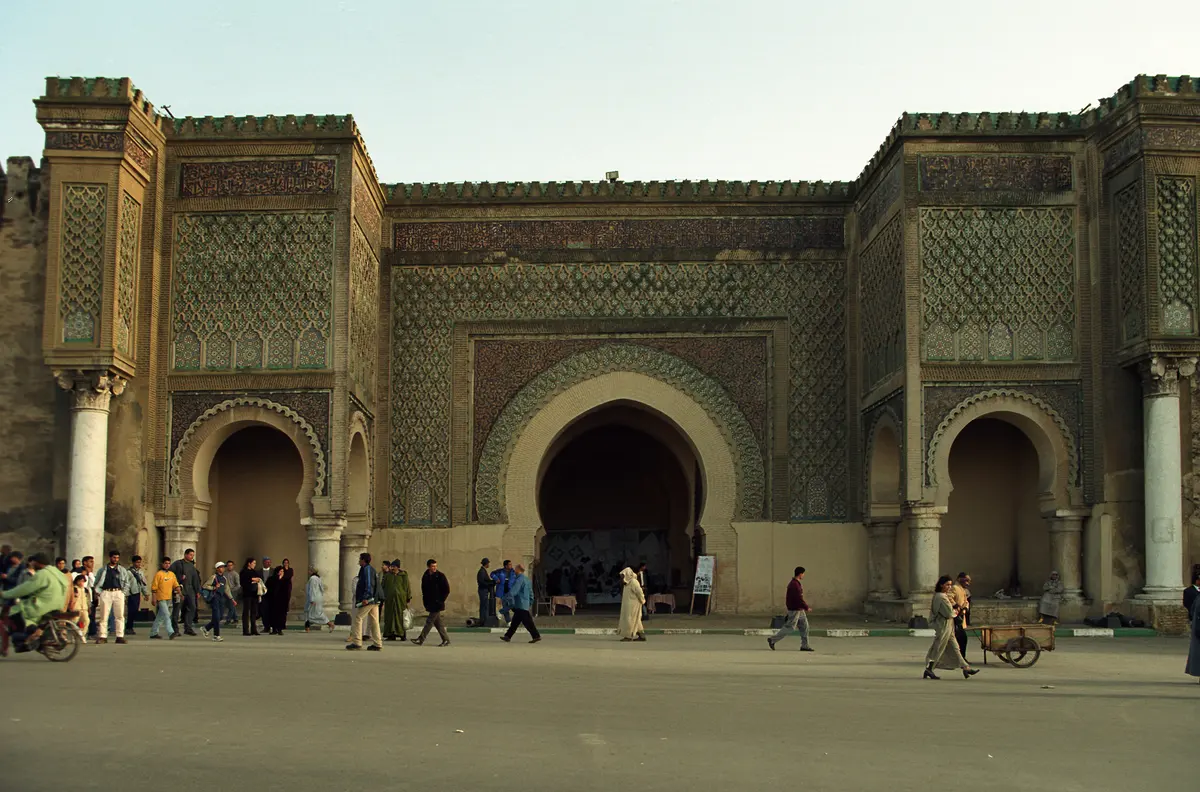 7 days / 6 nightsSignature route
CasablancaMarrakech
All four imperial capitals — Rabat, Meknes, Fes and Marrakech
From€610 / per person
View tour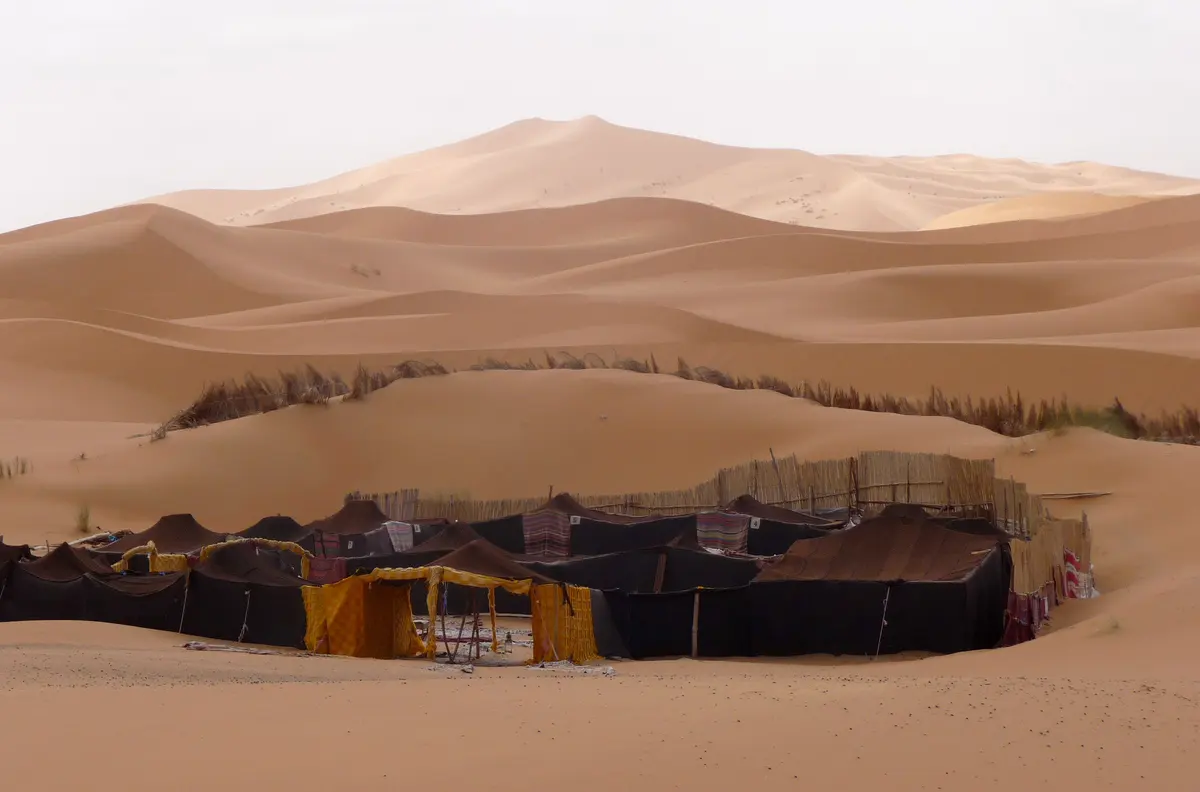 4 days / 3 nights
Marrakech
Two nights in a private-suite camp with proper beds and en-suite bathrooms
From€520 / per person
View tourTell us your dates and interests. We reply personally, usually within a couple of hours.
usually within 2 hoursNo deposit to planLicensed tour guide
From
€155/ per person
+212 665 295 999
Try “Sahara”, “3 days”, or “Chefchaouen”.