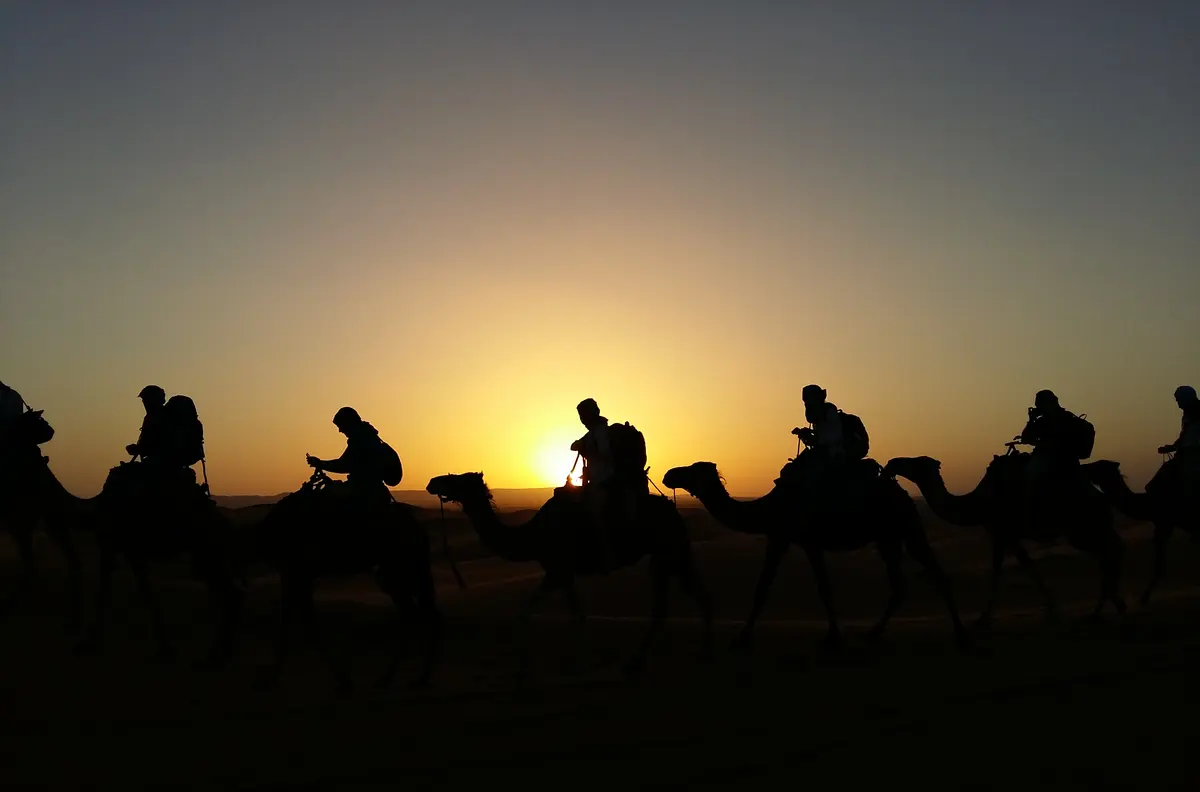
 3 days / 2 nightsSignature route
MarrakechFes
Marrakech to Fes Desert Tour: 3 Days to the Sahara
Cross the High Atlas on the Tizi n’Tichka pass
- 1–16
- Moderate
- 26 Sept
From€155 / per person
View tour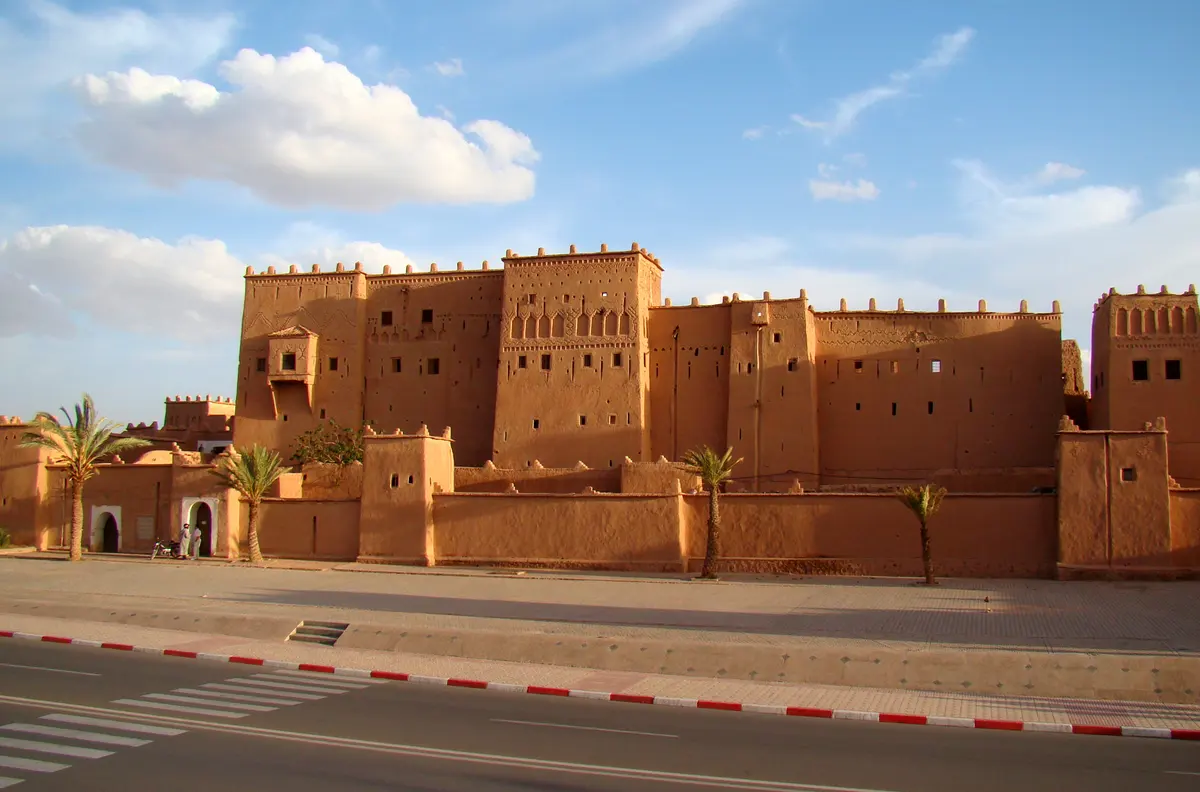
Drâa-Tafilalet
Where the Atlas ends and the pre-Sahara begins
Best time to visit
October to April. Summer afternoons pass 40 °C.
How long to stay
One night if you are passing through, two to walk the gorges.
Getting there
Four hours from Marrakech over the Tizi n’Tichka. Small airport with flights from Casablanca.
Ouarzazate is a small town at about 1,100 m where the road from Marrakech comes down off the Atlas and the pre-Sahara begins. Almost nobody travels here for the town itself. They stop here on the way to the desert — and the things worth seeing are the hour of country in every direction.
A stop.
Ouarzazate has one good kasbah, two film studios and a reservoir. That is half a day, comfortably. What justifies the four hours over the pass is everything around it: Aït Benhaddou 30 km west, Skoura and its oasis 40 km east, the Dades and Todra gorges beyond that, and the Draa valley running south towards Zagora.
Our advice to most clients is one night here, or one night at Aït Benhaddou, and an early start. Two nights only earns its place if you are walking in the Dades.
The ksar at Aït Benhaddou is the image you already have of southern Morocco: stacked earthen towers on a hillside above a river, with a granary at the top. It is UNESCO-listed and it has stood in for half the ancient world on film — Lawrence of Arabia, Gladiator, Game of Thrones.
The mistake is arriving at midday from Marrakech, which is when everybody arrives, because a four-hour drive starting after breakfast puts you there at exactly the wrong time.
Sleep on that side instead. At seven in the morning you climb to the granary alone and the light is coming across the valley. By ten the coaches are in the car park. We run it as a day trip from Marrakech too, but the overnight version is the better one.
Kasbah Taourirt sits on the main road in town — a Glaoui family stronghold, partly restored, and an hour well spent for the rooms and the roof.
Atlas Studios and CLA Studios keep standing sets up between productions: Egyptian temples, a Tibetan monastery, Roman streets, aircraft fuselages. Guided visits take about an hour. If film history interests you it is genuinely good; if it does not, skip it without regret.
Outside town, the Noor solar complex — one of the largest concentrated-solar plants in the world — sits on the plain towards Marrakech. You cannot visit it, but you will see the tower from the road, and it explains why a desert town has this much new infrastructure.
Forty minutes east, Skoura, Morocco’s best-kept oasis, is a palm grove with kasbahs still standing inside it. Kasbah Amridil is the famous one — it appears on the fifty-dirham note — and it is still owned by the family who built it.
The valley beyond it is the Valley of a Thousand Kasbahs: a line of fortified earthen villages along the river. They are built of rammed earth mixed with straw, which needs re-rendering after every wet winter. Many are dissolving. That is not neglect so much as economics, and it is worth understanding before you photograph a ruin.
From Skoura the road runs east to the Dades valley — the switchback climb and the rock formations locals call monkey fingers — and then to Todra Gorge, where 300-metre walls close to about ten metres apart.
Real timings on that leg:
| Leg | Time |
|---|---|
| Ouarzazate → Skoura | 40 min |
| Skoura → Dades valley | 1h 30 |
| Dades → Todra Gorge | 1h 30 |
| Todra → Merzouga | 3h |
If you only have time for one gorge: Todra for the photograph, Dades for the drive.
The other road out of Ouarzazate goes south along the Draa, Morocco’s longest river, through a continuous palm grove towards Zagora, Morocco’s old caravan town and the famous “Timbuktu, 52 days” sign.
It is about four hours to Zagora and it is a beautiful drive. It also leads to Erg Chigaga, the bigger and emptier of the two dune seas, which needs a proper 4x4 and an extra day. Most people go east to Merzouga instead; the Draa is the better road and the harder desert.
Four hours from Marrakech. Not three, whatever the map app says.
The Tizi n’Tichka crosses the High Atlas at 2,260 m and it is bends the entire way. The road has been widened in recent years and is in good condition, but there are lorries on it and there are usually roadworks somewhere. In December and January it closes for snow occasionally, sometimes for a day.
Leaving Marrakech you take the road signed Route de Ouarzazate, Marrakech’s south-eastern exit, and climb steadily for two hours before the first pass. Anyone prone to car sickness should sit in the front and skip breakfast.
If you are not driving, the bus — Marrakech–Ouarzazate on CTM or Supratours — takes about five hours with stops. Grand taxis leave when full and are quicker and less comfortable.
Ouarzazate’s hotels split into two kinds: the ones on the through-road, which are convenient and noisy, and the converted kasbahs on the edge of town, which are quieter and need a taxi.
Everybody arrives at six in the evening exhausted from the pass, checks into the first, and regrets it at five in the morning when the lorries start. Ask which road your hotel is on.
Ouarzazate eats late and it eats simply. The restaurants that stay open past nine are on the main avenue, and the food is grilled meat, tagine and chips rather than anything regional. The one thing worth ordering here is tanjia if you find it, and dates from the Draa, which are sold by the box everywhere south of town.
The El Mansour Eddahbi reservoir sits just east of the town — a large body of water in a place with none, with birds on it in spring. It is a twenty-minute stop rather than an afternoon, but it makes sense of why the town is where it is.
October to April. Spring and autumn are ideal; winter days are bright and cold, and the nights are properly cold at this altitude.
July and August pass 40 °C on the valley floor by early afternoon, and the earth architecture holds heat. If you must travel then, do the driving early and stop by one.
Ouarzazate is day one or day two of nearly every desert crossing we run, including Marrakech to Fes across the Sahara. The rest of the country is on our destinations page.
As a stop, yes; as a destination, rarely. The town itself is one kasbah and two film studios, comfortably done in half a day. What is worth the journey is everything within an hour of it — Aït Benhaddou, Skoura, the Draa valley and the gorges east.
About 200 km, and four hours of real driving over the Tizi n'Tichka pass at 2,260 m. Map apps often say three. They are wrong, because the pass is a continuous sequence of bends and there is usually a lorry on it.
One night for most itineraries. Arrive in the afternoon, see Kasbah Taourirt or the studios, sleep, and leave early for Aït Benhaddou or the gorges. Two nights only if you want to walk in the Dades or take the Draa valley south.
Aït Benhaddou, if the ksar is why you came. Staying there means seeing it at sunrise and sunset without the coach traffic that fills it between ten and four. Ouarzazate has more choice, more restaurants and an airport.
CTM and Supratours run coaches over the Tichka daily, taking about five hours with stops. Grand taxis run the route too and leave when full. Ouarzazate airport has domestic flights from Casablanca, which is worth checking if the pass is snowbound.
Yes. Atlas Studios and CLA Studios both run guided visits of standing sets — Egyptian temples, Tibetan monasteries, Roman streets — left up between productions. It takes about an hour and is worth it if film history interests you and dull if it does not.
The line of fortified earthen villages along the Dades and Draa rivers east and south of Ouarzazate. They are built from rammed earth, which needs constant maintenance, so many are slowly dissolving. Skoura has the best-kept examples.
About five hours by road, going east through Skoura, the Dades valley and Todra Gorge. That drive is the standard second day of a Marrakech-to-desert crossing, and the stops along it are the reason to do it by road rather than fly.
3 days / 2 nightsSignature routeMarrakechFes
Cross the High Atlas on the Tizi n’Tichka pass
From€155 / per person
View tour 10 days / 9 nightsSignature route
Marrakech
Every region that matters, in one loop
From€1,100 / per person
View tour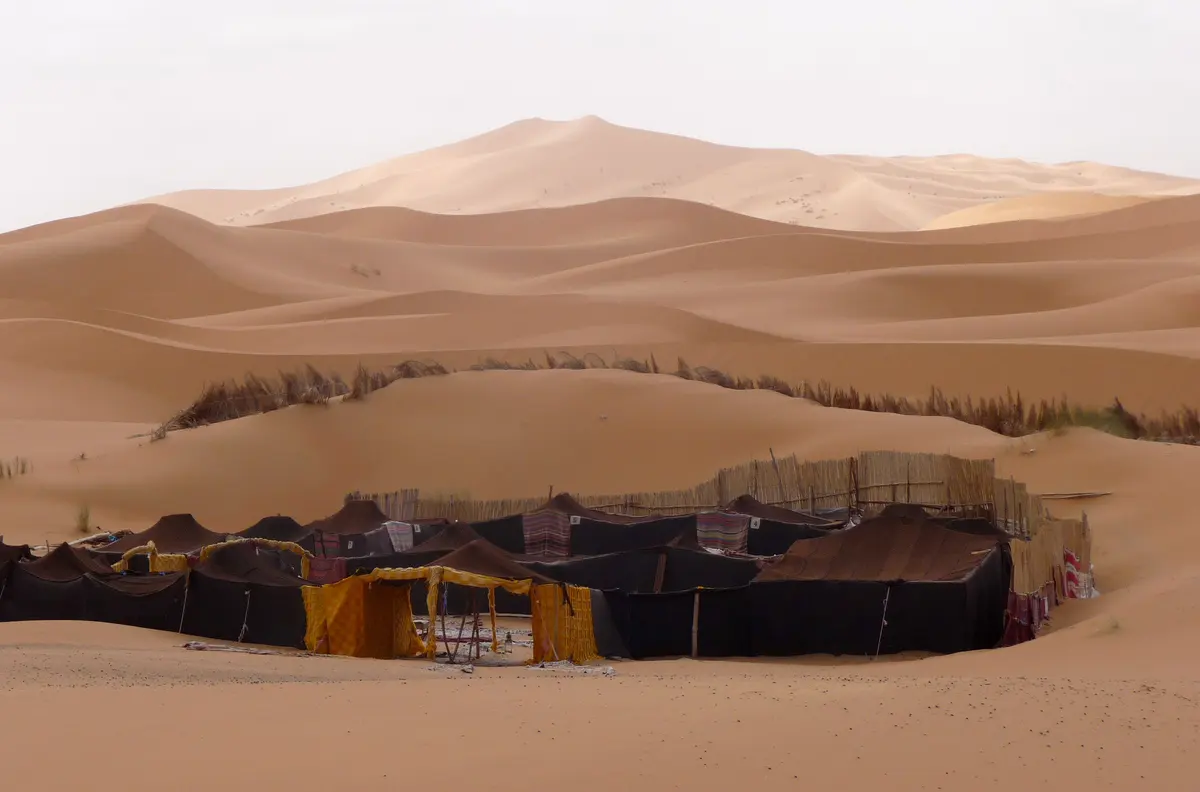 4 days / 3 nights
Marrakech
Two nights in a private-suite camp with proper beds and en-suite bathrooms
From€520 / per person
View tour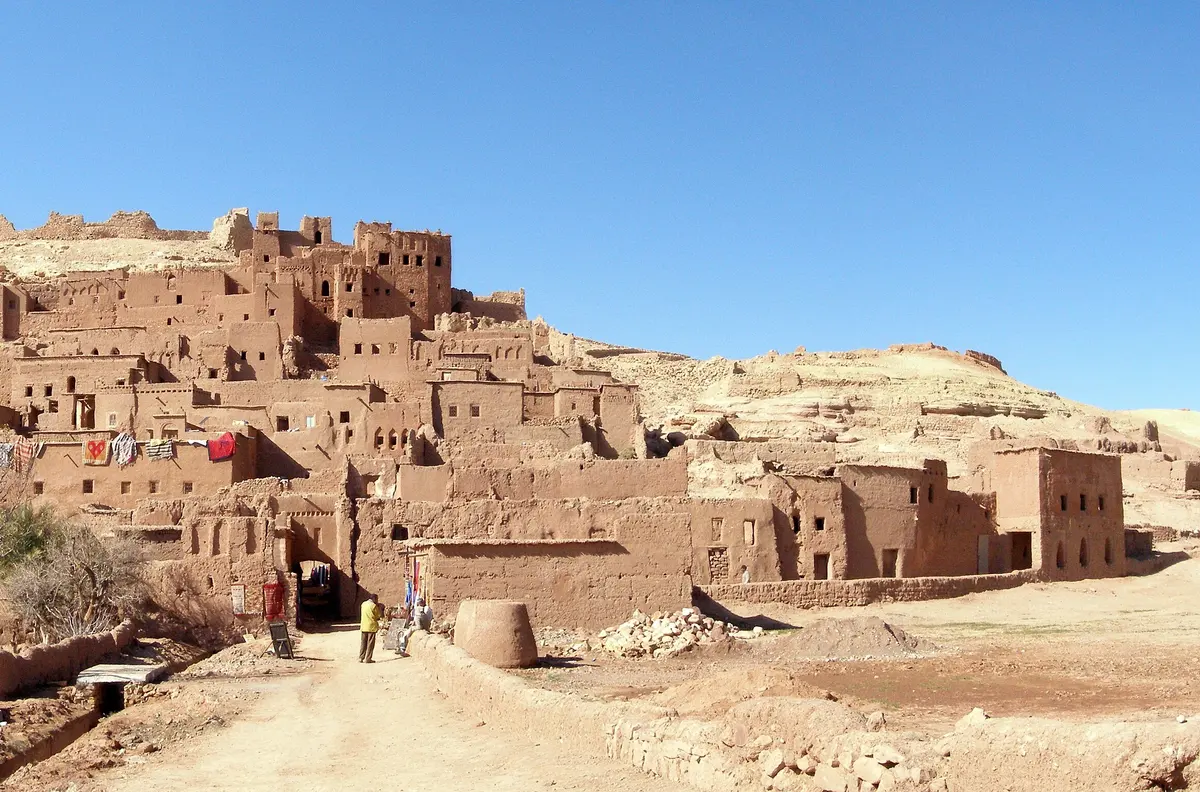 1 day
1 dayMarrakech
Cross the High Atlas at 2,260 m on the Tizi n’Tichka
From€38 / per person
View tourTell us your dates and interests. We reply personally, usually within a couple of hours.
usually within 2 hoursNo deposit to planLicensed tour guide
+212 665 295 999
Try “Sahara”, “3 days”, or “Chefchaouen”.