Updated 5 August 2026
Morocco is a Muslim country where religion sets the shape of the day rather than the rules of your visit. You will hear the call to prayer five times, find shops shut around midday on Friday, and be turned away from almost every mosque. Beyond that, very little is asked of you.
What kind of Muslim country Morocco is
Almost the entire population is Sunni Muslim, following the Maliki school — one of the four traditional schools of Islamic law, and historically the most flexible of them on local custom. Sufism runs deep here too: the zaouias, the brotherhoods, the saints’ tombs, and the moussems held in their honour every summer.
The King is the Amir al-Mu’minin, Commander of the Faithful, a role written into the constitution. That matters more than it sounds. Religious authority runs through the state rather than around it, which is a large part of why Moroccan Islam looks the way it does day to day: conservative in form, socially relaxed, and not much interested in you.
The practical version for a visitor: alcohol is legal, dress ranges from Casablanca office wear to a full djellaba in a mountain village, nobody will ask which faith you hold, and no one will invite you to convert.
The five prayers, and the one before dawn
Prayer is called five times: fajr before sunrise, dhuhr at midday, asr in the afternoon, maghrib at sunset, isha at night. The times move through the year with the sun, which is why nothing here happens at a fixed hour.
The first one is the one visitors notice. In summer, fajr falls around 4.30am, and inside a medina riad with hard tiled surfaces and several hundred minarets within earshot, it is loud. It is not aimed at you and it is not negotiable. Most people stop hearing it by the third night; if you know you will not, ask for a room off the courtyard, or stay in the new town.
Maghrib, at sunset, is the one worth being outside for. Shops pause, the light goes orange, and the call comes across the whole city from a hundred directions slightly out of time with each other.
Friday, and the rhythm of the week
Friday is the day of congregational prayer. Around midday the men go, small shops close for an hour or two, and the souks noticeably thin out. Museums, monuments and restaurants carry on as normal.
It is also couscous day. In most households Friday lunch is couscous, eaten after prayers, and it is the meal to accept an invitation to. If a family asks, cancel whatever else you had planned.
Friday is not a weekend day in the European sense. Offices in Morocco run Monday to Friday with a long Friday lunch, and Sunday is the quiet day.
Mosques: which you may enter, and why
With very few exceptions, mosques in Morocco are closed to non-Muslims. This surprises people who have visited Istanbul or Cairo, where the opposite is true.
The origin is not religious. It is usually traced to a 1912 decree under the French protectorate, which barred non-Muslims from mosques and shrines — a policy of Resident-General Lyautey, sold at the time as protection of Moroccan tradition. It outlasted the protectorate by seventy years and has become the custom it claimed to preserve.
The exceptions and the alternatives:
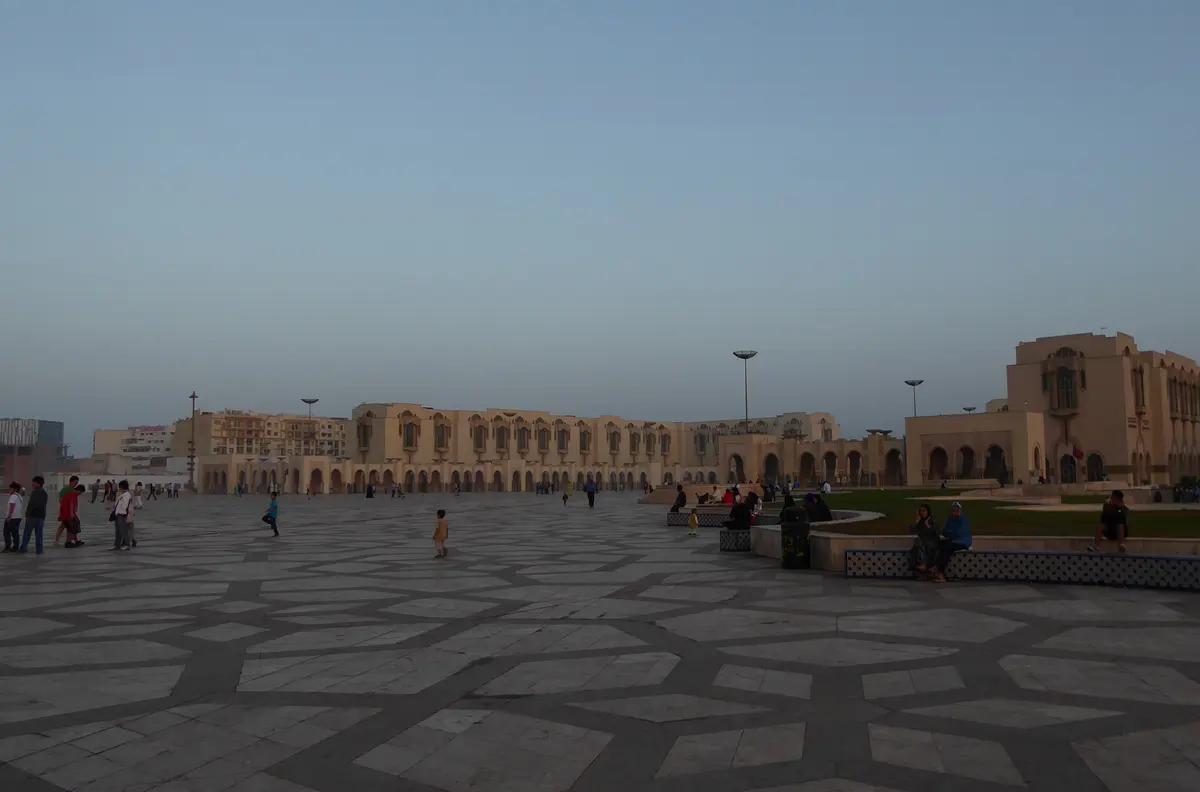
- Hassan II Mosque, Casablanca — admits visitors on guided tours outside prayer times. The main one, and genuinely worth it.
- Tin Mal, in the High Atlas — the other one historically, badly damaged in the 2023 earthquake. Check whether it has reopened before building a day around it.
- Madrasas — the old religious colleges are open to everyone: Ben Youssef in Marrakech, Bou Inania and Al-Attarine in Fes. These are the finest interiors in the country.
- Courtyards and shrine exteriors — often visible, sometimes enterable. Look, do not walk into a prayer hall, and do not photograph people praying.
Nobody will be hostile about this. Someone will simply appear beside you and say no.
Ramadan as a visitor
For one month of the lunar year, most of the country fasts between dawn and sunset — no food, no water, no cigarettes, in a country that can be 40°C. The date moves about eleven days earlier each year, so it drifts across the seasons: check the dates for your year before booking, alongside the best time to visit.
What actually changes:
- Local cafés and restaurants close in daylight. Tourist restaurants and riads serve normally.
- Monuments and museums often keep shorter hours.
- Your driver and guide are fasting. Plan lighter days, and do not schedule a drive that ends at sunset — the roads at ftour are genuinely dangerous, because everyone is hurrying home to eat.
- Shops keep odd hours and reopen after dark, often until midnight.
Then the sun goes down, the first date and the bowl of harira go around, and the whole country exhales. Ramadan evenings are the best atmosphere in the Moroccan year and it is not close.
Eid al-Fitr ends the month and shuts everything for a day or two. Eid al-Adha, roughly ten weeks later, is bigger still: families buy a sheep, transport is packed for days beforehand, and much of the country closes for three days. Neither is a reason to stay away, but both are worth knowing about before you book internal travel.
What respect actually looks like
Not much, and none of it is difficult:
- Ask before photographing people, and never inside or towards a place of prayer.
- Shoulders and knees covered in medinas, villages and religious sites. Hair does not need covering, for anyone. The regional detail is in what to pack.
- Do not eat, drink or smoke in the street in Ramadan daylight.
- Keep affection private and drunkenness indoors.
- Do not walk into a prayer hall, even an empty one.
- Say inshallah and hamdullah if they come naturally. They are ordinary conversational words here, not a claim about your beliefs.
The greetings, the right hand, the tea sequence and the rest of it are laid out in customs and etiquette.
Where visitors worry needlessly
- Your own religion is not an issue. You will rarely be asked, and “I am not religious” is an entirely ordinary answer.
- Alcohol is legal and sold in licensed restaurants, hotels and supermarkets in the new towns. It is not sold inside medinas and nobody drinks in the street.
- You do not have to fast, cover your hair, or pretend to be Muslim in any circumstance.
- Nobody is trying to convert you. Proselytising works the other way here — attempting to convert a Muslim is a criminal offence, which is a reason Moroccans generally avoid the topic entirely.
- You can be in a house while people pray. Nobody expects you to leave the room, though standing directly in front of someone praying is bad manners in the way walking in front of a cinema screen is.
The other faiths
Morocco’s Jewish history is long and unusually well preserved. There are working synagogues and restored cemeteries in Casablanca, Marrakech and Fes, a mellah — the old Jewish quarter — in most imperial cities, and a Jewish museum in Casablanca that is the only one of its kind in the Arab world. The community today is small, a few thousand at most, and its heritage is officially protected.
There are active Catholic and Anglican churches in Casablanca, Rabat, Tangier and Marrakech, serving European residents and a large West African congregation. The constitution guarantees the free exercise of faith. The one line that is not crossed is conversion.
Our guides brief clients on all of this in the car on the first morning, before it can matter. The point is not a list of prohibitions — it is that once you understand what the day is shaped around, almost nothing about Morocco reads as strange.
Tell us what you want from your trip, or read the rest of the Moroccan culture guide.
Frequently asked questions
Why are mosques in Morocco closed to non-Muslims?
The rule is usually traced to a 1912 decree under the French protectorate, which barred non-Muslims from mosques and shrines. It outlasted the protectorate by seventy years and became the custom it claimed to protect.
Which mosques can you visit in Marrakech?
None of the working mosques, including the Koutoubia — you can walk the gardens and photograph the minaret, and that is all. The Ben Youssef madrasa nearby is open to everyone and is the finer interior anyway.
Is Morocco a strict Islamic country?
No. Morocco is almost entirely Sunni Muslim of the Maliki school, with a strong Sufi tradition, and daily life is relaxed. Alcohol is legal, dress varies widely by city, and nobody will ask you about your own religion.
How early is the first call to prayer?
Fajr is called before dawn — roughly 4.30am in midsummer and closer to 6am in winter. In a medina riad you will hear it clearly. Most visitors stop noticing by the third night.
What happens on Friday in Morocco?
Congregational prayer around midday empties the streets for an hour or two, and many small shops close. It is also couscous day in most households. Museums and monuments keep normal hours.
When is Ramadan in Morocco?
It moves about eleven days earlier each year against the Western calendar, so it drifts through the seasons — February in 2027, January by 2028. Confirm the dates for your year before you book, and expect Eid al-Fitr to close things for a day or two afterwards.
Is it rude to eat in front of someone who is fasting?
Not rude, but conspicuous. Eating, drinking and smoking in public during Ramadan daylight is legal for visitors. Doing it discreetly, indoors, is what any Moroccan who is not fasting would do.
Are there Jews and Christians in Morocco?
Yes. Morocco has a small but historic Jewish community with working synagogues in Casablanca, Marrakech and Fes, and active churches in the big cities. Attempting to convert a Muslim is a criminal offence; talking about your own faith is not.