The Best Time to Visit Morocco, Region by Region
The best time to visit Morocco is March–May and September–November — but only for some trips. Real month-by-month temperatures for Marrakech, the Sahara, the coast.
Hajar
Founder & lead guide
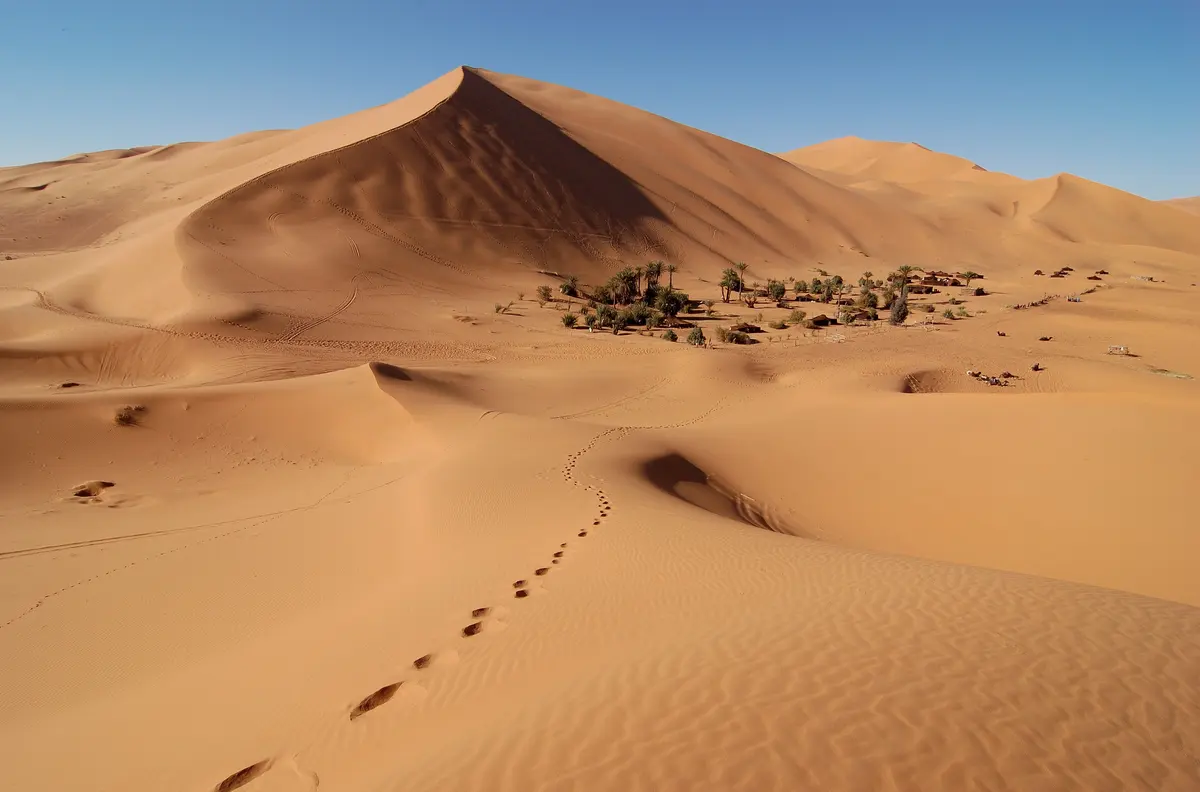
The best time to visit Morocco is March to May, and September to November. Spring and autumn are comfortable almost everywhere in the country, and if nothing constrains your dates, book then.
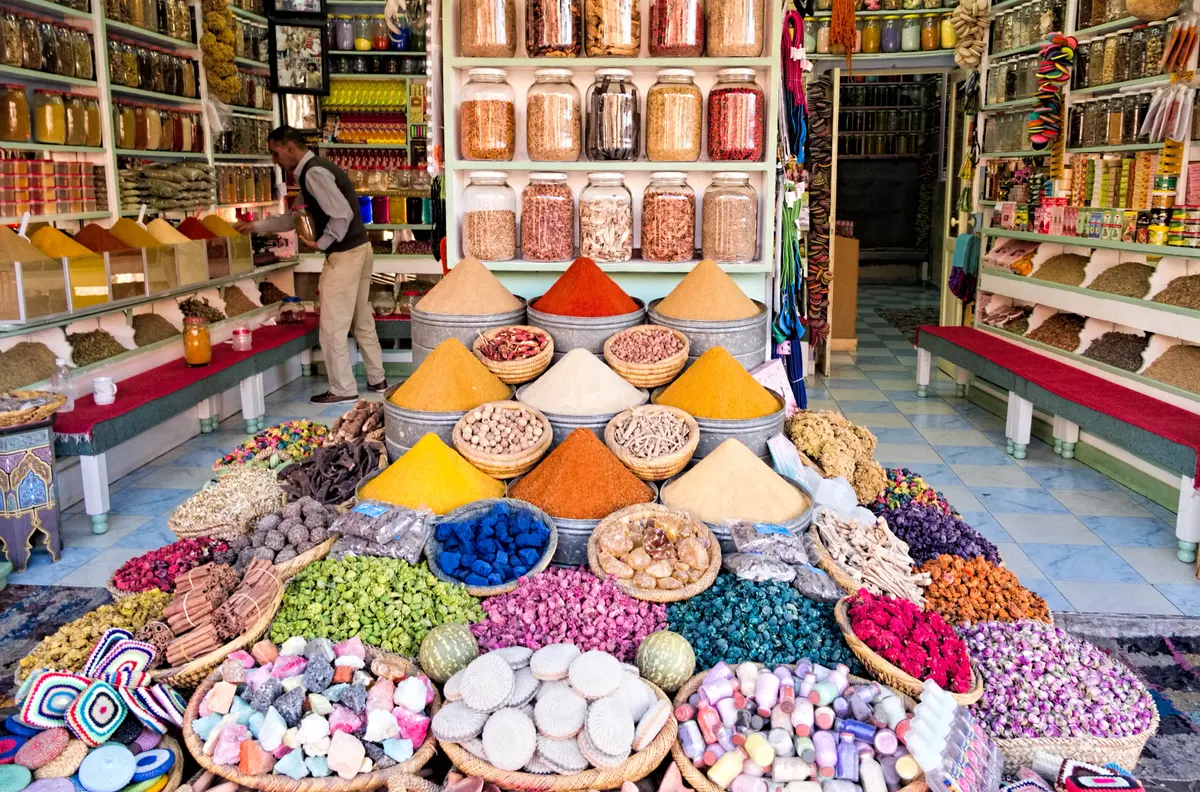
But that answer is only true for some trips. Morocco is not one climate — it is five, running at once, and in January they are doing opposite things. The month that is perfect for the desert is the month the Atlas passes can close. The month Marrakech is glorious is the month Essaouira is unswimmable. (Once you have picked the month, the things to do in Marrakech page covers the hours — several sites are unbearable by ten in the morning.)
So the real question is not when should I go to Morocco. It is where am I going, and what am I doing there.
Why there is no single best time to go to Morocco
Morocco is five climates, not one.
| Region | What drives it |
|---|---|
| Atlantic coast — Essaouira, Agadir, Taghazout | Ocean. Mild all year, windy in summer, never very hot |
| Marrakech plain | Continental. Brutal in July and August, perfect in spring and autumn |
| High Atlas — Imlil, Toubkal, the passes | Altitude. Snow December to April, passes can close |
| Pre-Sahara and desert — Merzouga, Erg Chigaga | Extreme range. 45°C days in summer, near-freezing nights in winter |
| North and Rif — Tangier, Chefchaouen, Fes | Mediterranean. Genuinely wet in winter |
Two places three hours apart can need different clothes in the same week. That is the entire planning problem.
Month by month
Typical daytime highs. Treat these as the shape of the year, not a forecast.
| Month | Marrakech | Merzouga | Essaouira | Notes |
|---|---|---|---|---|
| January | 18°C | 18°C | 17°C | Atlas under snow. Desert nights near 0°C |
| February | 20°C | 21°C | 18°C | Almond blossom in the Dades valley |
| March | 23°C | 25°C | 19°C | Very good. Green everywhere |
| April | 26°C | 29°C | 20°C | Arguably the best month overall |
| May | 30°C | 34°C | 21°C | Excellent, desert heat building |
| June | 35°C | 39°C | 22°C | Desert becoming hard work |
| July | 38°C | 43°C | 23°C | Too hot inland. The coast is the answer |
| August | 38°C | 42°C | 24°C | Same, plus peak domestic crowds |
| September | 33°C | 37°C | 24°C | Cooling. Sea at its warmest |
| October | 28°C | 30°C | 23°C | Excellent everywhere |
| November | 23°C | 24°C | 21°C | Very good, and quieter |
| December | 19°C | 19°C | 18°C | Cool days, cold nights, festive in the riads |
The Sahara: two things decide it
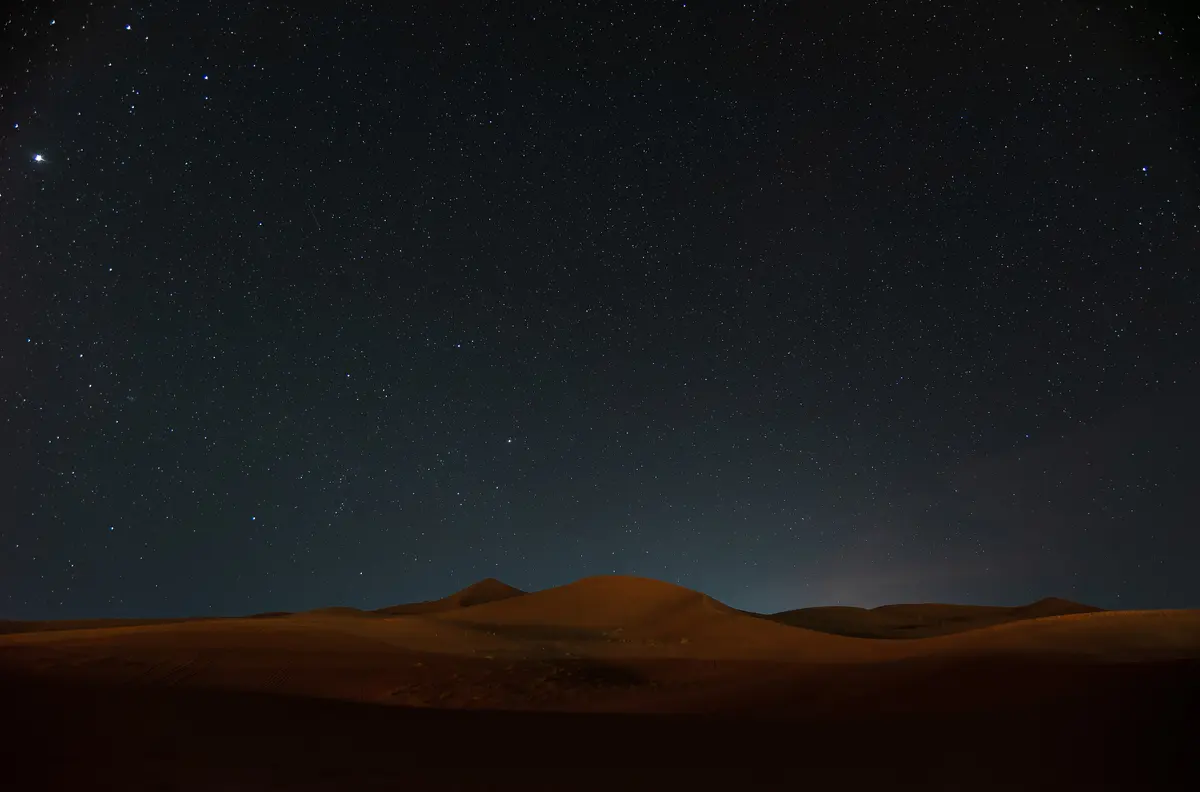
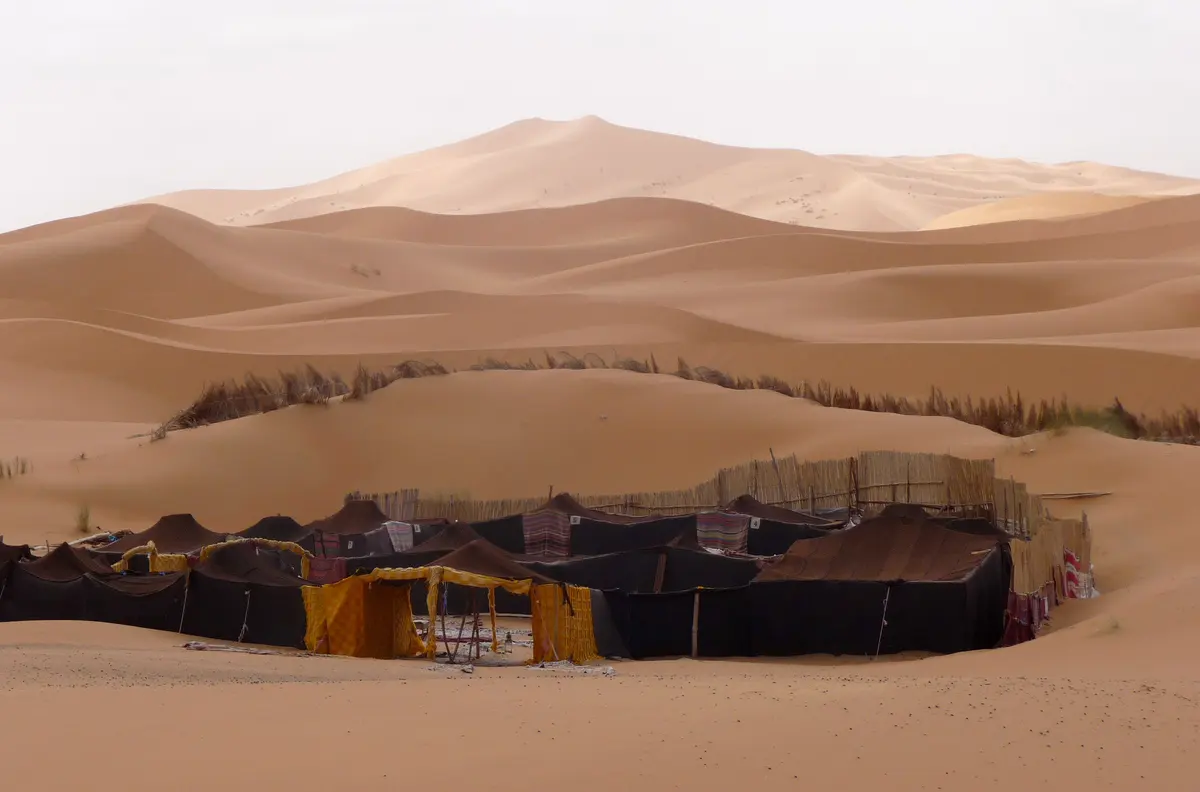
Everyone asks about daytime heat. In a desert camp, the night matters more.
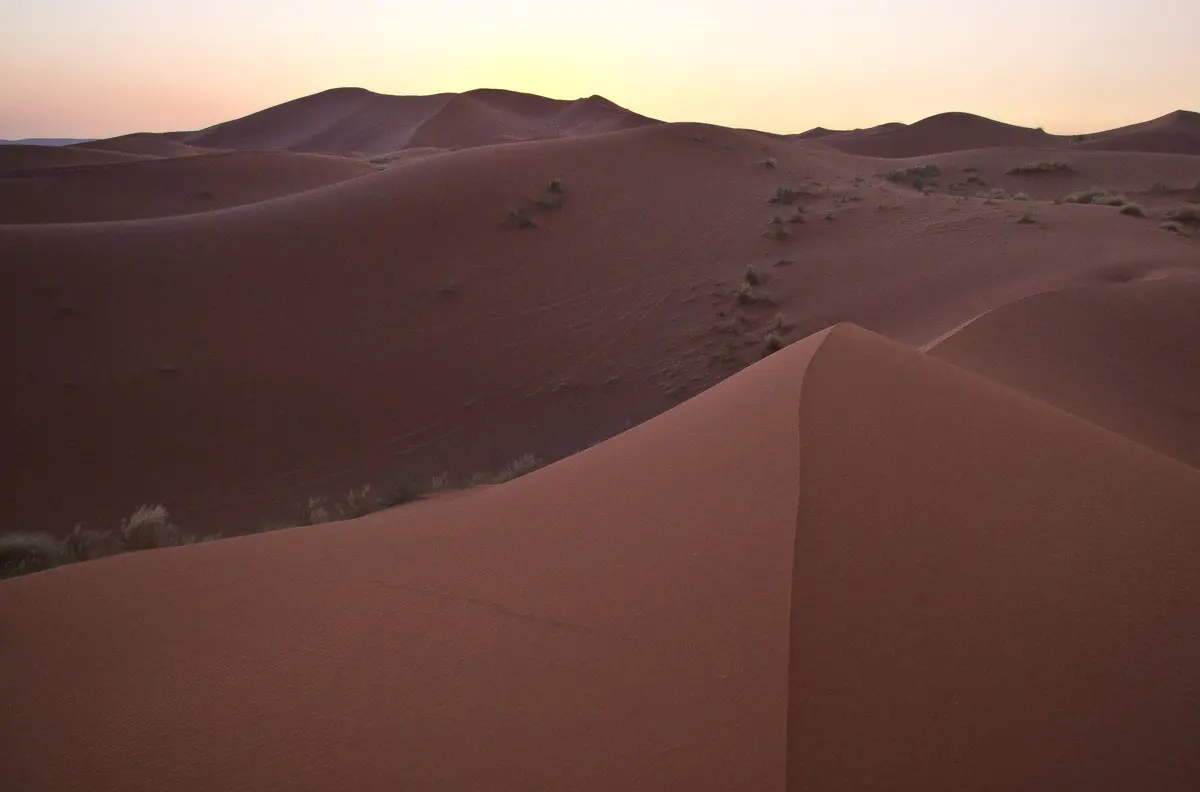
October, November, March and April are the desert months. Warm days, tolerable nights, good light.
December to February — days are pleasant, around 18–20°C, and genuinely lovely for walking. But camp nights drop to near freezing. Camps provide heavy blankets and it is still cold. Nobody is neutral about it.
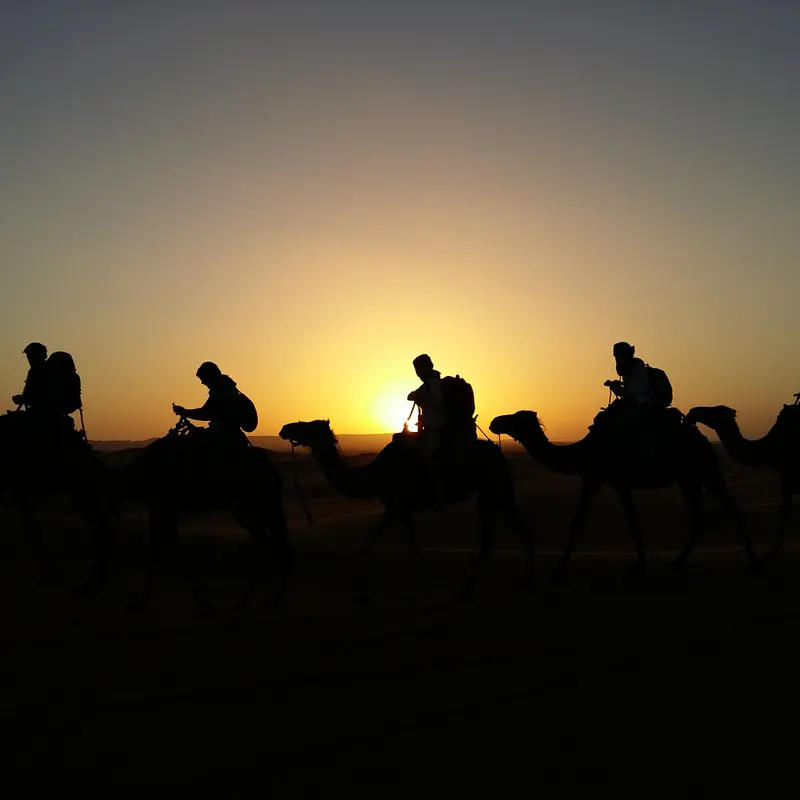
June to August — 42–45°C. We will still run it, but the camel trek moves to the last hour before sunset, and we say plainly that midday is for lying still.
If the desert is the reason you are coming: October or April.
The Atlas and Toubkal
Trekking season is May to October. Wildflowers in May and June, stable weather in September and October.
Toubkal between December and April is a mountaineering objective, not a hike. It needs crampons, an ice axe, and the experience to use them. We do not take beginners up in those months, and an operator who says otherwise is selling you a risk you have not understood.
The Tizi n’Tichka pass — the main road from Marrakech to Ouarzazate and the desert — can close in heavy snow. Usually for hours, occasionally a day. If your itinerary crosses it in January or February, build in slack.
The coast: the wind nobody mentions
Essaouira’s summer wind is what guidebooks leave out. From June to August it blows hard and constantly. It is why the town is a world-class kitesurfing destination, and why sunbathing there in July is an argument with sand.
For a beach day rather than a board, go in May, September or October. Agadir, further south and more sheltered, is the better swimming option in summer.
Sea temperature peaks in September, not August — around 21–22°C, which is still the Atlantic.
Crowds and prices
Peak: April, May, October, and the Christmas–New Year window. Book riads and desert camps well ahead.
Shoulder: March, June, September, November. Our preferred compromise — good weather, room to move.
Low: January and February (except New Year), plus high summer inland. Cheapest, and Jemaa el-Fna genuinely breathes.
Aït Benhaddou and the Majorelle garden are where crowding changes the experience most. Both are transformed by arriving at opening.
Ramadan and the holidays
Ramadan moves about eleven days earlier each year. In 2027 it falls roughly mid-January to mid-February; in 2028, early January.
Travelling during Ramadan is entirely possible and in some ways better. Tourist restaurants stay open. The evening, when the fast breaks, has an atmosphere available at no other time of year, and an invitation to eat is worth accepting.
What changes: some rural cafés close during daylight, afternoons are slower, and drivers and guides are fasting — we schedule lighter days for that reason. Eid al-Fitr and Eid al-Adha are family holidays; transport books out and many small businesses close for several days.
If you can only travel in July or August
School holidays are school holidays. It is workable — but change the itinerary, not the dates.
Build around coast and altitude instead of desert and plain: Essaouira, Agadir or Taghazout for the ocean; Imlil and the Atlas valleys, ten degrees cooler than Marrakech, where the rivers are the point. Do Marrakech in short early-morning bursts with a long afternoon break, and treat the desert as two nights maximum, with sunrise and sunset activity only.
Morocco: best time to visit, by trip type
The best time of year to travel to Morocco depends far more on what you are doing than on the calendar.
| You want | Go in |
|---|---|
| First trip, a bit of everything | April, October |
| Sahara and desert camp | October, November, March, April |
| Trekking and the Atlas | May, June, September |
| Beach and surf | September, October |
| Photography | November, February — low light, clear air |
| Fewest people | January, February |
| Family with school-age children | Easter, late October |
When is the best time to visit Morocco? Twelve months, ranked honestly
- October — the best all-rounder. Everything open, warm not hot, kind desert nights
- April — near-equal. Green Atlas, mild desert, spring light
- March — very good, cooler, fewer people
- November — excellent value, quiet, still warm
- May — great, heat building inland
- September — hot inland, but the sea is at its best
- February — cold nights, beautiful clear days, blossom
- December — cool and festive, cold in camp
- June — fine on the coast and in the mountains, hard in the desert
- January — quietest, coldest, cheapest
- July — coast and altitude only
- August — as July, plus the biggest crowds
Last place does not mean “don’t come”. It means “come, and build the trip differently”.
If you want the one-line version: the best times to visit Morocco are October and April. Everything after that is a trade-off between heat, crowds and price.
Tell us your travel month and we will tell you honestly what it costs you and what it buys you — including when we think you should move your dates.
Related tour
Marrakech to Fes Desert Tour: 3 Days to the Sahara
From €155 · 3 days / 2 nights
Morocco, once a month
Route ideas, when to book, and the odd honest warning about tourist traps. No spam, unsubscribe anytime.
Thanks — check your inbox to confirm.