Updated 5 August 2026
Can you drink alcohol in Morocco? Yes. It is legal, it is produced here, and it is served in licensed restaurants, hotel bars and nightclubs, and sold in the licensed sections of large supermarkets. Three practical conditions: not inside the medinas, never in the street, and much less of it during Ramadan.
That is the whole answer. The rest of this page is where, how much, and what changes when.
Can you drink alcohol in Morocco? The three conditions
One: geography. Alcohol lives in the new towns. Gueliz and Hivernage in Marrakech, the corniche in Casablanca, the seafront hotels in Agadir. Inside the old walled cities there is almost nothing, because licences are not granted there.
Two: never in public. Not on a bench, not walking, not on the square. This is not a law you will be arrested under so much as a line that nobody crosses. Being visibly drunk in public is one of the few things that will genuinely lower how you are treated.
Three: Ramadan. For one month a year, most of this stops. See below.
Morocco is a Muslim country where alcohol is legal, produced commercially and quietly consumed. Both halves of that sentence are true, and most travel writing manages only one of them.
Where to buy alcohol in Marrakech, and the medina problem
The licensed section of a large supermarket in the new town is where most people buy. It is usually a separate room at the back or through its own door, and it is entirely unremarkable — you queue, you pay, nobody comments.
The medina has none. If you are staying inside the walls, buying a bottle is a taxi ride each way. Go in the afternoon rather than the evening, take a bag that is not transparent, and expect the section to close earlier than the rest of the shop.
One honest warning: supermarket chains here have changed their alcohol policy before, sometimes withdrawing it entirely. Do not plan an evening around one specific shop. Ask your riad where their guests currently go — they will know this week’s answer.
Places to drink in Marrakech
Hotel bars. The most reliable option. The four- and five-star hotels in Hivernage and on the Route de Casablanca all have them, and almost all serve non-residents.
Gueliz. Bars, brasseries and licensed restaurants, mostly on and around the main avenues. This is where Marrakech’s own middle class drinks.
Rooftops. A handful in the medina are licensed, and they are pleasant at sunset. Understand what you are buying: the view first, the drink second, the food third.
Nightclubs. Hivernage, expensive, and a genuine scene rather than a tourist facsimile. Not for everyone and not cheap.
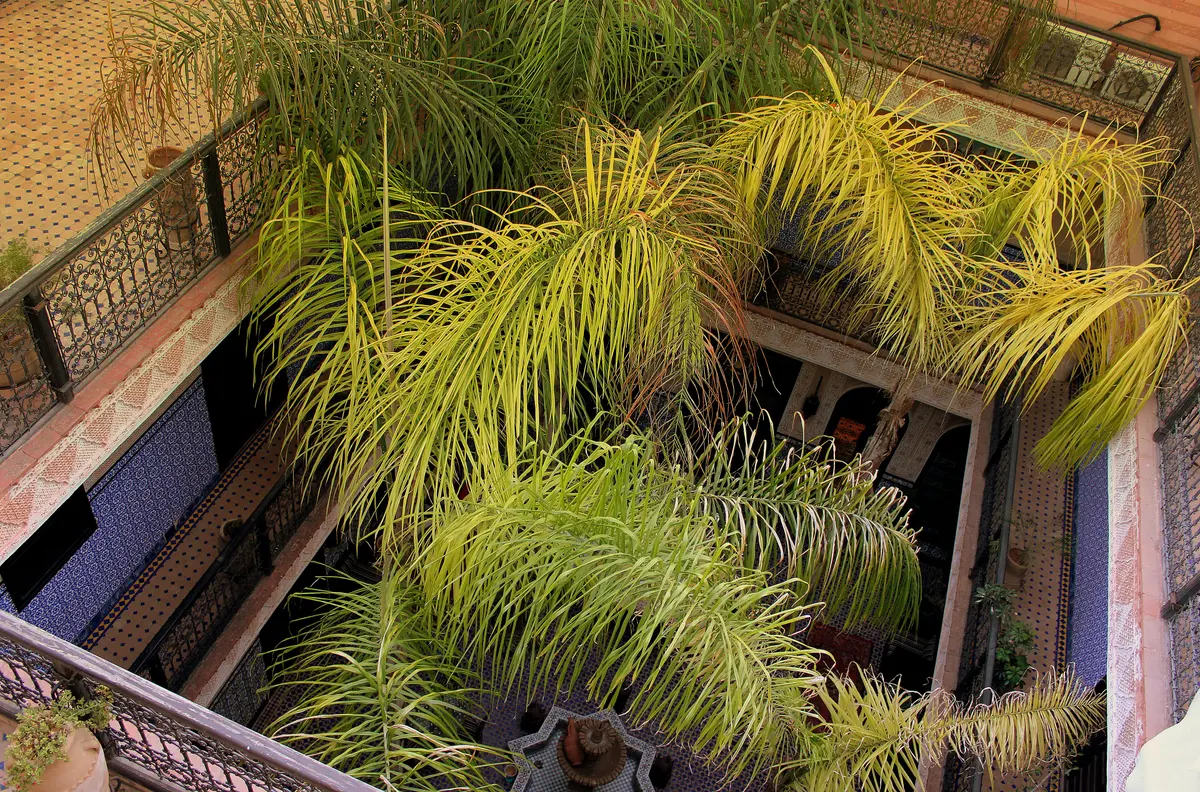
Riads. Most are dry. Some are licensed. A good number of the unlicensed ones will happily let you drink your own on your own terrace if you ask — and will say no if the answer is no. Ask before booking, not on arrival.
How to tell if a restaurant is licensed before you sit down
Look for a wine list on the menu displayed outside — Moroccan restaurants that serve alcohol advertise it, because it is a selling point. If there is no drinks page, there is no drinks page.
In the medina, assume unlicensed unless it says otherwise. In Gueliz and Hivernage, assume licensed unless it is a small local place. Any restaurant attached to a hotel will serve.
If wine with dinner matters to you, say so when you book. It is a normal request and it genuinely changes which restaurants make sense.
What it costs
Deliberately given as relationships rather than fixed numbers, because alcohol prices here move faster than food prices.
| Where | Relative cost |
|---|---|
| Supermarket, local beer | The baseline |
| Bar or licensed restaurant, same beer | Several times the supermarket price |
| Hotel bar or rooftop cocktail | Several times that again |
| Moroccan wine, restaurant bottle | Around the price of a main course, and up |
| Imported spirits | Heavily taxed, and priced accordingly |
Alcohol is taxed and it is the line on a Morocco bill most likely to surprise a European. Everything else here is cheaper than home; this is not. The wider cost picture is in money and tipping.
Moroccan wine and beer worth ordering
Morocco has a real wine industry, mostly around Meknès and Benslimane, and the wine is considerably better than most visitors expect.
Reds and rosés are the strength — the climate suits them. Volubilia and Médaillon are widely available and consistently decent, and there is a small organic estate near Essaouira whose wines turn up on coastal menus. The rosé, served cold, is the honest recommendation for a hot afternoon.
Beer: Casablanca is the flagship, Flag Spéciale is the everyday one, and Stork is the cheap one. All are lagers and all are fine.
Ordering the local wine rather than an imported one saves you a substantial amount and is usually the better bottle at the price.
Ramadan
Availability drops sharply for the month.
The licensed sections of supermarkets generally close entirely. Many bars shut. Hotels usually continue to serve residents in-house, and some licensed restaurants continue quietly, but nothing is guaranteed.
The practical advice is to assume you cannot buy alcohol during Ramadan and treat anything you find as a bonus. What else changes during the month — the hours, the driving, the extraordinary evenings — is covered in culture and etiquette.
Outside Marrakech
Fes — more conservative than Marrakech. Hotel bars in the new town, very little in the medina.
Chefchaouen — a conservative mountain town with very limited options. A few places serve; most do not. Do not plan a wine-with-dinner trip around Chefchaouen.
Essaouira — easier. A number of licensed restaurants and hotels along the seafront and in the medina, helped by decades of visitors.
Casablanca and Rabat — the easiest cities in the country for this by a distance.
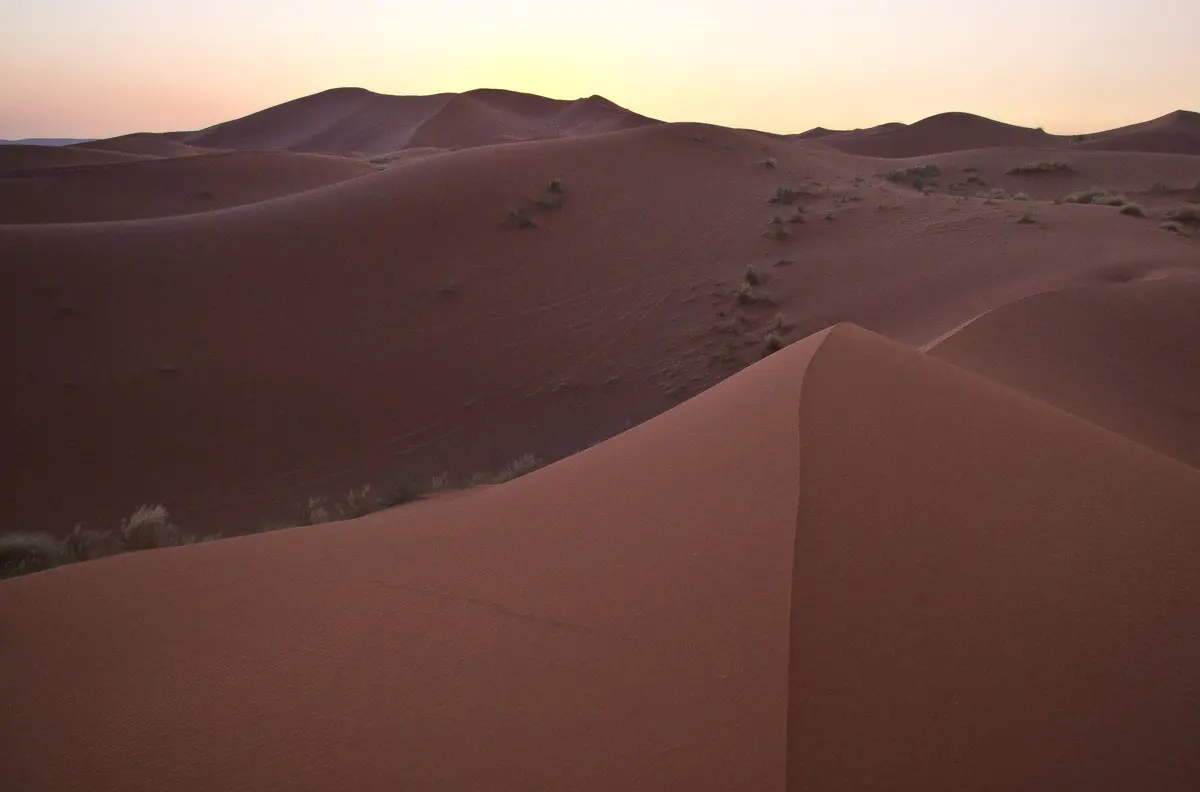
Desert camps — generally dry. Most camps will let you bring your own if you ask in advance, and the luxury camps often have a bar. This is exactly the sort of thing to settle before you leave Marrakech rather than at the end of a six-hour drive.
Drinking in public, and why nobody does
You will not see anyone drinking outdoors in Morocco. Not on a beach, not in a park, not walking between bars.
That is not squeamishness on our part; it is simply how it works, and visitors who ignore it stand out in a way that changes every subsequent interaction. Drink in the bar, in the restaurant, on your own terrace. Take the taxi rather than walking back loudly.
Nothing about this requires you to hide, apologise or pretend. It requires the same judgement you would apply anywhere.
Bringing it in
There is a duty-free allowance for travellers arriving in Morocco, and there are duty-free shops after passport control at the main airports — worth knowing if you are heading straight to the medina or the desert. Allowances change, so check the current Moroccan customs limit before you fly rather than relying on a travel page, including this one.
If wine with dinner matters to you, tell us on the enquiry form. We pick licensed riads and restaurants, and we tell desert camps in advance. It is a genuine trip-shaping preference and it costs nothing to state.
Tell us what you want from your trip. If you want to know what you will actually be drinking most of the time, that is mint tea — and a few words of the local language go further than you expect.
Frequently asked questions
Can you drink alcohol in Morocco?
Yes. It is legal, produced here, and served in licensed restaurants, hotel bars, nightclubs and the licensed sections of large supermarkets. Three practical limits — not inside medinas, not in the street, and reduced availability during Ramadan.
Can you buy alcohol in Marrakech?
Yes, in the licensed section of the big supermarkets in Gueliz and the other new-town districts, and in specialist shops. Not in the medina. Take a taxi, bring a bag, and go before the evening.
Where to buy alcohol in Marrakech?
The supermarkets in Gueliz and the newer districts have a separate licensed section, usually at the back or through its own door. Chains change policy on this, so do not build an evening around one shop — ask your riad where their guests currently go.
Where to drink alcohol in medina Marrakech?
In licensed riads and a small number of licensed restaurants and rooftop bars. The medina has very few, they are not obvious from the street, and most riads are dry. Ask before you book if it matters to you.
Is there alcohol in Marrakech?
Plenty, in the right districts. Gueliz and Hivernage have bars, licensed restaurants, hotel terraces and nightclubs. The medina is the exception, not the rule.
How much is a beer in Marrakech?
Cheapest from a supermarket, several times that in a bar or restaurant, and highest in a hotel or a rooftop with a view. Expect a large multiple between the supermarket price and the terrace price. Check current prices — they move.
Can you drink alcohol in Morocco during Ramadan?
Availability drops sharply. Licensed shop sections generally close for the month and many bars shut. Hotels usually continue to serve residents. Assume you cannot buy it and be pleasantly surprised.
Is alcohol allowed in Marrakech?
Yes, in licensed premises and in private. What is not acceptable is drinking in the street or being visibly drunk in public, which will change how you are treated faster than almost anything else.
Can you bring alcohol into Morocco?
There is a duty-free allowance for arriving travellers, and there are duty-free shops after passport control at the main airports. Limits change — check the current Moroccan customs allowance before you fly rather than assuming.