Updated 5 August 2026
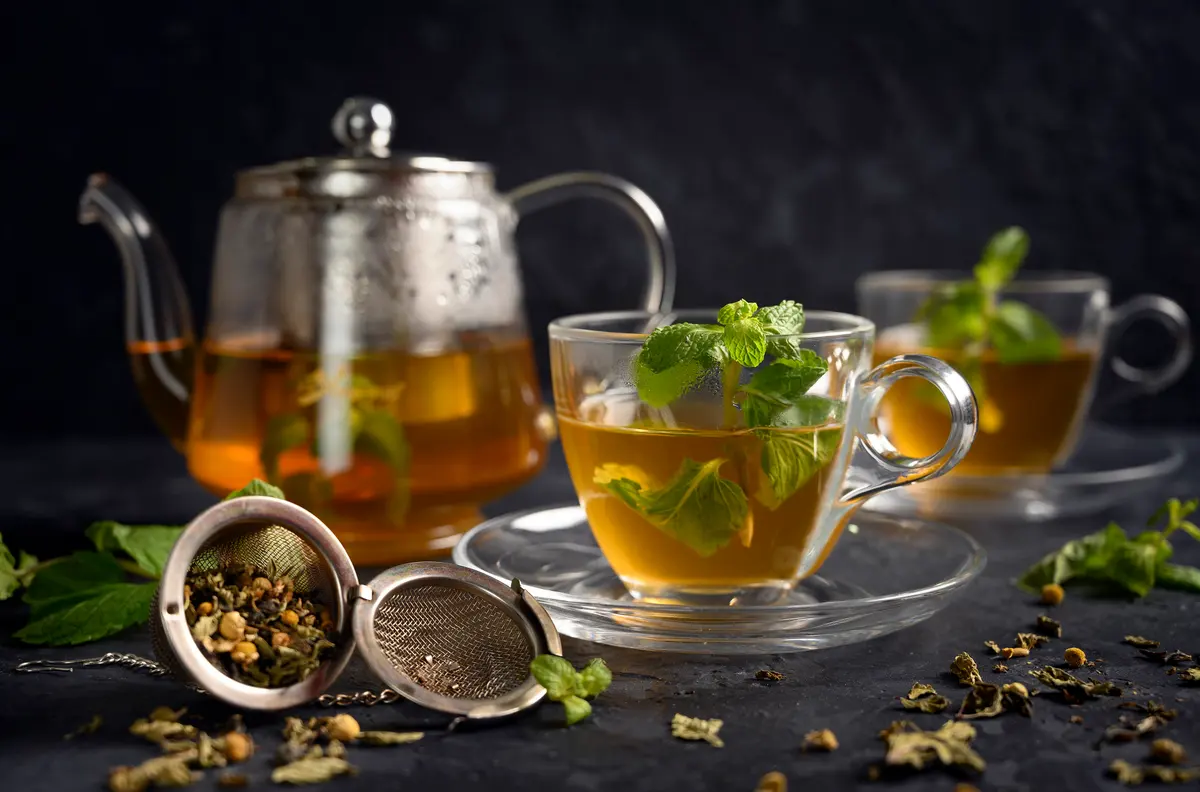
Moroccan drinks start and end with mint tea: Chinese gunpowder green tea, a large bunch of fresh spearmint, and a lot of sugar, poured from height into small glasses. It is caffeinated, because it is green tea. The pour is not just for show — it aerates the tea and builds the foam that tells you it was made properly.
You will be handed a glass on your first day and roughly forty more times after that. Here is what is actually going on.
Mint tea, Morocco’s most-performed ritual
Search mint tea Morocco and you get four hundred photographs of a pour and almost nothing about the method. The method is the interesting part.
A Marrakech mint tea in an ordinary café costs roughly 5 to 15 dirhams and comes with a small plate of the same sweets everyone gets. In a rooftop café aimed at visitors it costs several times that and is usually worse, because it has been made in advance.
How it is really made
Not the version on recipe sites.
Boiling water goes onto the gunpowder leaves, is swirled once and thrown away — that first rinse carries the dust and the bitterness. Fresh water goes on, the pot sits on the heat, and the sugar goes in while it brews, not at the table. A large bunch of spearmint is pushed in near the end so it infuses without stewing.
Then the pot is poured out into a glass and returned to the pot two or three times. That is not decoration either: the sugar sits at the bottom and the tea at the top, and pouring it back is how you mix it without a spoon.
Only then does it get poured properly, from as high as the pourer can manage without spilling.
The foam is the point. A glass with a good head on it was poured well. A flat glass was rushed.
The sugar, and how to ask for less
It is extremely sweet. Traditionally the sugar comes from a cone of loaf sugar, broken with a small hammer, and a serious pot takes a serious piece.
You are completely within your rights to ask for it without sugar, or with less. Nobody is offended, every café understands the request, and it is increasingly common among Moroccans too. If you want the flavour without the caffeine, ask for mint only and no tea leaves — that is a normal order.
You do not need any Darija to do this, though a few words go a long way generally; that is covered in what language they speak in Morocco.
Three glasses, and when tea means something
There is a saying you will hear about the three glasses — the first gentle as life, the second strong as love, the third bitter as death. It is quoted more by guides than by families, but the underlying convention is real: three glasses is the sequence, and the third is understood to be optional.
In a home, the first glass matters. Refusing it is close to refusing the household. Take it even if you do not drink it — hold the glass, then set it down. The offer is what is being accepted, not the liquid. The wider etiquette is in culture and etiquette.
When tea is hospitality and when it is a sales tactic
Both are real and it is worth knowing which one you are in.
In a home, a village, a workshop, a café, at a roadside stop — it is hospitality, it costs you nothing, and accepting it is the correct move.
In a carpet shop, a spice shop or an argan co-operative on the road to Essaouira — the tea is the opening of a negotiation. Sitting down with a glass creates an obligation, and the seller knows exactly what he is doing. That is not sinister; it is a skilled trade practised daily.
The honest advice: accept the tea if you might genuinely buy, and decline politely if you will not. “No thank you” while continuing to walk works perfectly. What does not work is drinking three glasses and then leaving — that is the interaction everyone finds awkward.
You will also be told, repeatedly, that mint tea is “Berber whisky”. It is a joke about the absence of alcohol, and it will be made to you on day one. What the real position on alcohol in Morocco is, we cover separately.
Coffee in Marrakech, and the café that is all men
Most urban Moroccans drink coffee in the morning, not tea. The coffee Marrakech actually drinks is French-descended and strong: espresso, café cassé (espresso with a dash of milk), and the standard order, the nous-nous — half coffee, half milk, in a small glass.
One thing to prepare for: many neighbourhood cafés, particularly the ones with chairs facing the street, are effectively male spaces. Nobody will be hostile and women are not turned away, but it is noticeable. Cafés in the new town and anywhere near tourist areas are entirely mixed. This is one of the few places where the safety and social climate for women question has a practical, undramatic answer.
The other Moroccan drinks you will be offered
Ask what Morocco drinks besides tea and the first honest answer is coffee, in quantity. After that:
Fresh orange juice. On Jemaa el-Fna it is squeezed in front of you and it is very good. The price is a few dirhams and it is quoted, not posted — ask before, not after. Do not accept a bottle that has been filled in advance.
Avocado and almond milkshake. Thick, sweet, sometimes with dates. A Marrakech speciality that surprises people. Half a meal.
Raïb and leben. Fermented milk, sold cold in cartons and in cafés. Sour, thin, and much loved. Try it once and decide.
Sugarcane juice, pressed at street carts in the south.
Pomegranate juice in autumn, when the fruit is everywhere and cheap.
Fizzy drinks, in enormous quantity, everywhere.
There is no wine culture at the table in most of the country and no beer with lunch. What you drink with food is water, or a soft drink, or nothing.
Is it safe?
Tea and coffee: yes, without qualification. The water is boiled and the glasses are washed hot.
Fresh juice: yes, if it is squeezed in front of you. Ice in cities is factory ice and not a problem. The genuine risks around food and water are covered in street food and how to pick a stall.
In the desert, and why it tastes different
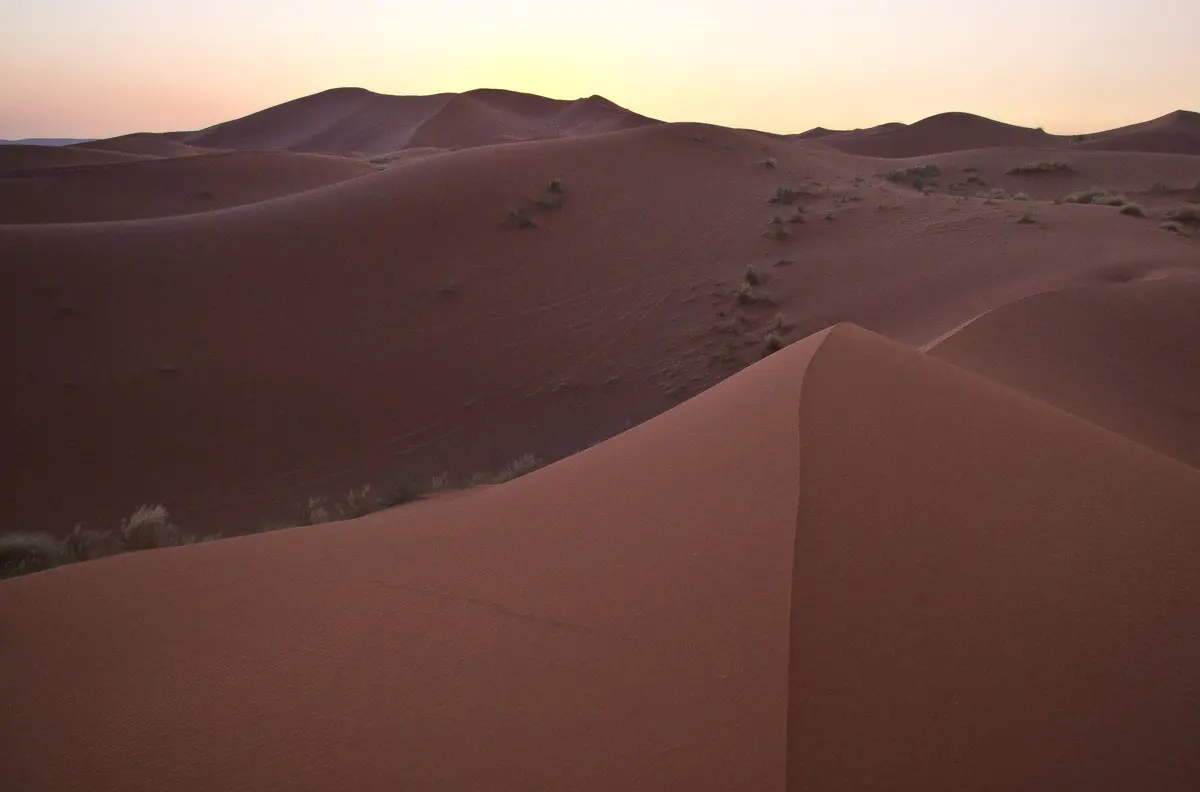
The tea you are given at a Sahara camp is made on a small gas ring or on coals, often with less mint and more sugar, and it is poured for you rather than by you. It is a formal act of welcome and it is the first thing that happens when you arrive.
It also tastes better, which is partly the setting and partly that nobody in the desert is in a hurry. If one image of Morocco stays with people, it is usually this one — described in more detail in what a desert camp is actually like.
Taking it home
Buy the gunpowder tea — a plain box from a grocer, not a decorated tin from a souk stall at four times the price. Buy the small glasses if you want them; they are cheap and they travel badly, so wrap them properly.
What you cannot buy is the mint. Moroccan spearmint is a specific, strong-flavoured variety and the supermarket mint you get at home will not taste the same. That is not romanticism, it is horticulture.
Every driver we work with stops for tea. It is not on the itinerary and it is not costed; it is simply what happens on a long road, usually somewhere you would never have stopped.
Tell us what you want from your trip, or start with what Moroccan food actually is.
Frequently asked questions
What is Moroccan mint tea?
Chinese gunpowder green tea brewed with a large bunch of fresh spearmint and a great deal of sugar, poured from height into small glasses. It is caffeinated — it is green tea, not a herbal infusion.
Why is Moroccan tea poured from a height?
To aerate it and build the foam on top, and to cool it slightly on the way down. The foam is the mark of a good pour. It is also, honestly, a bit of a performance, and everyone knows that.
Why is Moroccan tea so sweet?
Because sugar is part of the recipe rather than an addition — it goes into the pot, not the glass. A traditional pot can take a large piece of sugar loaf. Asking for it unsweetened is completely normal and nobody is offended.
Is it rude to refuse mint tea in Morocco?
Refusing the first glass in someone's home comes close to refusing the household. Refusing the third is normal and expected. If you cannot drink more, take the glass, hold it, and set it down — the gesture is what is being offered.
Is Moroccan mint tea safe during pregnancy?
It contains caffeine because it is green tea, and it carries a lot of sugar. Spearmint infusions themselves are widely drunk, but caffeine intake in pregnancy is a question for your midwife or doctor, not for a travel page. Ask for mint-only, no tea leaves, if you want the flavour without it.
Is it safe to drink tea in Morocco?
Yes. The water is boiled for the pot, the glasses are washed in hot water, and tea is one of the safest things you can accept anywhere in the country.
What is Berber whisky?
A joke, and you will hear it four times a day. It means mint tea, and it is said because alcohol is not part of most Moroccan households. Laugh the first time; you are allowed to stop after that.
What is a nous-nous?
Half coffee, half milk, in a small glass. The standard Moroccan café order and the reason nobody asks for a latte.
What do Moroccans drink besides tea?
Coffee, a great deal of it. Fresh orange juice, avocado and almond milkshakes, fermented milk, and in summer whatever fruit is in season, blended. Fizzy drinks everywhere. Tap water at home.