Updated 4 August 2026
Is Morocco safe? Yes. Violent crime against visitors is rare, and I have guided here for years without an incident. What you will meet is commercial pressure, not danger. The three things that genuinely go wrong are road accidents, stomach illness and aggressive selling in the Marrakech medina — in that order.
My name is Hajar. I am Moroccan, I am a woman, and I guide for a living. Most of what is written about Morocco safety online is assembled from government advisory pages by people who have never spent a night in Merzouga. This page is what I tell my own clients.
What actually goes wrong, ranked by how often we see it
Across six years of operating trips, this is the honest order.
- Stomach upsets. By a wide margin the most common thing that spoils a day.
- Road incidents and near-misses. Rare on our own trips, because we control the driving. Common among self-drivers.
- Commercial pressure that ruins a mood — false guides, forced henna, a “closed” souk.
- Petty theft — phones and wallets, in crowds, in three or four specific places.
- Everything else, including violent crime, at a distance far below the four above.
Notice what is not on that list. In six years I have never had a client assaulted, robbed at knifepoint, or caught up in anything political. That is not luck. That is what the underlying numbers look like.
Road safety: the largest real risk
If you take one thing from this page, take this. Do not drive at night in Morocco.
Rural roads are narrow and the shoulders drop away. Mountain passes have no barriers. Lorries overtake on blind bends. And after dark you will meet unlit mopeds, donkey carts and sheep on the tarmac with no warning at all. The WHO publishes comparative road-fatality rates by country — look up Morocco’s next to your own and you will understand why this section comes first.
We build itineraries around it. The Marrakech to Merzouga run is roughly nine hours with stops, and we leave early so it finishes in daylight. Merzouga up to Fes is about eight. Any operator selling you those legs as a comfortable afternoon has either not driven them or is not telling you the truth. If a company offers to cross the Atlas after sunset to save a hotel night, that tells you what you need to know about the company.
Self-driving is genuinely fine in the north — Casablanca, Rabat, Tangier, the motorway network. It gets harder fast once you leave it. More on that in getting around Morocco.
Commercial pressure is not danger, and confusing the two ruins trips
This is the distinction that explains almost every bad review of Marrakech.
Someone follows you for two streets insisting the tannery is this way. A man puts a monkey on your shoulder before you have agreed to anything. A woman takes your hand and starts drawing henna on it. None of that is dangerous. All of it is uncomfortable, and if you read discomfort as threat you will spend your holiday braced.
The counter is unglamorous: keep walking, do not stop, do not make eye contact with a pitch, and say la, shukran — no, thank you. Two words of Darija end more of these encounters than any amount of firm English.
The scams, named
The helpful stranger. “The road is closed.” “The souk is shut today.” “That way is only for locals.” All false, all designed to reroute you into a shop or a demand for a guiding fee. There is no day of the week on which the Marrakech souk closes.
The false guide. Real guides are licensed and carry a badge with a number on it. Anyone who attaches themselves to you in the street is not one, and the tourist police take this seriously if you report it.
The gift that is not a gift. A bracelet slipped on, a sprig of mint pressed into your hand, henna applied before you agree. Refuse it before it touches you; unwinding it afterwards is the awkward part.
The broken meter. Petit taxi drivers often claim the meter does not work. Agree the fare before you get in, or insist on the meter and be willing to get out. See money and tipping for what fares actually run.
The wrong change. Prices quoted in rials rather than dirhams, or a 200 note handed back as though it were 20. Count your change in front of the person, every time.
Petty theft: where, and how
Morocco safety, in the narrow crime sense, is mostly about pockets. Phones lifted from hands by moped, wallets in crowds, bags left on the back of a café chair.
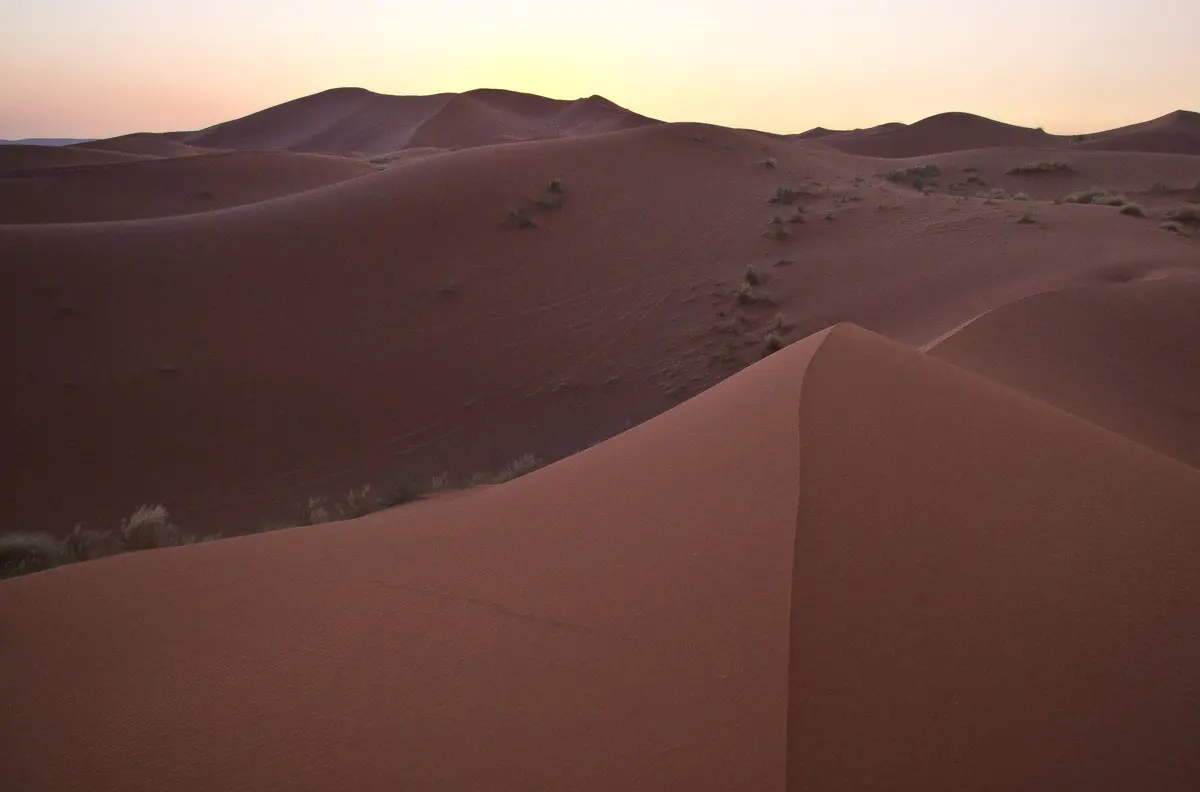
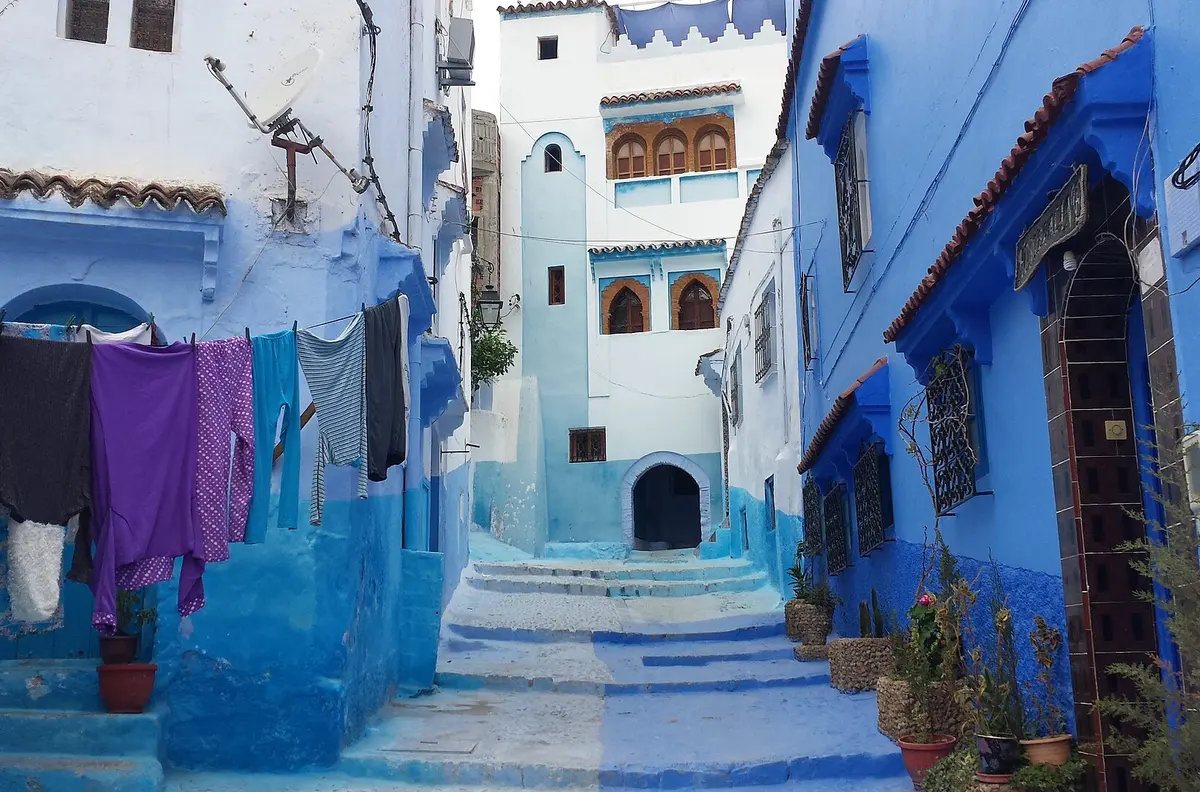
Where it actually happens: Jemaa el-Fna at night, the Casablanca corniche and the streets near Casa Port, the Tangier port area, and any crowded souk alley at rush hour. Not the desert, not the Atlas villages, not Chefchaouen, not Essaouira.
Front pocket or cross-body bag. Nothing valuable behind you. That is the whole defence.
Is Marrakech safe? Tangier? Casablanca? City by city
Marrakech. Safe, and the most tiring city in the country. Everything described above happens here more often than anywhere else, because this is where the visitors are. It is also entirely possible to have a calm week here; the difference is mostly knowing to keep moving.
Fes. More conservative, less English, and in my experience less hassle than Marrakech. The medina is a genuine maze — getting lost is the real risk and it is a harmless one.
Is Tangier Morocco safe? Yes, and far more so than its old smuggling-port reputation suggests. The Grand Socco and the port get lively after dark. The Kasbah and the medina in Tangier are fine.
Is Casablanca Morocco safe? Casablanca is a working city of several million people and it has the pickpocketing rate of one. It is the only place in Morocco where I tell clients to take a taxi rather than walk late at night. Maarif, the Corniche and the Hassan II Mosque quarter are straightforward.
Chefchaouen, Essaouira, Merzouga, the Atlas villages. The safest places in Morocco, and it is not close. Small towns where everyone knows everyone, and where the economy depends on you going home happy.
Women, solo travellers and LGBTQ+ visitors
Is Morocco safe for women? Yes, with a real caveat. Street harassment — comments, following, persistence — is common and it is wearing. It is very rarely physical. The full version, written by women who live here, is our guide for solo female travellers.
Solo travellers of any gender do well here. Riads are sociable, guides are affordable, and grands taxis are shared with locals who will look after you.
LGBTQ+ visitors should know that same-sex relations are criminalised under Moroccan law. Prosecution of foreign visitors is effectively unheard of, but public affection of any kind — gay or straight — is not done here. Discretion is the practical answer, and it is not a happy one.
Families. Moroccans are unembarrassed about liking children. Travelling with them makes people warmer, not colder.
Terrorism, protests and the travel advisory
State it plainly. Morocco has had attacks, the last major one against tourists being the Argana café bombing on Jemaa el-Fna in 2011. Security since then is visible: bag scanners in hotels, police at monuments, gendarmerie checkpoints on intercity roads. The state has a great deal riding on tourism and behaves accordingly.
Is Morocco safe from war elsewhere in the region? Morocco borders none of the conflicts that dominate the news and shares no frontier with them. The land border with Algeria has been closed since 1994 and is irrelevant to any normal itinerary.
Protests happen, mostly economic and mostly peaceful. Walk the other way, do not film, and it will not touch your trip.
Is Morocco safe to visit right now?
I cannot answer that in a file last edited weeks before you read it, and neither can any page that claims to. Is it safe to travel to Morocco this month, this week, the day you fly? Nobody writing in advance knows.
How safe is Morocco in the only terms that are stable enough to publish: safer than its reputation, and dangerous in the ordinary ways every country is — traffic, water, and inattention in a crowd.
Check before you travel. The US State Department and the UK FCDO both publish country advisories and update them; your own foreign ministry does the same. Read the actual advisory rather than a headline about it — the level assigned to Morocco has generally sat alongside countries most Americans visit without thinking twice.
Health, water and travel insurance
Stomach trouble is the thing most likely to cost you a day. Drink bottled water, be careful with ice at roadside stops, eat where the turnover is high, and bring rehydration sachets. They are the most useful thing in the bag.
Travel insurance for Morocco is not optional. European health cards are not valid here and most US health plans are not either. Private clinics in Marrakech and Casablanca are good, and they expect payment up front. Check that your policy covers the Sahara, camel riding and trekking above 3,000 m, because several standard policies exclude all three — that matters if you are heading for the High Atlas.
Emergency numbers and what to save before you land
- Police, in cities: 19
- Gendarmerie Royale, rural areas and main roads: 177
- Ambulance: 15
- Tourist police, Marrakech: +212 524 384 601
Also save your embassy’s number, your insurer’s 24-hour line, a photograph of your passport page stored somewhere other than your phone, and your riad’s address written in Arabic — a taxi driver may not read the Latin spelling of the street.
What a licensed operator changes, and what it does not
It does not make you immune to a stomach bug or a pickpocket. Nothing does.
What it changes is the largest risk on this page. Our drivers are professional and insured, the vehicles are maintained and inspected, we do not drive tired, and we do not cross the Atlas after dark. Our guides are licensed and carry published numbers — you can check them against the team. And if something does go wrong, someone Moroccan is on the phone to the clinic, the police or the insurer in Darija within minutes, which is worth more than any pre-trip checklist.
That is the honest case. Morocco is a safe country to visit. It is not a frictionless one, and anyone telling you otherwise is selling something.
Tell us your route and we will tell you honestly what to worry about.
Frequently asked questions
Is Morocco safe?
Yes. Violent crime against visitors is rare and Morocco is one of the more stable countries in the region. The realistic risks are road accidents, stomach illness and persistent commercial pressure in the big medinas — not violence.
Is Morocco safe for tourists?
Yes, and tourism matters enough to the economy that the state polices it actively. Expect hassle in Marrakech and Fes rather than danger. Petty theft happens in crowds; assaults on tourists are unusual enough to make the national news.
Is Morocco safe for Americans?
Yes. Morocco was the first country to recognise the United States and relations have never been broken. Americans are not treated differently on the street. Keep a passport copy separate, register your trip with your embassy, and carry travel insurance.
Is Marrakech safe?
Marrakech is safe and it is also the most tiring city in Morocco for a first-time visitor. The problem is commercial pressure — false guides, forced henna, "the souk is closed today" — rather than crime. Walk with purpose and say *la, shukran*.
Is Tangier Morocco safe?
Tangier is safe and much calmer than its old reputation. The port and the streets around the Grand Socco get busy at night; the medina and the Kasbah are fine. Ordinary city rules apply — watch your pockets in crowds.
Is Casablanca Morocco safe?
Casablanca is a working city rather than a tourist one, and it feels like it. Petty theft is more common here than anywhere else in Morocco. Stick to Maarif, the Corniche and the Hassan II Mosque quarter, and take taxis after dark.
Is Morocco safe for women?
Yes, with the caveat that street harassment is common and persistent. It is comments and following rather than assault. Firm refusal works. I am a Moroccan woman and I guide here for a living, which is not something I would do if it were dangerous.
Is it safe to drive in Morocco?
Driving is the single largest real risk in Morocco. City traffic is aggressive, rural roads are narrow and unlit, and animals wander onto mountain passes after dark. If you self-drive, do not drive at night. That rule matters more than any other here.
Is the water safe to drink in Morocco?
Tap water is treated and locals drink it, but it will usually upset a visitor's stomach for the first few days. Bottled water is cheap and everywhere. Avoid ice at small roadside cafés and pack rehydration sachets.
Is it safe to travel to Morocco right now?
Check your own government's advisory before you book — the US State Department and the UK FCDO both publish current guidance and both update it. Do not rely on a travel article for a live answer, including this one.