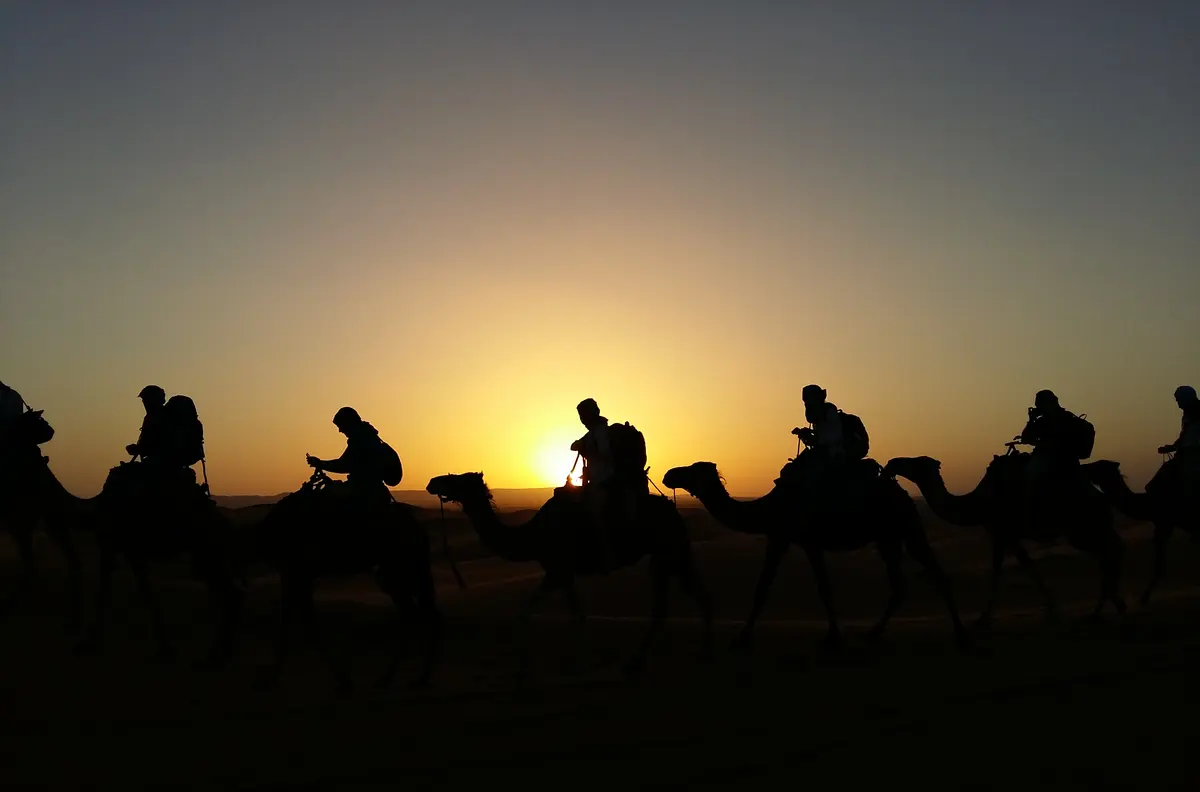
 3 days / 2 nightsSignature route
MarrakechFes
Marrakech to Fes Desert Tour: 3 Days to the Sahara
Cross the High Atlas on the Tizi n’Tichka pass
- 1–16
- Moderate
- 26 Sept
From€155 / per person
View tour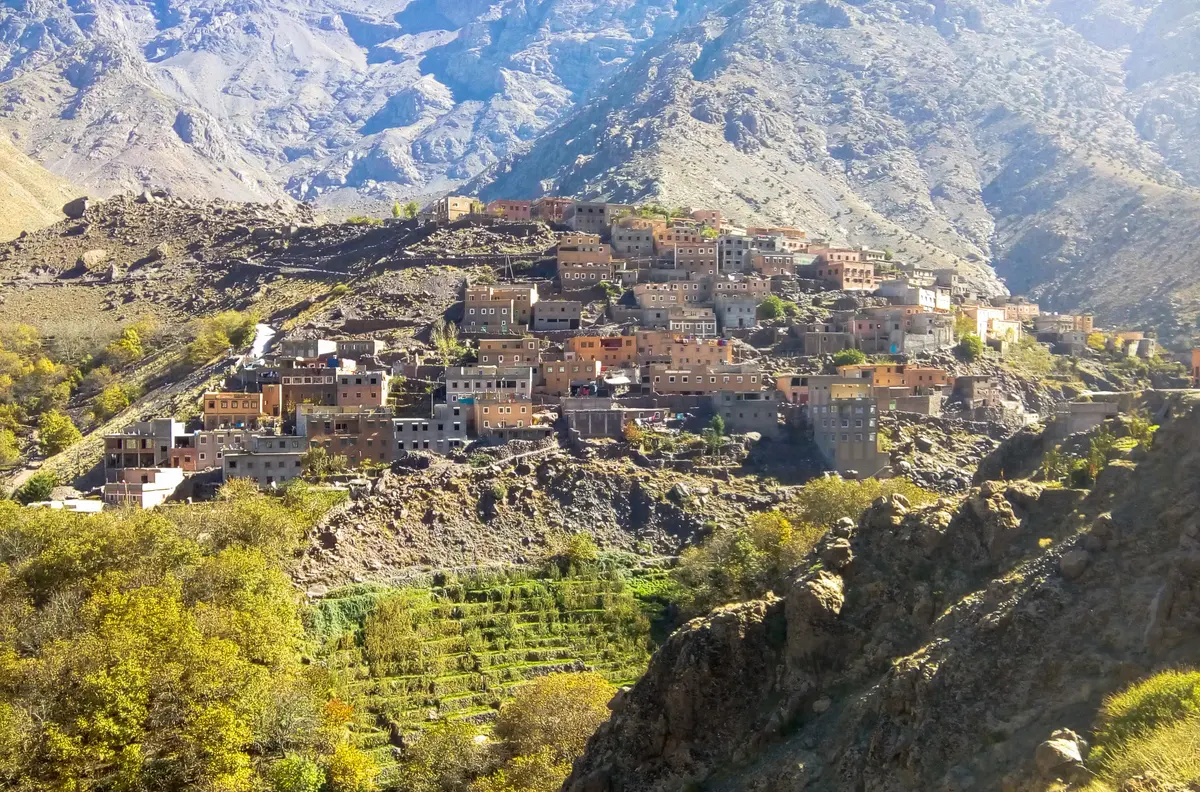
Summit Jebel Toubkal at 4,167 m — the highest point in North Africa
Toubkal is not technical, but it is high, and altitude is what turns people back — not fitness. We build in a proper acclimatisation walk on day two, which is the single biggest reason our summit rate is what it is. You carry a day pack; a mule carries everything else. Nights are in village houses with families we have worked with for years.
This Mount Toubkal trek takes 5 days from Marrakech to the 4,167 m summit, the highest point in North Africa, with a certified mountain guide, two nights in Berber village houses and a full acclimatisation day built in. No technical climbing between April and October.
| Summit | 4,167 m |
| Trailhead at Imlil | ≈ 1,740 m |
| Refuge | 3,207 m |
| Ascent on summit day | ≈ 960 m |
| Summit day, up and down | 9–10 hours |
| Drive from Marrakech | ≈ 1.5 hours |
| Season for the non-technical route | April to October |
Those numbers are the whole argument for this itinerary. You gain nearly 2,500 vertical metres from the valley floor, and altitude — not fitness — is what turns most people back.
Search for a Mount Toubkal trek, 2 days is what most operators put in front of you. Marrakech to Imlil, straight up to the refuge, summit at dawn, back down and home.
It works for people who arrive already acclimatised. For everyone else it means going from roughly 1,740 m to 4,167 m inside about 36 hours, which is exactly the profile that produces headaches, nausea and a turnaround at 3,900 m. People do not fail on Toubkal because they are unfit. They fail because they went up too fast.
We do not run the two-day version. If two days is genuinely all you have, ask us about a valley trek from Imlil instead — it is a better use of the time than a summit you will probably not reach.
Day two climbs the Tizi n’Tamatert pass at 2,279 m, has lunch in a village house on the far side, and comes back down to sleep in Imlil. Roughly five hours of walking.
Climb high, sleep low. It is the oldest rule in mountaineering and it is the single reason our summit rate is what it is. It also gets your legs used to Atlas ground — loose, stony, and quite unlike a graded path — before it matters.
05:00. Head up in the dark from the refuge, into the south cwm. Head torch, layers on, slow pace.
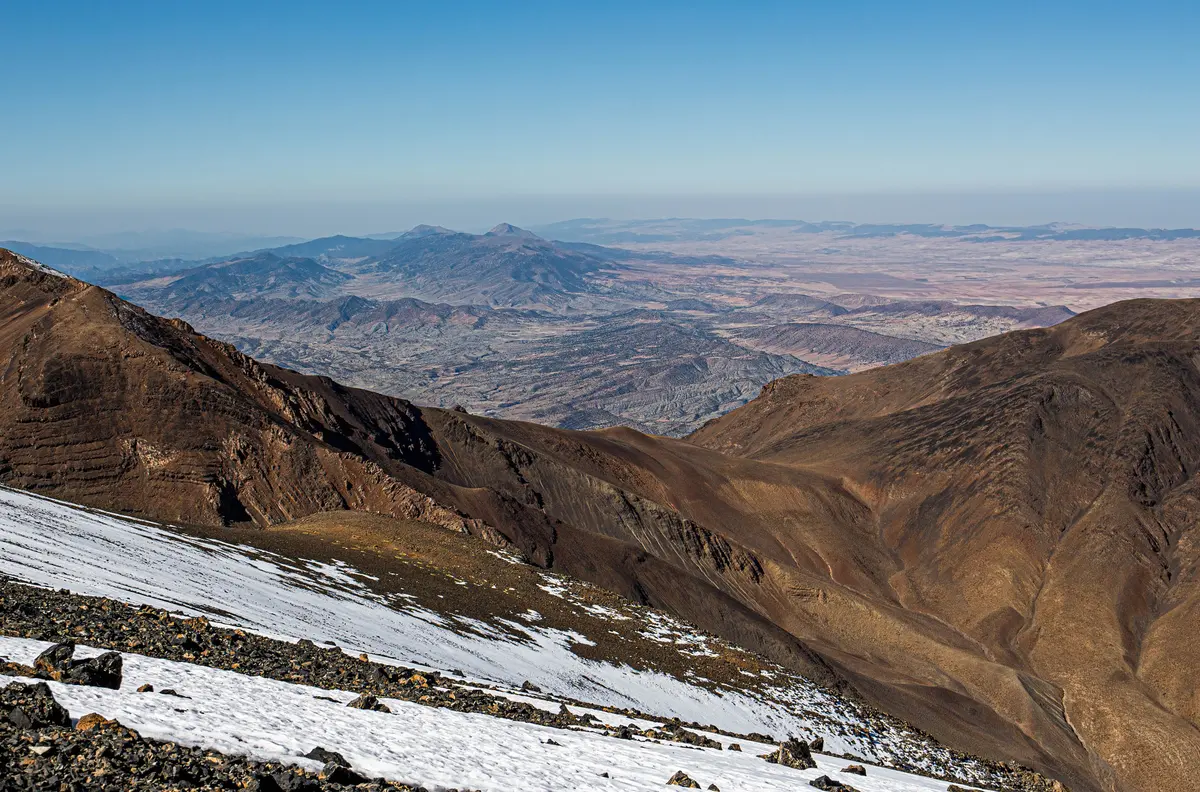
09:00. The summit. On a clear morning you can see the Atlas running east and the haze over the Sahara to the south.
Down. The descent is the long part: back to the refuge, then the whole valley to Imlil. Nine to ten hours in total, and the last two are on tired legs — which is why poles are worth carrying.
From roughly November to March this is a snow route. A Toubkal winter climb needs crampons, an ice axe and the ability to use both, and avalanche conditions on the cwm have to be assessed on the day.
We run it as a separate winter itinerary, with different kit, a smaller group and a guide qualified for the conditions. We do not take beginners onto it. If you want a summit and it is January, say so at the enquiry stage and we will tell you honestly whether it is a sensible plan for you.
Two nights are in village guesthouses in Imlil, with families we have worked with for years. Bedrooms are simple, the food is home cooking, and the tea is constant.
One night is in the Toubkal refuge at 3,207 m: bunk dormitories, shared bathrooms, hot meals, no shower worth the name. It is a mountain hut and it behaves like one. Dinner is early and so is lights-out. All meals on trekking days are included.
You carry a day pack: water, layers, camera, snacks. A muleteer and mule take everything else as far as the refuge, which is the point at which most people realise it was worth it.
Bring broken-in boots, a warm layer for the summit, sun protection and poles if you use them. A sleeping bag is rentable locally for €15. Travel and mountain rescue insurance is required, not optional. Our packing guide covers the general list; your guide will send a mountain-specific one once you confirm.
| Travellers | Per person |
|---|---|
| 2 | €620 |
| 3–4 | €490 |
| 5–7 | €420 |
| 8–10 | €395 |
That covers the certified high-mountain guide, the muleteer and mule, two nights in village guesthouses and one in the refuge, all meals on trekking days, the return transfer from Marrakech, and the Toubkal National Park permit.
You should be able to walk six hours on consecutive days on rough ground. No climbing skill is needed in season. We ask about your fitness and altitude history before we confirm a place, and we will say no if the answer worries us.
Toubkal is not the only High Atlas trek worth doing. The Mgoun trek, on the massif east of here, is longer and lower — more valley, less altitude, and almost no other walkers.
If you want the mountains without the summit, our other Morocco tours include shorter Atlas walks, and the best time to visit Morocco sets out the trekking months against everything else.
Hajar is a Moroccan woman who guides professionally and has been organising these routes for six years. The mountain guide on your trek is certified by the Moroccan federation — we do not subcontract that to whoever is available.
No online payment. Send your dates and your walking background, we quote in writing, and nothing is confirmed until you are happy. More on why booking direct differs.
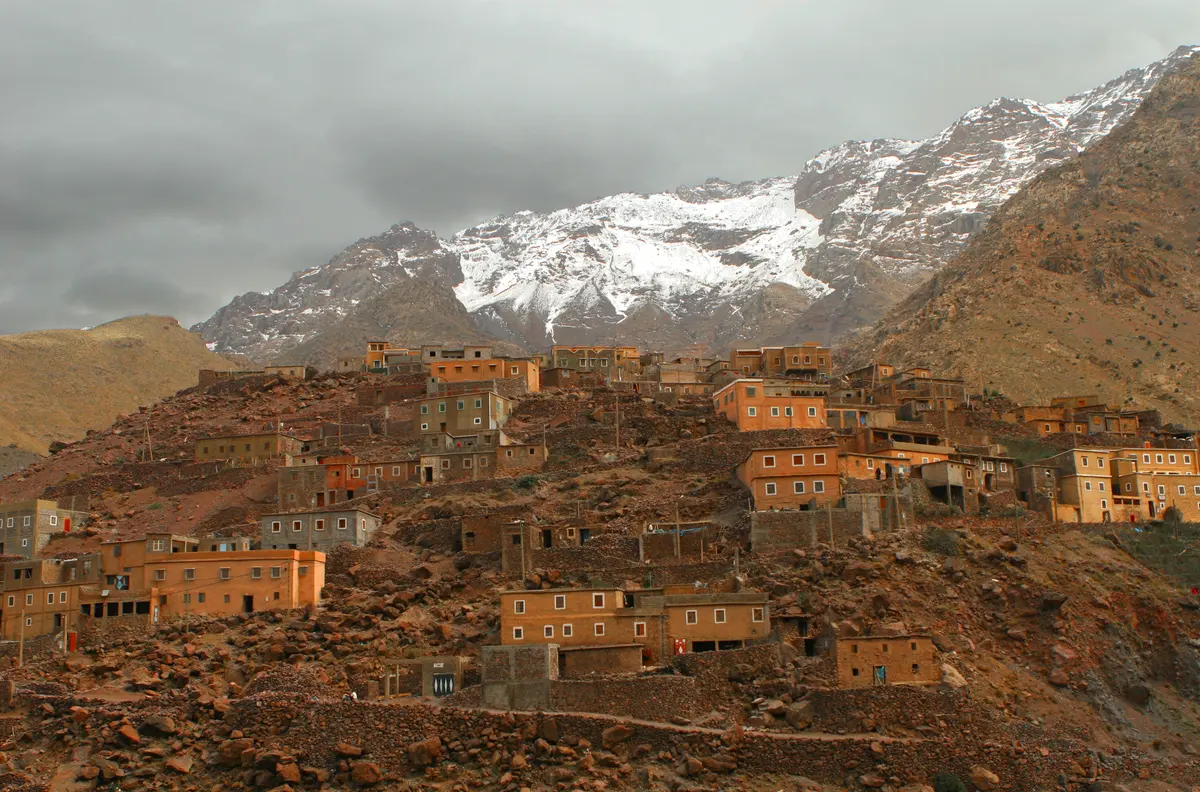
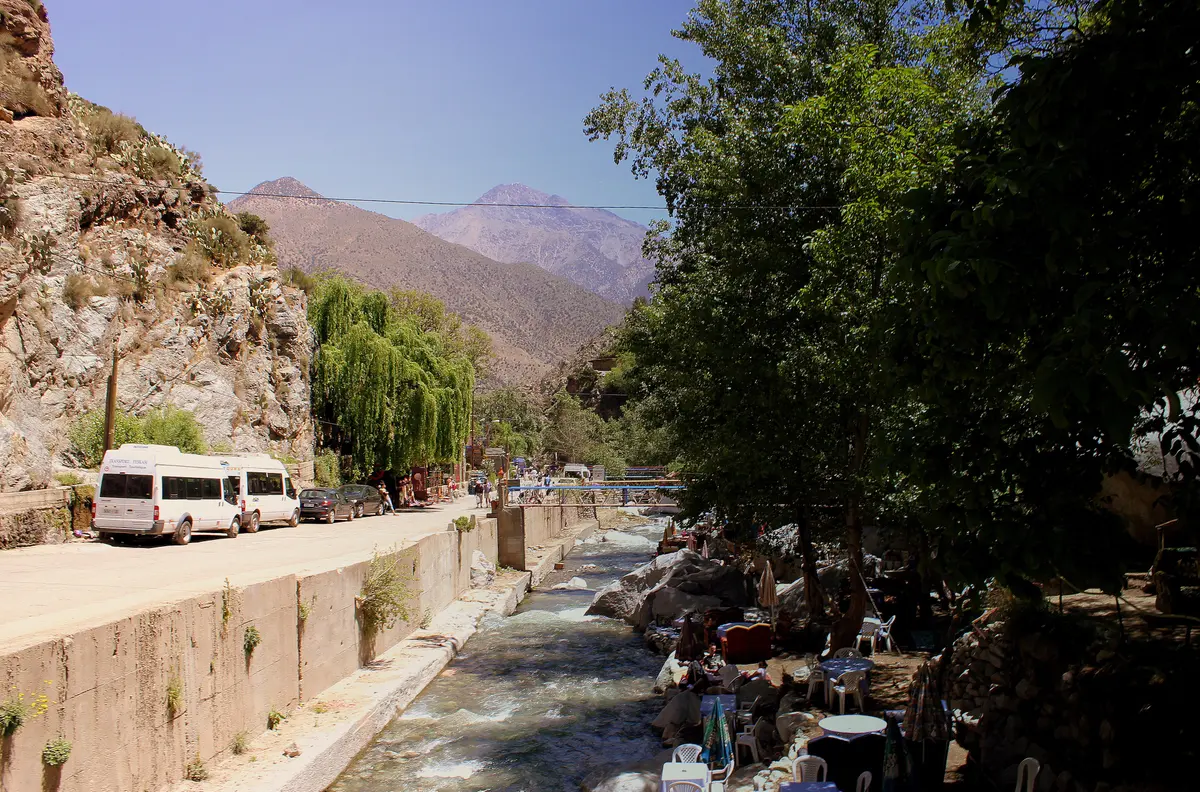
You should be able to walk 6 hours on consecutive days on rough ground. Summit day is 9 to 10 hours. No climbing skill is needed between April and October.
From November to March, Toubkal is a crampons-and-ice-axe mountain. We run it as a separate winter itinerary with the right kit and a smaller group.
The refuge is at 3,207 m and the summit at 4,167 m. Mild headaches are common; the acclimatisation day on day two is exactly why we include it.
Bunk dormitories, shared bathrooms, hot meals, no showers worth the name. It is a mountain hut, and it is fine.
Physically demanding, technically easy between April and October. It is a walk on rough scree, not a climb. Summit day is 9 to 10 hours and about 960 m of ascent from the refuge, then the whole descent to Imlil.
Two days is what most operators sell and five is what we run. The difference is an acclimatisation day and a gentler summit push. If you have only two days spare, we would rather you did a valley trek instead.
From roughly November to March, yes — crampons and an ice axe, and the knowledge to use them. That is a separate winter itinerary with different kit and a smaller group. April to October needs neither.
We do not run this mountain unguided under any circumstances. Every departure includes a high-mountain guide certified by the Moroccan federation, and the national park permit is arranged for you.
Your guide turns you around, which is the job. The refuge is the turning point for most people who stop. You are not left alone on the mountain and there is no charge for not finishing.
3 days / 2 nightsSignature routeMarrakechFes
Cross the High Atlas on the Tizi n’Tichka pass
From€155 / per person
View tour 10 days / 9 nightsSignature route
Marrakech
Every region that matters, in one loop
From€1,100 / per person
View tour 7 days / 6 nightsSignature route
CasablancaMarrakech
All four imperial capitals — Rabat, Meknes, Fes and Marrakech
From€610 / per person
View tourTell us your dates and interests. We reply personally, usually within a couple of hours.
usually within 2 hoursNo deposit to planLicensed tour guide
From
€395/ per person
+212 665 295 999
Try “Sahara”, “3 days”, or “Chefchaouen”.