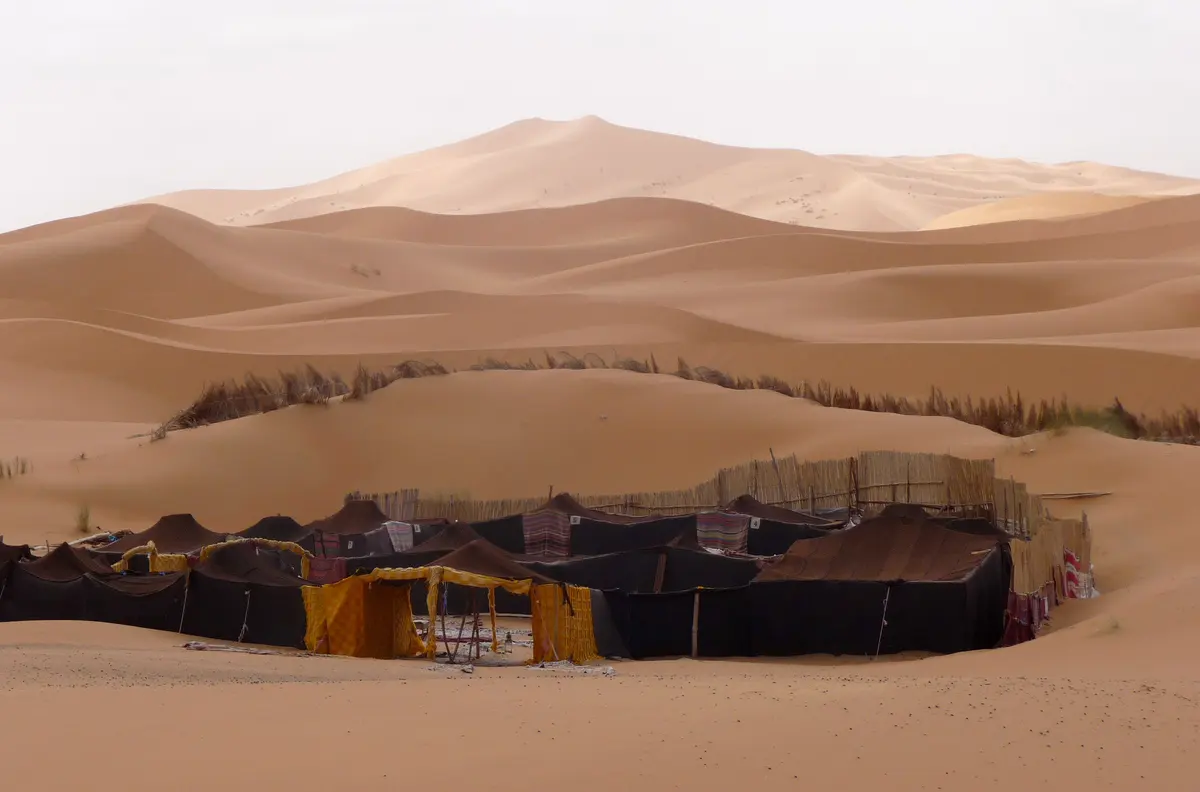
This is the Morocco packing list for the part of the trip that catches people out — one night in the Sahara. Most desert packing lists are written by people who have never slept in a camp. This is the version we give our own travellers.
The general Morocco packing list covers cities, medinas and the coast. What follows is the desert layer that goes on top of it.
The three things people regret leaving behind
A warm layer. Every single time. Between November and February the temperature falls about twenty degrees within an hour of sunset — from a pleasant 18–20°C day to something close to freezing. A fleece is fine. A down jacket is better, packs to nothing, and is the item people wish they had at three in the morning.
A head torch. Camps run on solar and the generator goes off around eleven. Walking to the bathroom block across soft sand in the dark, holding a phone in your teeth, is a rite of passage nobody needs. A cheap head torch weighs 60 grams.
Lip balm. The air holds almost no moisture. Two days in, everybody in the group is asking who has some. Take two — one will go missing in the sand.
What to wear in the Sahara
Long, loose and light. Covering your arms and legs is genuinely cooler than exposing them, it keeps the sun off, and it settles the sand question. Cotton and linen beat synthetics.
A scarf you can wrap over your face is the most useful thing you will carry. When the wind gets up — and it does, without warning, for twenty minutes at a time — it is the difference between an experience and an ordeal. You will be offered a cheche at camp and most people end up buying one. Bring your own if you have a view about fabric.
Closed shoes for walking, sandals for camp. Trainers or light walking shoes are right; boots are hot and unnecessary. Do not wear open sandals on a camel.
A hat. Not optional between May and September.
Modesty is not the driver out here — the desert is not a medina and nobody is watching what you wear — but the same loose, covered clothing works for both, which is convenient. The town-and-medina guidance covers that side of it.
Morocco packing list: winter versus summer
The desert has two completely different problems depending on the month, and one list does not cover both.
| November–February | March, April, October | June–August | |
|---|---|---|---|
| Day | 18–20°C | 25–32°C | 42–45°C |
| Night at camp | Near freezing | 10–15°C | Above 25°C |
| Must have | Insulated jacket, hat, gloves, socks for sleeping | A fleece | Scarf, hat, electrolytes |
| Can skip | — | The heavy jacket | Everything warm except one light long sleeve |
Winter visitors consistently underpack. Summer visitors overpack clothing and underpack their water strategy. The seasonal picture for the whole country is worth reading before you finalise anything.
Luggage: the bag, not the case
Do not take a suitcase to camp. Camel bags are soft-sided panniers and a hard shell does not ride well. On a 4x4 transfer it survives, and it is still pointless.
Take a small overnight bag with the camp night in it: warm layer, head torch, toothbrush, one change of clothes, charger, camera. Leave the main case in the vehicle or at your Marrakech riad — every riad will store it, and most will not charge for it.
If you are doing the one-way Marrakech to Fes crossing, the main case travels with the vehicle to Fes, so the small bag is the only thing you ever carry.
What not to bring
A hairdryer. No camp will run one.
A drone, unless you have a permit. Drones are restricted in Morocco and are routinely confiscated at the airport on arrival. This is not a rule that gets quietly ignored.
A sleeping bag. Camps supply heavy wool blankets, several in winter. A silk liner is a reasonable luxury; a sleeping bag is dead weight.
A water filter. Bottled water is provided and the camp has plumbing.
More than one book. You will not read it. The evening is dinner, drums and the dune.
Heels of any kind. Obvious in writing, and we still see them.
Small things that make a disproportionate difference
- Wet wipes. Showers are short, because water arrives by tanker.
- A power bank. The generator goes off around eleven, and cold drains camera batteries fast.
- Rehydration or electrolyte sachets. You will not notice how much you are sweating; the air takes it instantly.
- A plastic bag or dry pouch for the camera between the vehicle and the tent. Sahara sand is fine enough to get past most seals.
- Sunglasses that wrap. Blowing sand goes round the sides of anything else.
- Earplugs. Canvas is not soundproof and somebody in the group will still be up at one.
- Cash in small notes for tips at camp. There is no card machine in the dunes, and what to tip is worth settling before you arrive.
Cameras, and what sand does to them
Erg Chebbi sand is very fine and it moves. It gets inside zip lenses, into hinges, and into anything with a rubber seal that has aged.
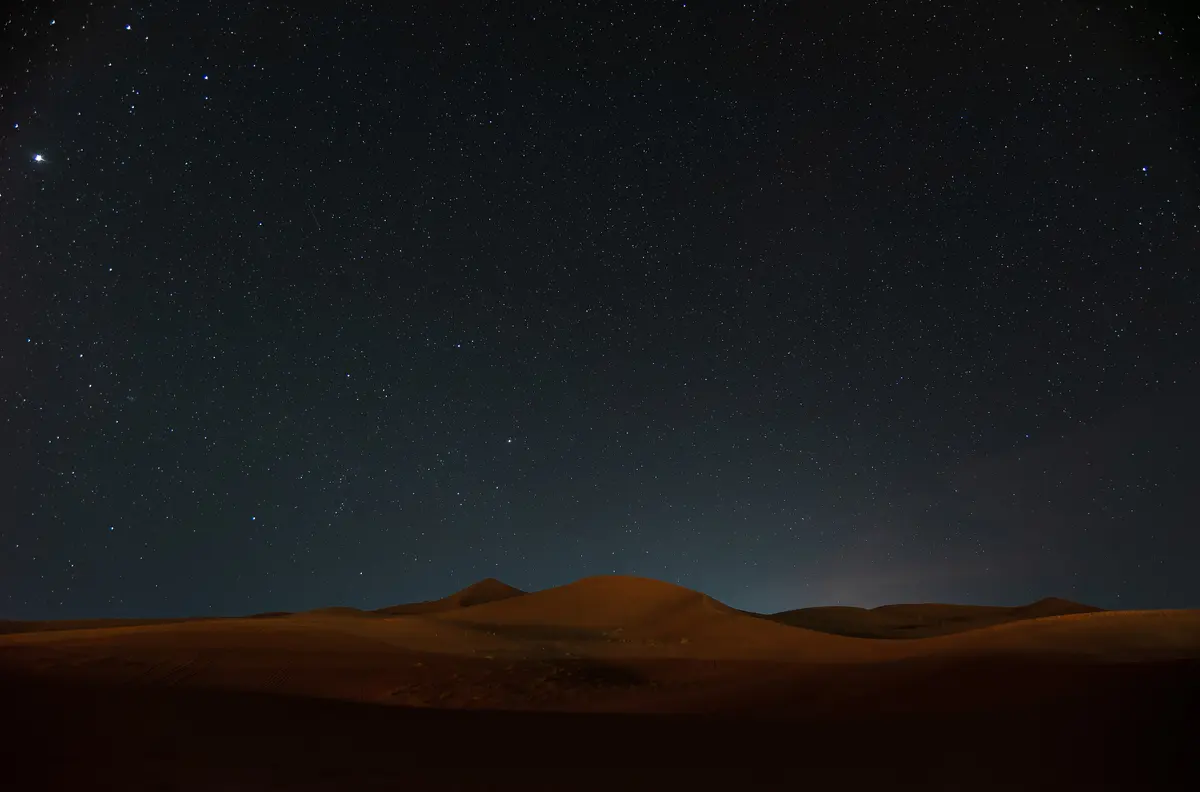
Change lenses inside the tent, not on the dune. Keep the body in a bag between the vehicle and the camp. If you are shooting the Milky Way — and on a moonless night you should, because there is effectively no light pollution out here — you need a tripod, because no phone will hold a long enough exposure. Bring a spare battery: cold nights flatten them faster than you expect, and the generator may already be off when you notice.
A cheap lens cloth is worth more here than an expensive one, because you will be wiping grit off glass and you will want to throw it away afterwards.
What the camp already supplies
Half of over-packing comes from not knowing what is waiting for you. At a standard Erg Chebbi camp, all of this is there when you arrive:
- Mattress or bed, sheets, pillow, and heavy wool blankets — as many as you ask for
- Towel
- Toilet paper and soap in the shared block, or in the tent at a private-suite camp
- Bottled water, and as much mint tea as you can drink
- Dinner, breakfast, and a vegetarian option if you flagged it at booking
- A cheche to borrow or buy if the wind gets up
- Somewhere to charge a phone in the dining tent, until the generator goes
What is not there: a shop, an ATM, a pharmacy, a hairdryer, reliable wifi, alcohol, or anything you forgot. Rissani is the nearest real market and it is an hour away.
The short version, to copy
Everything below fits in a 20-litre overnight bag.
Wear: long loose trousers, long-sleeved light shirt, closed shoes, hat, sunglasses. In the bag: warm layer, scarf, one change of clothes, sandals, socks for sleeping, underwear. Small items: head torch, power bank, lip balm, sunscreen, wet wipes, eye drops, rehydration sachets, earplugs, small-note cash. Optional: silk liner, tripod, sandboarding gloves, a book you genuinely will read. Winter only: insulated jacket, hat, gloves. Leave behind: suitcase, hairdryer, sleeping bag, drone, heels, second and third book.
That is the whole list. It is shorter than most people expect, which is the point — the desert night is one night, and everything else stays in the car.
Medication and the small first-aid kit
Merzouga has a pharmacy. The dunes do not.
Bring what you actually take, plus rehydration salts, painkillers and whatever stomach remedy you trust. The one addition specific to the desert is eye drops — between the dry air and blown sand, contact lens wearers have the hardest time out here, so pack glasses as a backup.
Blister plasters belong on the general list rather than this one, but the sunrise dune climb is where they get used.
Pack the night before
Camps leave at eight in the morning and the light has gone flat by nine. The morning is not the time to be repacking.
Do it the evening before, in the dining tent while the generator is still on: charger out of the socket, head torch by the bed, warm layer within reach, bag mostly closed. Then go and sit on the dune, which is what you came for and the part everyone remembers.
We send a dated, season-specific version of this list to everyone booked on a desert departure, along with the name of the camp you will actually be sleeping in.
Frequently asked questions
What should you wear in the Morocco desert?
Long, loose and light in the day — covering your arms and legs is genuinely cooler than exposing them, and it keeps the sand off. A fleece or down jacket after sunset, and a scarf you can pull over your face when the wind gets up.
What shoes should you wear in the Morocco desert?
Closed trainers or light walking shoes for the day, and sandals for around camp. Sand gets into everything either way. Boots are hot and unnecessary, and open sandals on a camel are a mistake.
How do you pack for a 3-day Morocco desert tour?
One small overnight bag for the camp night, with the main case left in the vehicle or at your Marrakech riad. Camel bags are soft-sided panniers, so a hard shell rides badly. Put the warm layer and head torch in the small bag.
What goes on a Morocco packing list for winter?
Everything on the standard list plus a proper insulated jacket, a hat, gloves and socks to sleep in. Between November and February camp nights can approach freezing after daytime highs of 18 to 20°C.
What to wear in the Sahara Desert in Morocco in summer?
The loosest, lightest, longest clothing you own, plus a wide scarf and a hat. Merzouga reaches 42 to 45°C in July and August. Covered skin is cooler than bare skin, and sunscreen alone will not keep up.
Do you need a sleeping bag for a Sahara desert camp?
No. Camps supply heavy wool blankets, several of them in winter. A silk liner is a reasonable luxury if you are particular about bedding, but a sleeping bag is dead weight you will carry for nothing.
Can you charge a phone in a Sahara desert camp?
Sometimes, in the dining tent, until the generator goes off around eleven. Do not rely on it. A power bank is the answer, and it also solves the camera battery problem on a cold night.
What should you not bring to the Sahara?
A hard-shell suitcase, a hairdryer, a drone without a permit, heels, and more than one book. Skip the sleeping bag and the water filter too — blankets are supplied and bottled water is provided.
Do you need a scarf for the Morocco desert?
Yes, and it is the most useful single item on the list — sun, blowing sand, a cold night and a mosque courtyard from one piece of cloth. You will be offered one at camp, but bring your own if you have a preference.
Related tour
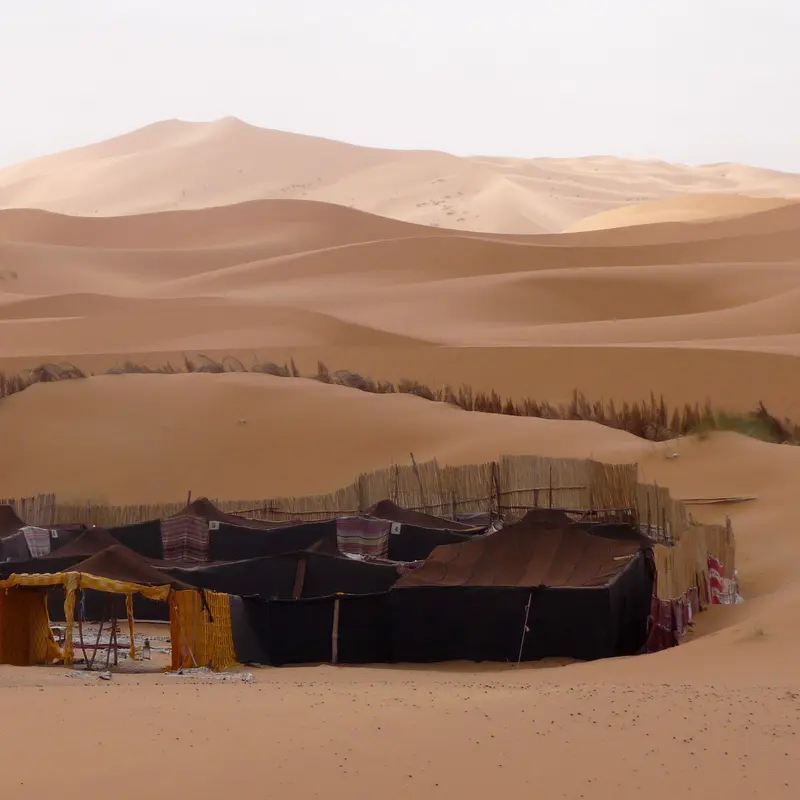
Morocco Luxury Desert Tour: 4 Days at Erg Chebbi
From €520 · 4 days / 3 nights
Morocco, once a month
Route ideas, when to book, and the odd honest warning about tourist traps. No spam, unsubscribe anytime.
Thanks — check your inbox to confirm.