Is Morocco Cheap? What a Trip Actually Costs
Is Morocco cheap? On the ground, yes — moving around it is where the budget breaks. Real daily cost bands at three levels, with what each one actually buys.
Youssef Ait Taleb
Senior driver-guide
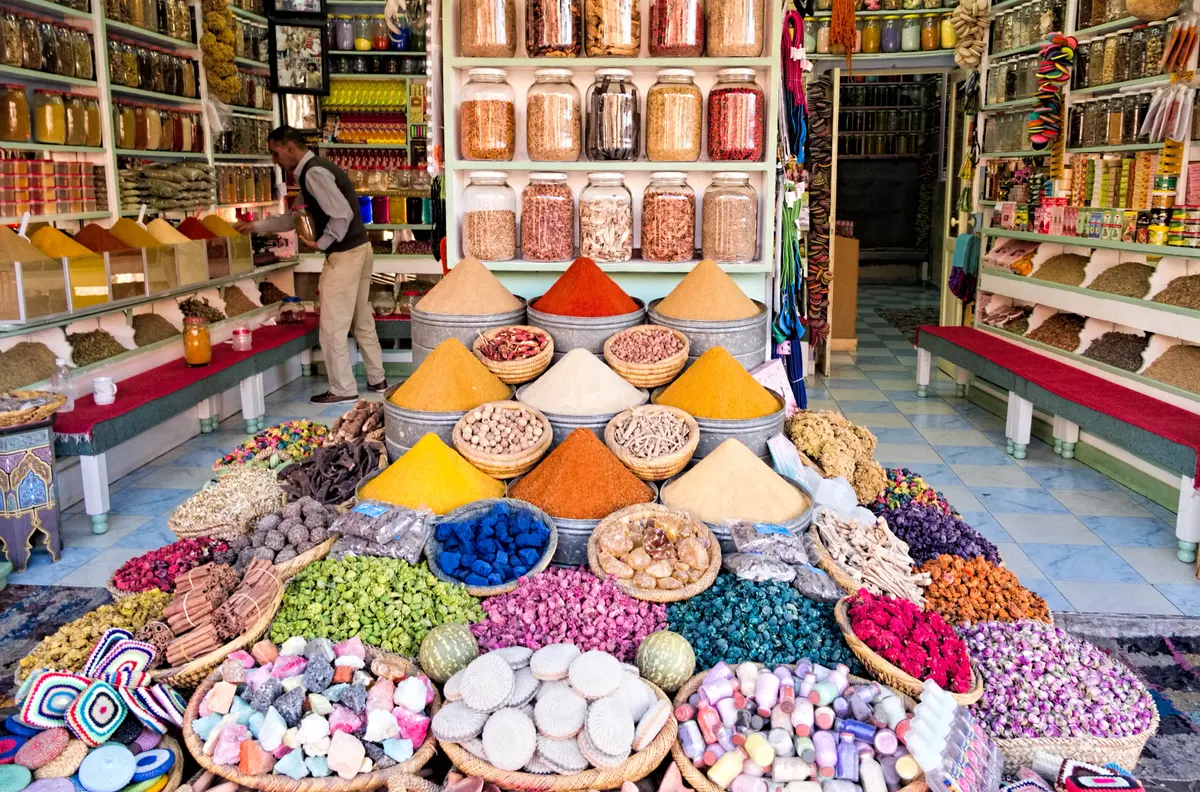
Is Morocco cheap? On the ground, yes — and in transit, no. Food, taxis, entry tickets and simple rooms cost a fraction of European prices. Covering the distances between them does not, and transport is where almost every Morocco budget quietly breaks.
The real Morocco travel cost sits anywhere between €35 a day and €350. Here is what each end actually buys, per person per day, excluding international flights. All figures were checked in August 2026 and are honest bands rather than fixed prices — check current rates before you commit to anything.
Is Morocco cheap? The short answer on Morocco trip cost
| Level | Per person, per day | A week for two |
|---|---|---|
| Backpacking | €35–55 | €490–770 |
| Mid-range | €80–140 | €1,120–1,960 |
| Private driver throughout | €200+ | €2,800+ |
Add international flights on top. From European capitals, return fares to Marrakech are frequently under €150 outside the school holidays; from the US, expect a long-haul fare via Europe or a direct seasonal service.
The dirham runs at roughly 10 to 11 MAD to the euro, which makes mental arithmetic easy: divide by ten and take a little off.
Budget: €35–55 a day
Riad dormitories or simple guesthouses at €12–20. Street food and neighbourhood cafés — a tagine at a local place is €4–8, a bowl of harira soup is a euro or two. Buses and shared grands taxis between cities.
Entirely viable, and the food at this level is often better than at the next one up. What you spend instead of money is time: an eight-hour CTM bus instead of a four-hour private transfer.
Morocco budget travel works well here precisely because the cheap version of most things is also the authentic version. The exception is the desert, where the cheap version is a twenty-hour round trip in a minibus.
Mid-range: €80–140 a day
A decent riad with a private bathroom at €45–75 for the room. A mix of local restaurants and the occasional rooftop. Trains between the northern cities, private transfers where there is no train. One or two guided days.
This is where most of our travellers sit and where the value curve is steepest. The step up from backpacking buys comfort and, more importantly, hours back.
Comfortable: €200+ a day
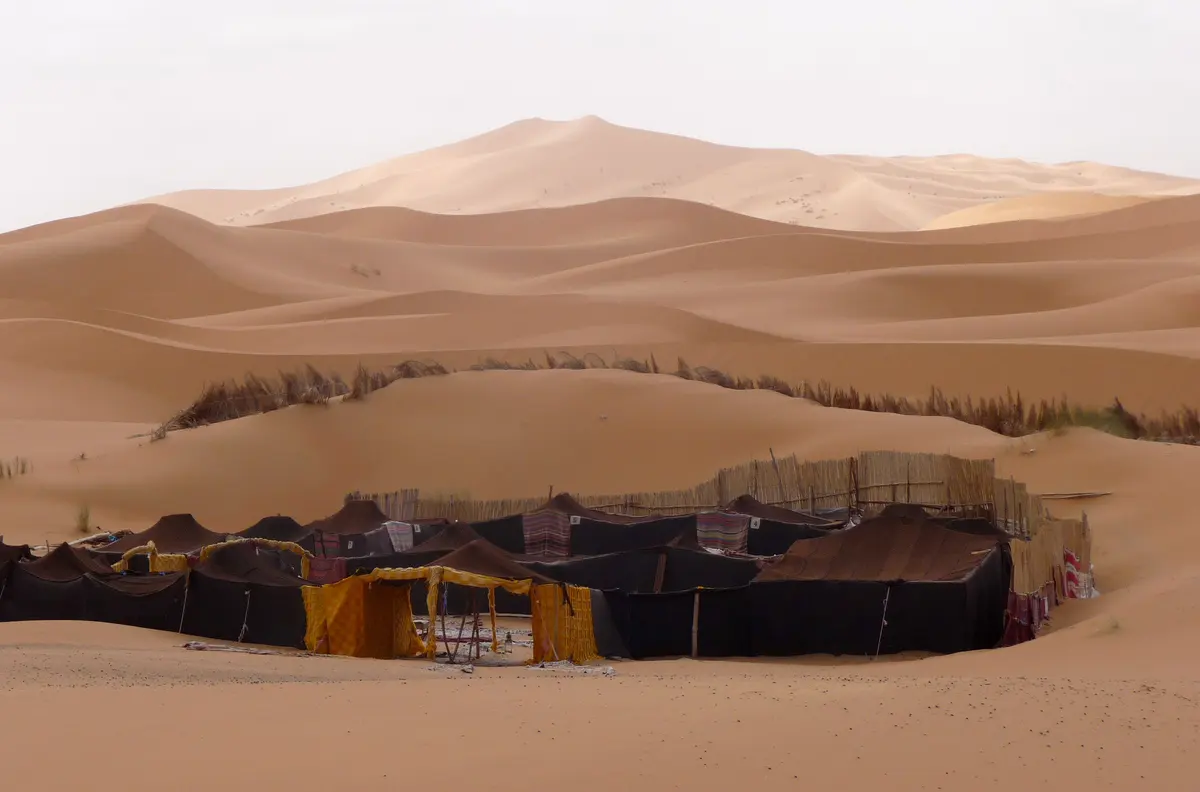
Boutique riads and kasbah hotels at €120–250. A private driver-guide throughout, which for two people works out at roughly €90–130 a day for the vehicle. Luxury desert camps around €120 a head.
Worth saying plainly: above about €250 a day you are buying hotel quality, not a better trip. The itinerary does not improve.
Where the money really goes: transport
This is the line item everyone underestimates, and it is the honest answer to whether Morocco is cheap.
Morocco is large. Marrakech to Merzouga is around 560 km. Marrakech to Fes is 530 km. There is a good rail network in the north — Tangier, Rabat, Casablanca, Fes, Marrakech — and effectively none in the south and east, which is where the landscapes are.
| Journey | Bus / train | Private vehicle |
|---|---|---|
| Marrakech → Fes | ~€15–25, 7h by train with a change | ~€200–280 for the car |
| Marrakech → Essaouira | ~€8–12, 3h by bus | ~€90–130 |
| Marrakech → Merzouga | No direct public option worth taking | Part of a multi-day tour |
So the budget question is really: how much of your trip is south of the Atlas? A north-loop trip on trains is cheap. A desert trip is not, and cannot be, because a vehicle and a driver have to cover 1,100 km. Getting around Morocco sets out the options properly.
Costs people forget
Entry tickets. Small individually — most monuments are 70–120 MAD — and they add up over a week of sightseeing. Marrakech raised several in 2025: the Bahia and El Badi palaces both went from 70 to 100 MAD, and Le Jardin Secret from 80 to 120.
Tips. Not optional in practice. See below.
The desert camp supplement. A private-suite camp instead of a standard one is typically €40–80 more per person per night.
Airport transfers. Fixed rates exist and are posted at Marrakech airport. The medina should be around 100–150 MAD, not the 400 you will first be quoted.
Bottled water. Trivial per bottle, noticeable over ten days in summer.
The thing you buy in the souk. Everyone says they will not. A rug costs more to ship than to buy.
Where people consistently overspend
The airport taxi. As above. Agree the fare or use the posted rate.
Buying at the first shop. The opening price in a souk is typically two and a half to four times the settling price. This is not adversarial, it is the format, and walking away is a legitimate move in it.
Booking desert tours from your riad. The riad is reselling, usually with a 30–40% margin on top. Book direct with an operator, and ask whether the guide is licensed — that is a real distinction here, not marketing.
Currency exchange at the airport. Rates at the arrivals hall are poor. Take enough cash for the first day and use a bank ATM in town.
Paying for a “guide” who approached you. It ends in a demand for money and a shop you did not want to enter.
What to budget for tips
Tipping matters here and it is not built into prices.
- Driver-guide: €10–15 per group per day
- Local city guide: €10–20 for a half day
- Restaurant: round up, or 10% somewhere formal
- Riad staff: about €5 a night, left at the end rather than daily
- Desert camp: small notes, left with the camp manager for the whole team
- Porter with your bags in the medina: 20–30 MAD
More detail in money and tipping.
Money, cards and the closed currency
Dirhams are a closed currency. You cannot buy them outside Morocco, and you should not carry them out — spend or change them before you fly.
ATMs are everywhere in cities and take foreign cards, usually with a fee of around 25–40 MAD per withdrawal, so take larger amounts less often. Cards work in hotels, riads, supermarkets and mid-range restaurants. Cash is essential in the medina, in taxis, in rural cafés, at desert camps and at most monuments.
What a tour price includes, and what it does not
Comparing two tour prices is close to meaningless without this, and it is where most of the apparent differences between operators come from.
Usually included: the vehicle, fuel, the driver, accommodation on the nights of the tour, and the meals stated on the itinerary — typically dinner and breakfast at the desert camp.
Usually not included: lunches, drinks, monument entry fees, the licensed local guide inside each city, tips, and anything optional such as a quad bike or a sandboard. On our Marrakech to Fes crossing that gap is around €20–40 a day per person if you do everything.
The two questions worth asking any operator: which camp, by name, and is the guide licensed. The answers explain most price gaps of more than about 20%, and an operator who will not answer either is telling you something.
Saving money without ruining the trip
Things that work:
- Travel in March, June, September or November — same weather, lower riad prices than April or October. The seasonal breakdown has the detail
- Take the train between northern cities and save the private vehicle for the south
- Eat lunch as your main meal, as Moroccans do
- Stay in the medina in Fes, where riads cost less than in Marrakech
- Fill the vehicle — a private tour costs the same for two people as for five, so the per-person price halves
Things that do not:
- Cutting the desert from three days to two. You save one night and lose the reason you went
- Booking the cheapest tour on the comparison sites. The saving comes out of the camp, the guide’s licence, or the driving hours
- Skipping travel insurance
- Assuming you can haggle a taxi fare down after you have got in
We quote by itinerary rather than by headline price, and the quote itemises what is included — camp category, meals, entry fees, and whether the guide is licensed. There is no online payment, so nothing is committed until you have seen the numbers.
Frequently asked questions
Is Morocco cheap to visit?
On the ground, yes — food, taxis, entry tickets and simple accommodation are cheap by European or US standards. Moving between cities is not, because distances are long and the fast options are private. Transport is where budgets break.
How much is a trip to Morocco?
Excluding international flights, budget roughly €35–55 a day at the low end, €80–140 mid-range, and €200 upwards with a private driver. A week for two mid-range, all in, typically lands between €1,100 and €2,000. These are indicative bands, not quotes.
How much does it cost to go to Morocco?
The flight plus your daily band. From Europe, return fares are often under €150 outside school holidays; from the US, expect a long-haul fare via Europe. On the ground, €80–140 a day covers a mid-range trip including transport.
How much does a week in Morocco cost?
Around €250–400 per person backpacking, €560–1,000 mid-range, and €1,400 upwards with a private driver-guide, excluding flights. The single biggest variable is whether you move between cities by bus, train or private vehicle.
Is Marrakech expensive?
Less than any comparable European city, but it is the most expensive place in Morocco. Riad prices in the medina, rooftop restaurants and the airport taxi are all above the national norm. Guéliz is cheaper than the medina for food.
How much does a meal cost in Morocco?
A tagine in a neighbourhood restaurant is roughly 40–90 MAD. A bowl of harira soup is usually 10–20 MAD. A rooftop restaurant in the Marrakech medina runs 150–300 MAD a head, and an upscale one 250–600 MAD. Treat these as indicative — menu prices move.
How much does a driver cost in Morocco?
A private driver with a vehicle is typically quoted per day for the car, not per person, so the cost per head falls sharply with group size. For two people it usually works out around €90–130 a day including fuel.
How much do you tip a tour guide in Morocco?
For a driver-guide, €10–15 per group per day is normal. A city guide for a half day, €10–20. Restaurants, round up or 10% somewhere formal. Riad staff, about €5 a night left at the end.
How much money should I take to Morocco?
Enough cash for a few days at a time, topped up from ATMs, which are everywhere in cities. The dirham is a closed currency, so you cannot buy it before you arrive and should spend it before you leave.
Can you use credit cards in Morocco?
In hotels, riads, supermarkets and mid-range restaurants, usually yes. In the medina, in taxis, in rural cafés and at most desert camps, no. Carry cash and assume anything traditional is cash-only.
Morocco, once a month
Route ideas, when to book, and the odd honest warning about tourist traps. No spam, unsubscribe anytime.
Thanks — check your inbox to confirm.